School of Life Sciences, Arizona State University, Tempe, AZ 85287.
Advanced Imaging Center, HHMI Janelia Research Campus, Ashburn, VA 20147.
Mol Biol Cell. 2019 Aug 1;30(17):2254-2267. doi: 10.1091/mbc.E19-01-0009. Epub 2019 Jun 26.
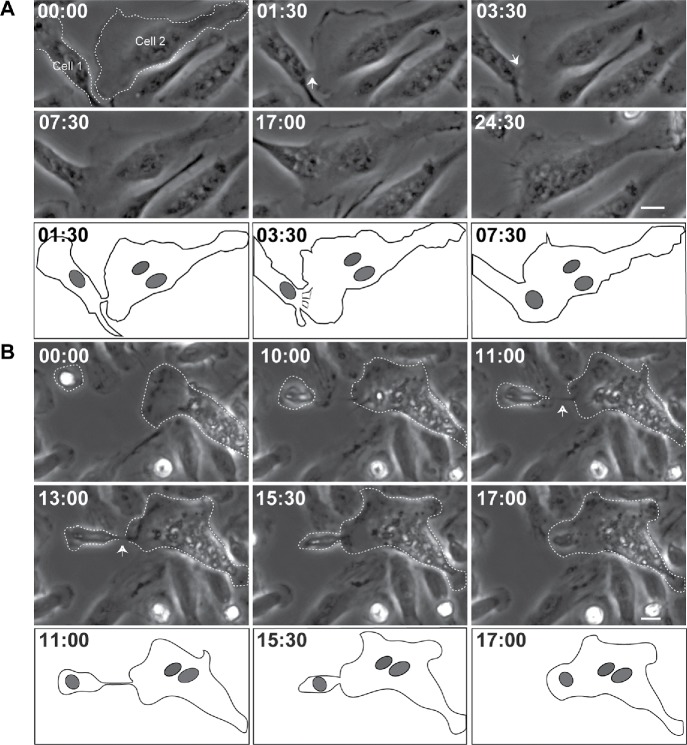
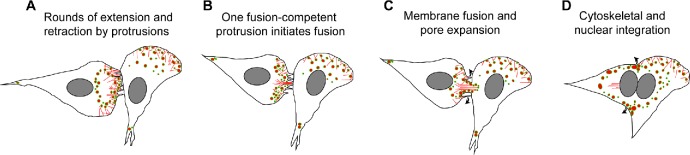
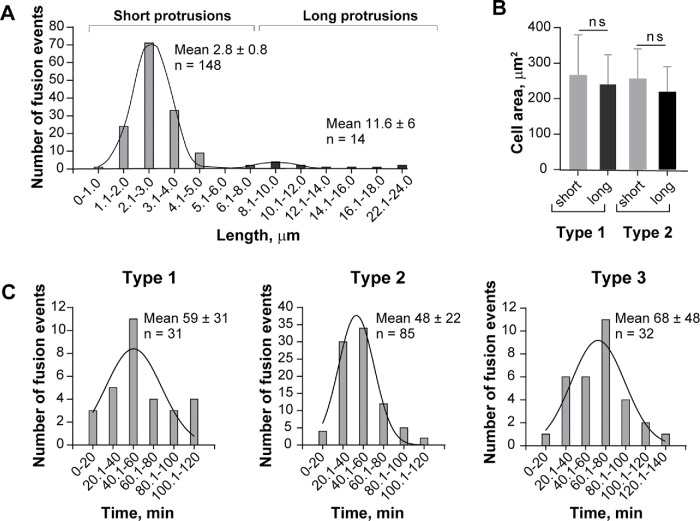
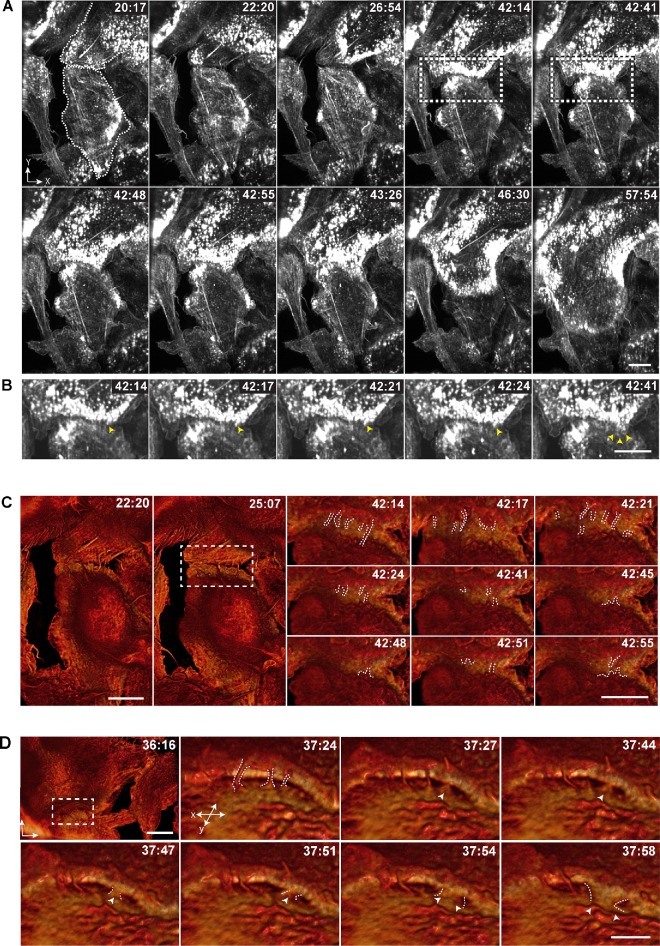
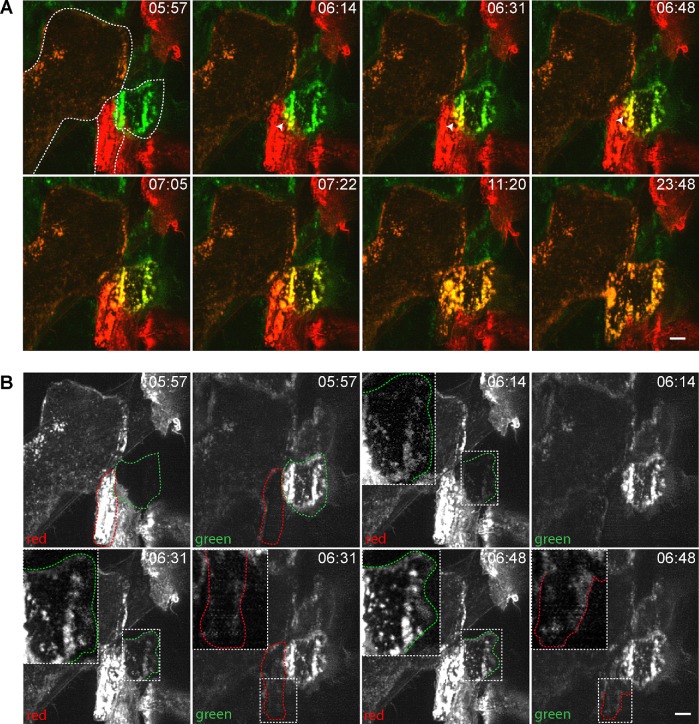
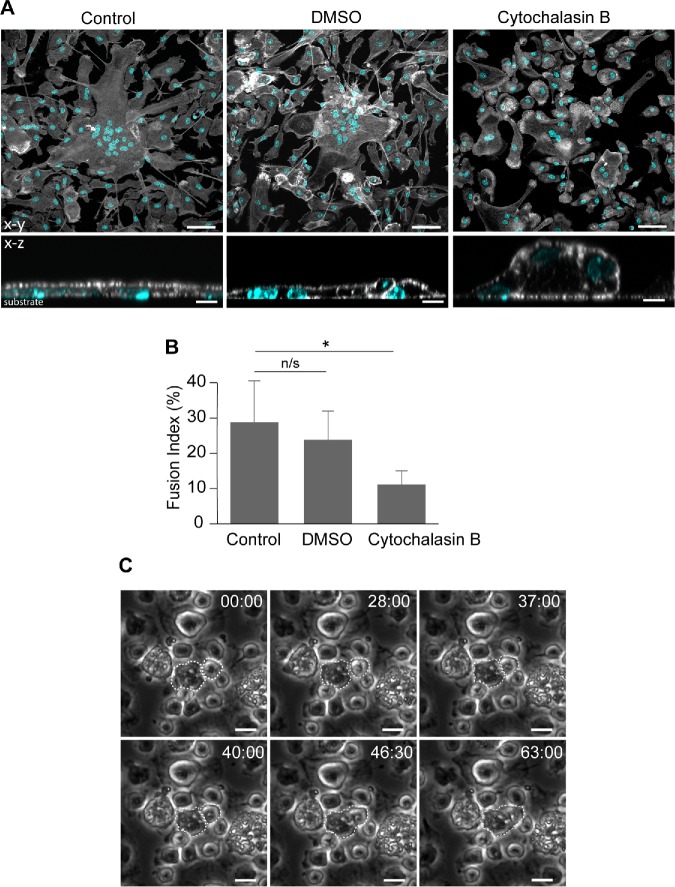
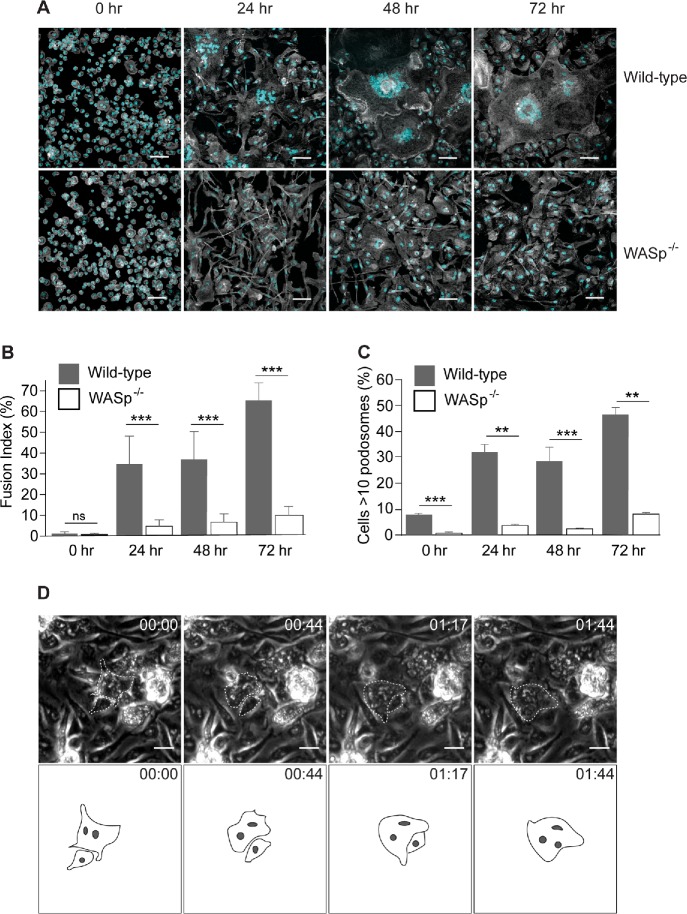
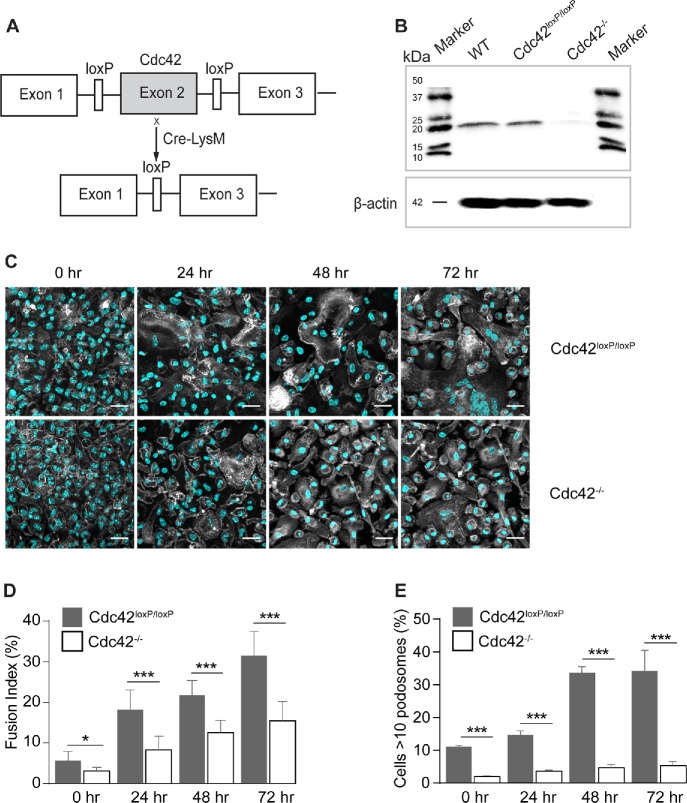
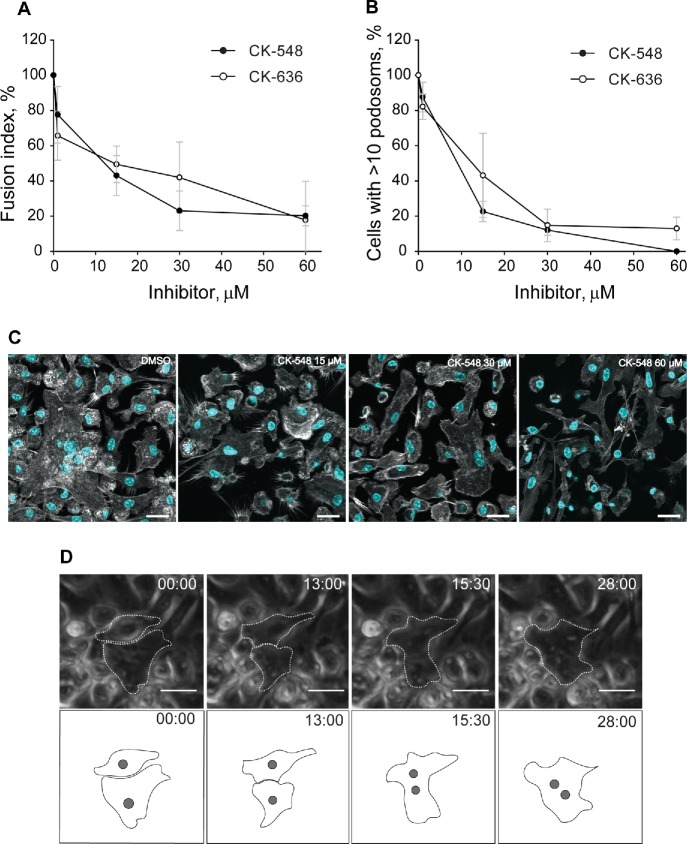
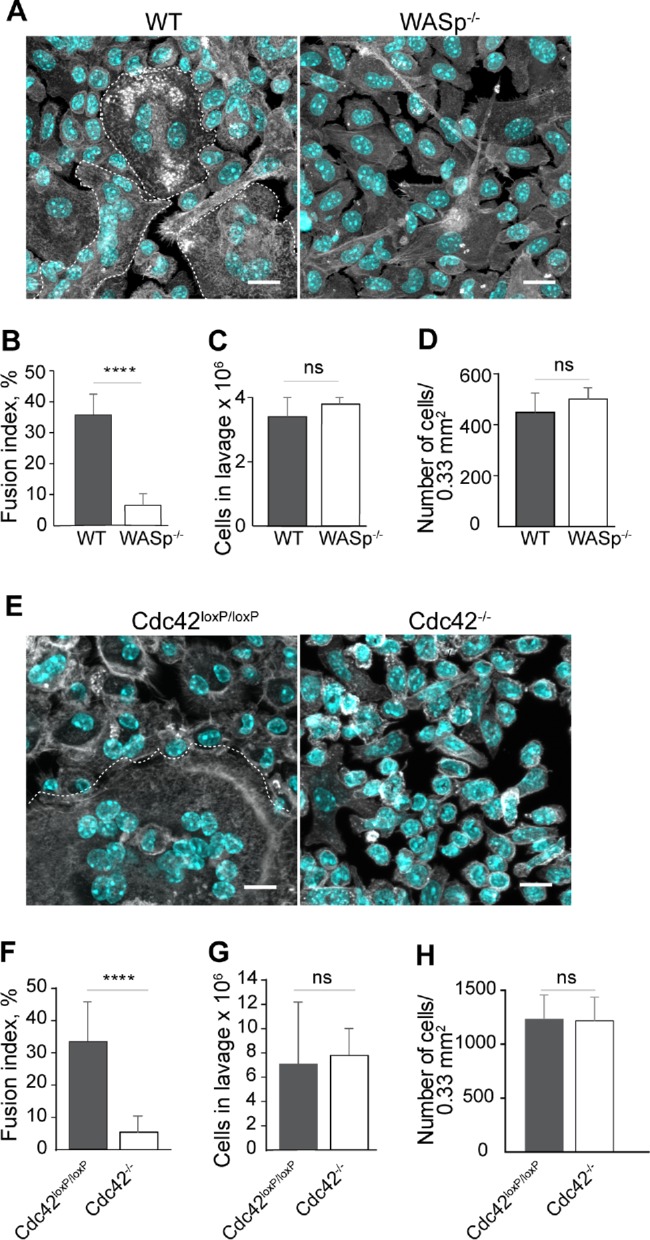
Macrophage fusion resulting in the formation of multinucleated giant cells occurs in a variety of chronic inflammatory diseases, yet the mechanism responsible for initiating this process is unknown. Here, we used live cell imaging to show that actin-based protrusions at the leading edge initiate macrophage fusion. Phase-contrast video microscopy demonstrated that in the majority of events, short protrusions (∼3 µm) between two closely apposed cells initiated fusion, but occasionally we observed long protrusions (∼12 µm). Using macrophages isolated from LifeAct mice and imaging with lattice light sheet microscopy, we further found that fusion-competent protrusions formed at sites enriched in podosomes. Inducing fusion in mixed populations of GFP- and mRFP-LifeAct macrophages showed rapid spatial overlap between GFP and RFP signal at the site of fusion. Cytochalasin B strongly reduced fusion and when rare fusion events occurred, protrusions were not observed. Fusion of macrophages deficient in Wiskott-Aldrich syndrome protein and Cdc42, key molecules involved in the formation of actin-based protrusions and podosomes, was also impaired both in vitro and in vivo. Finally, inhibiting the activity of the Arp2/3 complex decreased fusion and podosome formation. Together these data suggest that an actin-based protrusion formed at the leading edge initiates macrophage fusion.
巨噬细胞融合导致多核巨细胞的形成发生在多种慢性炎症性疾病中,但负责启动这一过程的机制尚不清楚。在这里,我们使用活细胞成像技术表明,前沿的基于肌动蛋白的突起引发了巨噬细胞融合。相差视频显微镜显示,在大多数事件中,两个紧密相邻的细胞之间的短突起(约 3 µm)引发融合,但偶尔我们也观察到长突起(约 12 µm)。使用从 LifeAct 小鼠中分离的巨噬细胞并通过晶格光片显微镜进行成像,我们进一步发现融合能力的突起形成在富含足突的部位。在 GFP 和 mRFP-LifeAct 巨噬细胞的混合群体中诱导融合,显示在融合部位 GFP 和 RFP 信号的快速空间重叠。细胞松弛素 B 强烈抑制融合,并且当罕见的融合事件发生时,不会观察到突起。在体外和体内,Wiskott-Aldrich 综合征蛋白和 Cdc42 缺陷的巨噬细胞的融合,这两种蛋白参与肌动蛋白依赖的突起和足突的形成,也受到损害。最后,抑制 Arp2/3 复合物的活性会降低融合和足突的形成。这些数据表明,前沿的基于肌动蛋白的突起的形成引发了巨噬细胞的融合。