Department of Medicine, Beth Israel Deaconess Medical Center, Harvard Medical School, Boston, MA 02215, USA.
Department of Cell Biology, Harvard Medical School, Boston, MA 02215, USA.
Cell Rep. 2019 Jun 25;27(13):3972-3987.e6. doi: 10.1016/j.celrep.2019.05.089.
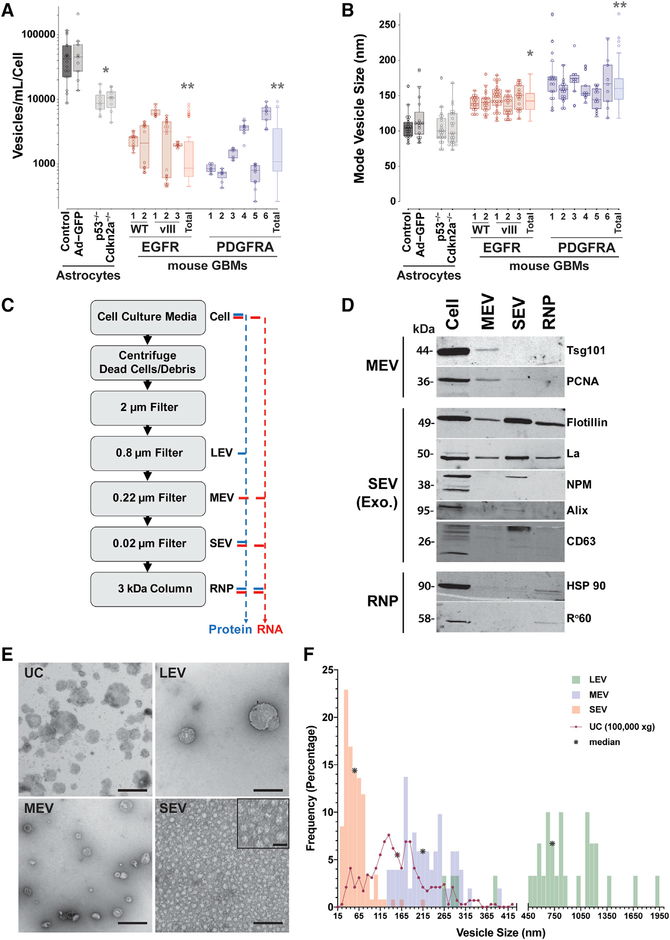
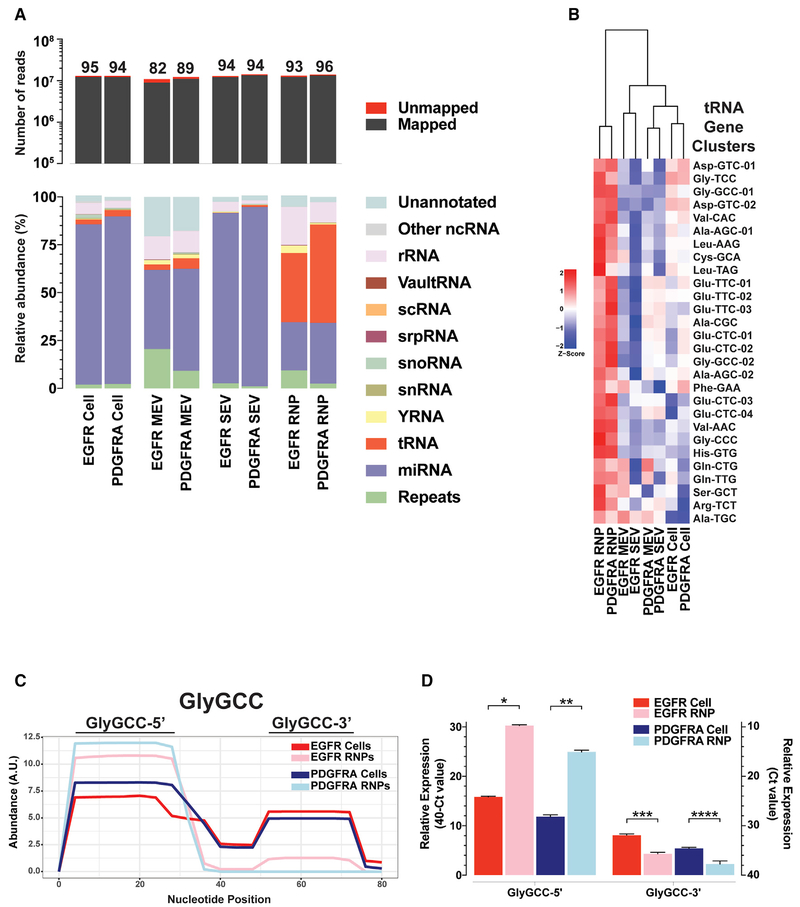
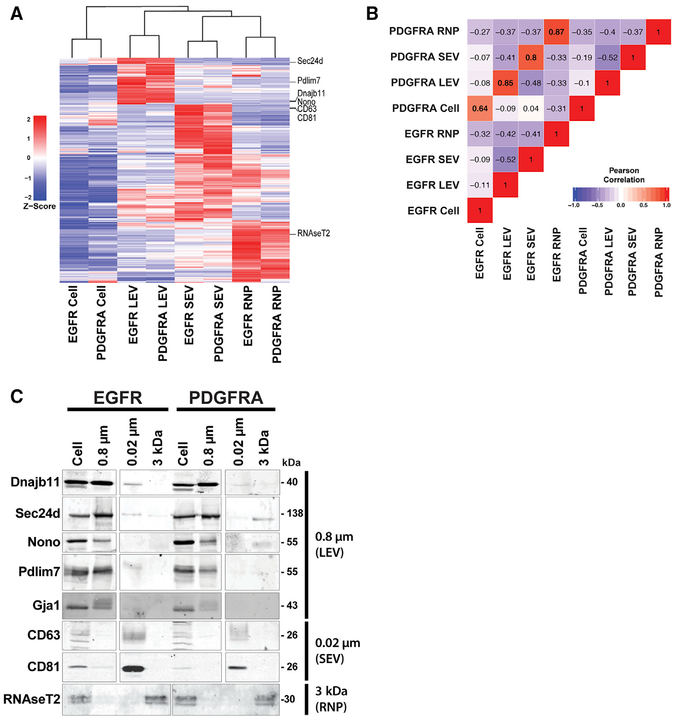
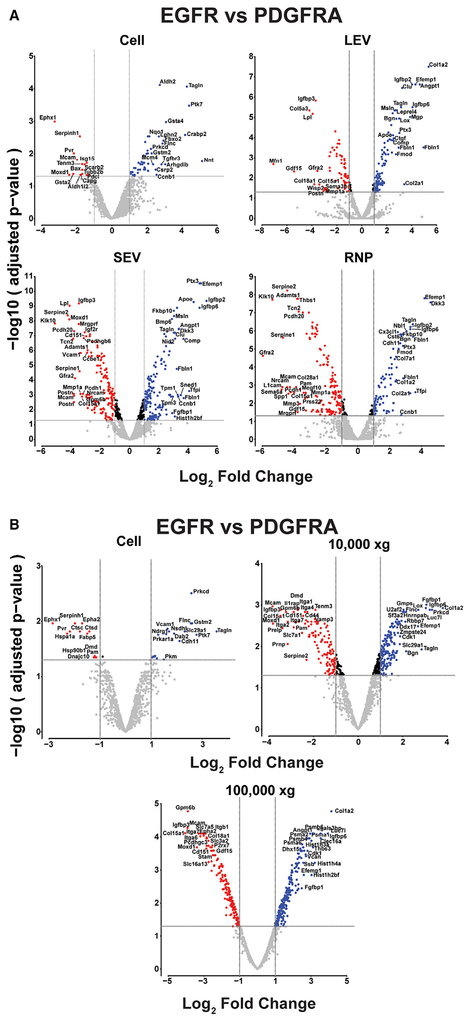
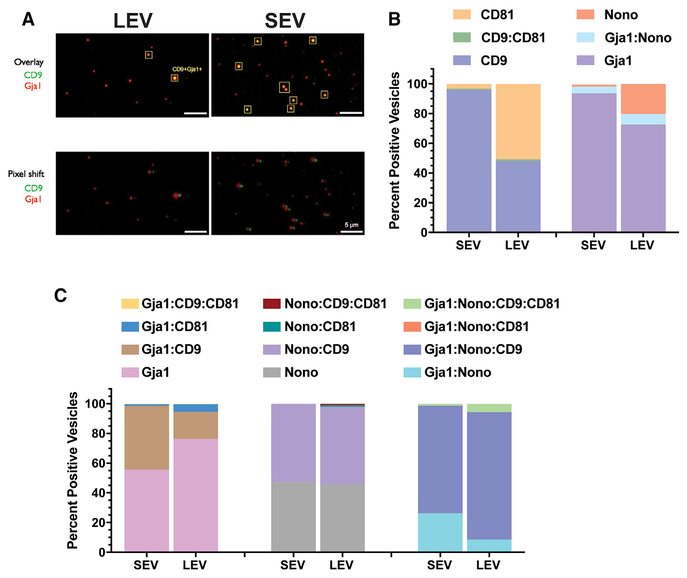
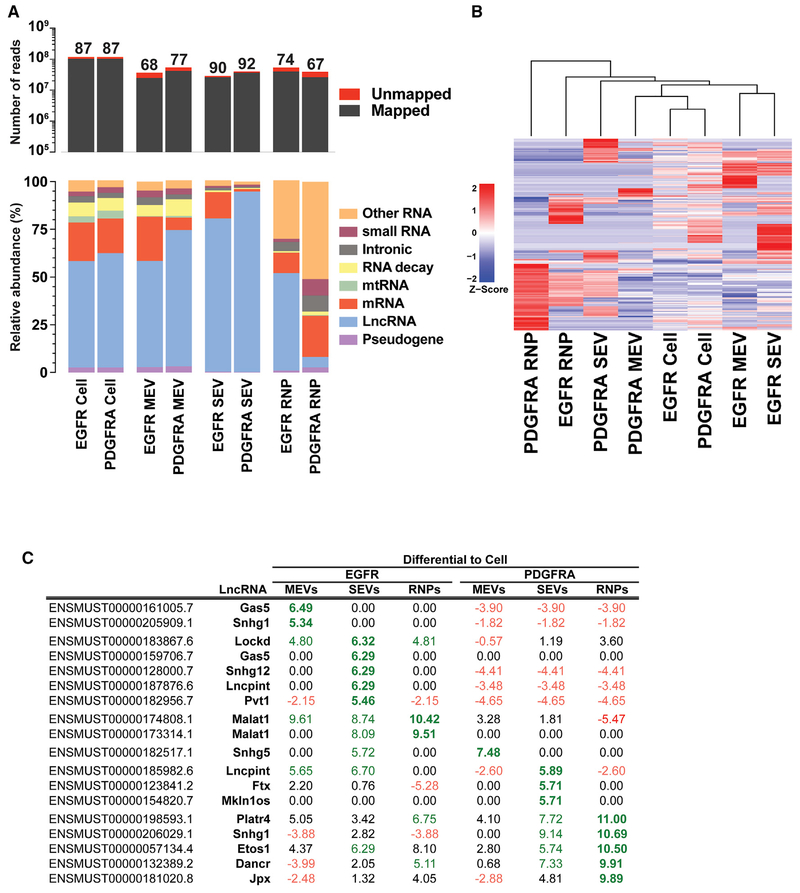
Cancer extracellular vesicles (EVs) are highly heterogeneous, which impedes our understanding of their function as intercellular communication agents and biomarkers. To deconstruct this heterogeneity, we analyzed extracellular RNAs (exRNAs) and extracellular proteins (exPTNs) from size fractionation of large, medium, and small EVs and ribonucleoprotein complexes (RNPs) from mouse glioblastoma cells by RNA sequencing and quantitative proteomics. mRNA from medium-sized EVs most closely reflects the cellular transcriptome, whereas small EV exRNA is enriched in small non-coding RNAs and RNPs contain precisely processed tRNA fragments. The exPTN composition of EVs and RNPs reveals that they are closely related by vesicle type, independent of their cellular origin, and single EV analysis reveals that small EVs are less heterogeneous in their protein content than larger ones. We provide a foundation for better understanding of segregation of macromolecules in glioma EVs through a catalog of diverse exRNAs and exPTNs.
癌症细胞外囊泡 (EVs) 具有高度异质性,这阻碍了我们理解它们作为细胞间通讯介质和生物标志物的功能。为了解构这种异质性,我们通过 RNA 测序和定量蛋白质组学分析了从小鼠神经胶质瘤细胞中大小分级的大、中、小 EV 以及核糖核蛋白复合物 (RNP) 中分离出的细胞外 RNA (exRNA) 和细胞外蛋白质 (exPTN)。来自中型 EV 的 mRNA 最能反映细胞的转录组,而小 EV exRNA 富含小非编码 RNA,并且 RNP 包含精确加工的 tRNA 片段。EV 和 RNP 的 exPTN 组成表明,它们通过囊泡类型密切相关,而与它们的细胞起源无关,并且通过对单个 EV 的分析表明,小 EV 的蛋白质含量比大 EV 的异质性更小。我们通过大量不同的 exRNA 和 exPTN 提供了一个更好地理解胶质瘤 EV 中大分子分隔的基础。