Marzullo Aldo, Kocevar Gabriel, Stamile Claudio, Durand-Dubief Françoise, Terracina Giorgio, Calimeri Francesco, Sappey-Marinier Dominique
CREATIS, CNRS UMR5220, INSERM U1206, Université de Lyon, Université Lyon 1, INSA-Lyon, Villeurbanne, France.
Department of Mathematics and Computer Science, University of Calabria, Rende, Italy.
Front Neurosci. 2019 Jun 12;13:594. doi: 10.3389/fnins.2019.00594. eCollection 2019.
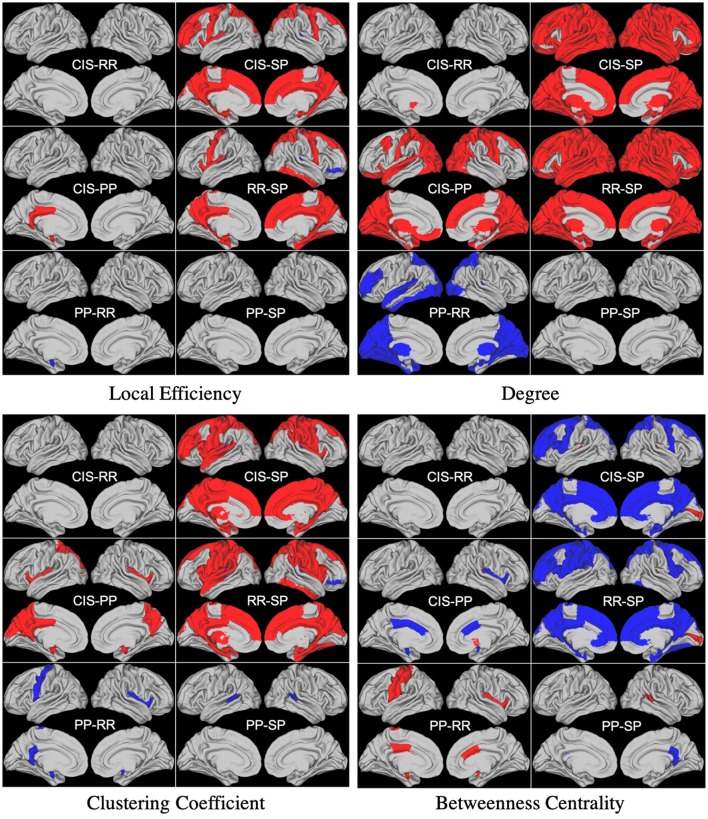
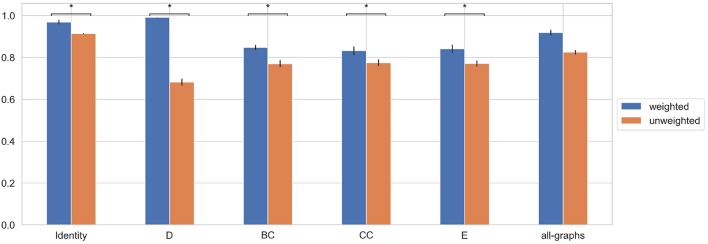
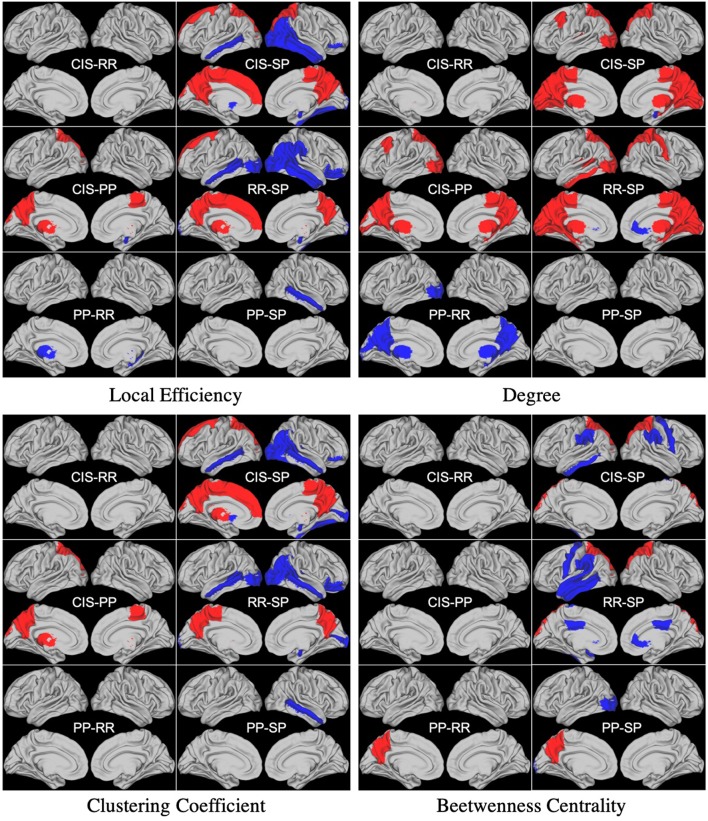
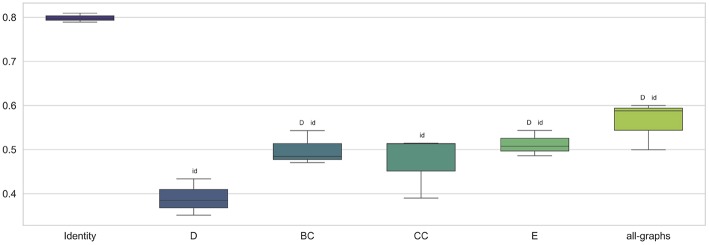
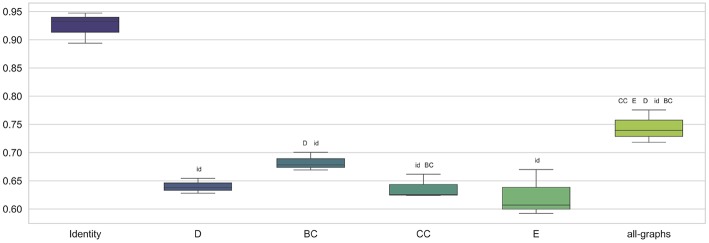
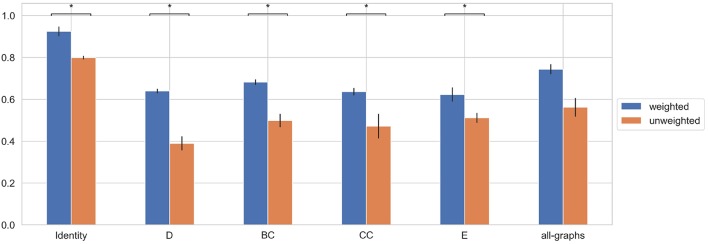
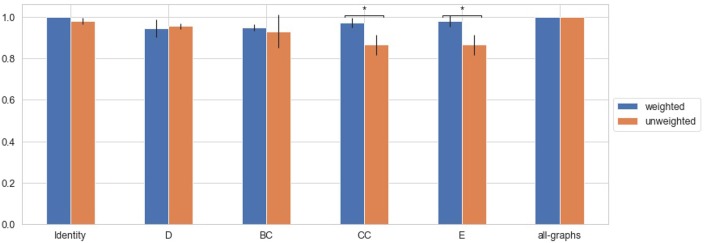
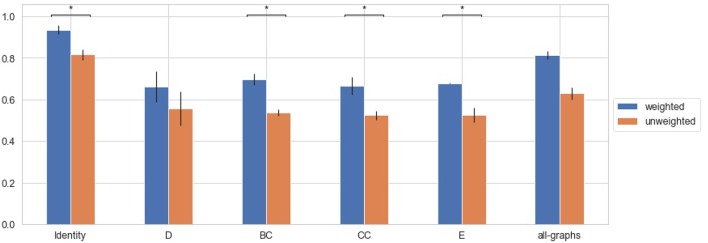
Recent advances in image acquisition and processing techniques, along with the success of novel deep learning architectures, have given the opportunity to develop innovative algorithms capable to provide a better characterization of neurological related diseases. In this work, we introduce a neural network based approach to classify Multiple Sclerosis (MS) patients into four clinical profiles. Starting from their structural connectivity information, obtained by diffusion tensor imaging and represented as a graph, we evaluate the classification performances using unweighted and weighted connectivity matrices. Furthermore, we investigate the role of graph-based features for a better characterization and classification of the pathology. Ninety MS patients (12 clinically isolated syndrome, 30 relapsing-remitting, 28 secondary-progressive, and 20 primary-progressive) along with 24 healthy controls, were considered in this study. This work shows the great performances achieved by neural networks methods in the classification of the clinical profiles. Furthermore, it shows local graph metrics do not improve the classification results suggesting that the latent features created by the neural network in its layers have a much important informative content. Finally, we observe that graph weights representation of brain connections preserve important information to discriminate between clinical forms.
图像采集和处理技术的最新进展,以及新型深度学习架构的成功,为开发能够更好地表征神经相关疾病的创新算法提供了机会。在这项工作中,我们引入了一种基于神经网络的方法,将多发性硬化症(MS)患者分为四种临床类型。从通过扩散张量成像获得并表示为图形的结构连接信息开始,我们使用未加权和加权连接矩阵评估分类性能。此外,我们研究基于图形的特征在更好地表征和分类病理学方面的作用。本研究纳入了90名MS患者(12例临床孤立综合征、30例复发缓解型、28例继发进展型和20例原发进展型)以及24名健康对照。这项工作展示了神经网络方法在临床类型分类中取得的优异性能。此外,研究表明局部图形指标并不能改善分类结果,这表明神经网络在其各层中创建的潜在特征具有更重要的信息内容。最后,我们观察到大脑连接性的图形权重表示保留了区分临床类型的重要信息。