Nava Eduardo, Llorens Silvia
Department of Medical Sciences, Faculty of Medicine of Albacete, Centro Regional de Investigaciones Biomédicas (CRIB), University of Castilla-La Mancha, Albacete, Spain.
Front Physiol. 2019 Jun 12;10:729. doi: 10.3389/fphys.2019.00729. eCollection 2019.
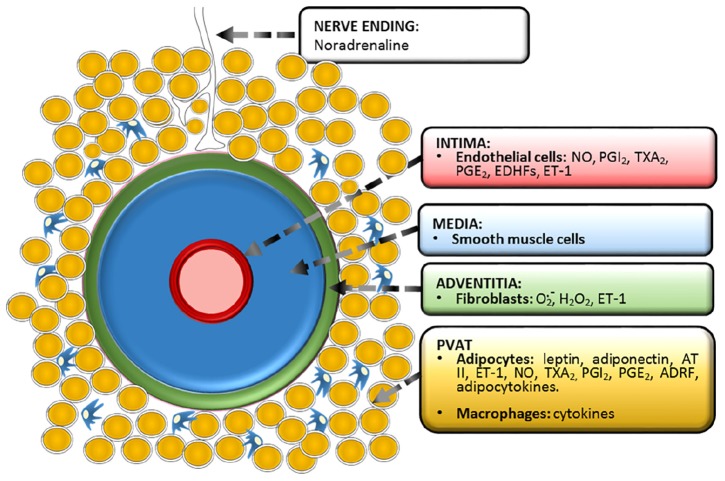
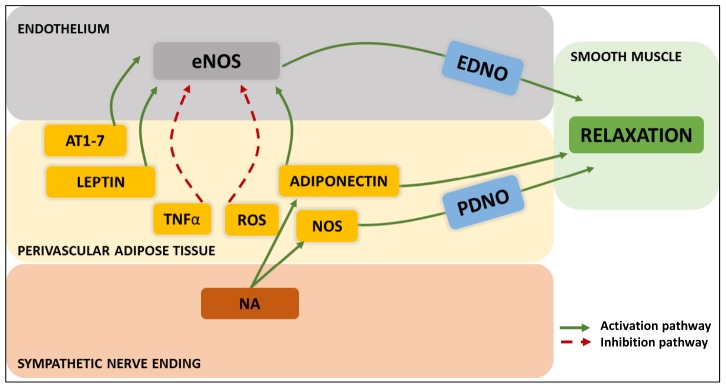
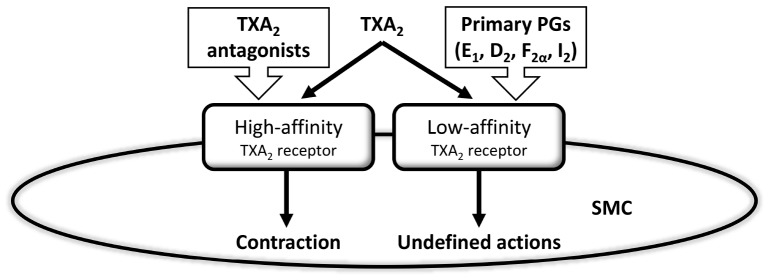
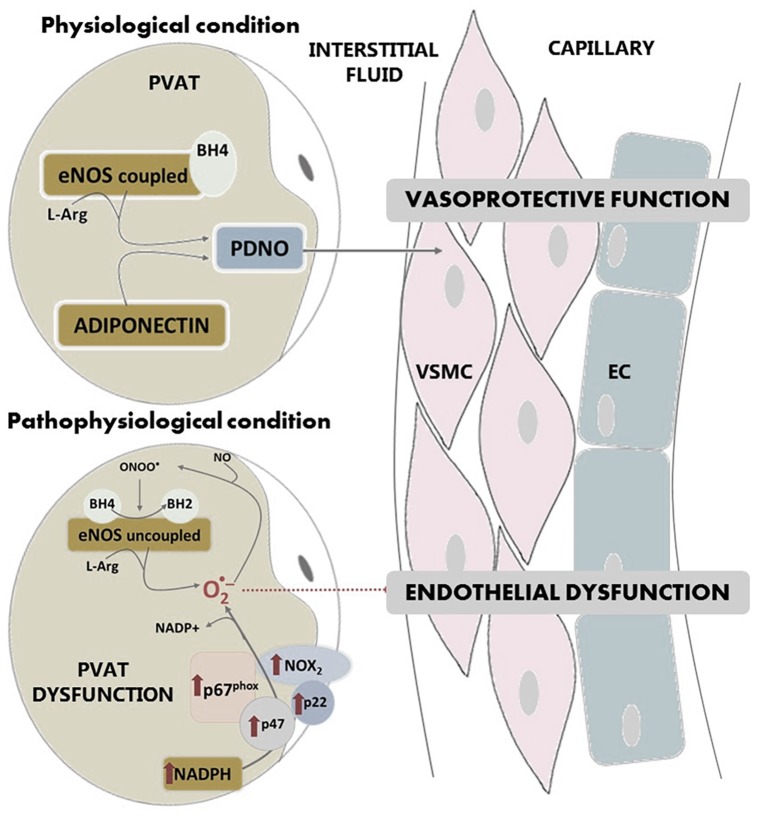
Our understanding of the regulation of vascular function, specifically that of vasomotion, has evolved dramatically over the past few decades. The classic conception of a vascular system solely regulated by circulating hormones and sympathetic innervation gave way to a vision of a local regulation. Initially by the so-called, autacoids like prostacyclin, which represented the first endothelium-derived paracrine regulator of smooth muscle. This was the prelude of the EDRF-nitric oxide age that has occupied vascular scientists for nearly 30 years. Endothelial cells revealed to have the ability to generate numerous mediators besides prostacyclin and nitric oxide (NO). The need to classify these substances led to the coining of the terms: endothelium-derived relaxing, hyperpolarizing and contracting factors, which included various prostaglandins, thromboxane A2, endothelin, as well numerous candidates for the hyperpolarizing factor. The opposite layer of the vascular wall, the adventitia, eventually and for a quite short period of time, enjoyed the attention of some vascular physiologists. Adventitial fibroblasts were recognized as paracrine cells to the smooth muscle because of their ability to produce some substances such as superoxide. Remarkably, this took place before our awareness of the functional potential of another adventitial cell, the adipocyte. Possibly, because the perivascular adipose tissue (PVAT) was systematically removed during the experiments as considered a non-vascular artifact tissue, it took quite long to be considered a major source of paracrine substances. These are now being integrated in the vast pool of mediators synthesized by adipocytes, known as adipokines. They include hormones involved in metabolic regulation, like leptin or adiponectin; classic vascular mediators like NO, angiotensin II or catecholamines; and inflammatory mediators or adipocytokines. The first substance studied was an anti-contractile factor named adipose-derived relaxing factor of uncertain chemical nature but possibly, some of the relaxing mediators mentioned above are behind this factor. This manuscript intends to review the vascular regulation from the point of view of the paracrine control exerted by the cells present in the vascular environment, namely, endothelial, adventitial, adipocyte and vascular stromal cells.
在过去几十年里,我们对血管功能调节,尤其是血管运动调节的理解发生了巨大变化。血管系统仅由循环激素和交感神经支配调节的经典概念,已被局部调节的观点所取代。最初是由所谓的自分泌物质,如前列环素,它是平滑肌的首个内皮衍生旁分泌调节因子。这是内皮舒张因子 - 一氧化氮时代的前奏,该时代占据了血管科学家近30年。内皮细胞被发现除了前列环素和一氧化氮(NO)外,还能够产生多种介质。对这些物质进行分类的需求导致了以下术语的产生:内皮衍生舒张因子、超极化因子和收缩因子,其中包括各种前列腺素、血栓素A2、内皮素,以及众多超极化因子的候选物质。血管壁的另一层,即外膜,最终在相当短的一段时间内受到了一些血管生理学家的关注。外膜成纤维细胞因其能够产生一些物质,如超氧化物,而被认为是平滑肌的旁分泌细胞。值得注意的是,这发生在我们认识到另一种外膜细胞——脂肪细胞的功能潜力之前。可能是因为在实验过程中,血管周围脂肪组织(PVAT)被系统地去除,被视为非血管伪像组织,所以花了很长时间才被认为是旁分泌物质的主要来源。现在,这些物质正被整合到脂肪细胞合成的大量介质中,即脂肪因子。它们包括参与代谢调节的激素,如瘦素或脂联素;经典的血管介质,如NO、血管紧张素II或儿茶酚胺;以及炎症介质或脂肪细胞因子。研究的第一种物质是一种抗收缩因子,名为脂肪衍生舒张因子,其化学性质不确定,但可能上述一些舒张介质就是该因子的背后原因。本手稿旨在从血管环境中存在的细胞,即内皮细胞、外膜细胞、脂肪细胞和血管基质细胞所施加的旁分泌控制的角度,回顾血管调节。