Curatio International Foundation, Tbilisi, Georgia.
UNAIDS, Geneva, Switzerland.
Glob Health Sci Pract. 2019 Jun 27;7(2):258-272. doi: 10.9745/GHSP-D-18-00425. Print 2019 Jun.
In the era of declining development assistance for health, transitioning externally funded programs to governments becomes a priority for donors. However, the process requires a careful approach not only to preserve the public health gains that have already been achieved but also to expand on them. In the Eastern Europe and Central Asia region, countries are expected to graduate from support from the Global Fund to Fight AIDS, Tuberculosis and Malaria in or before 2025. We aim to describe transition risks and identify possible means to address them.
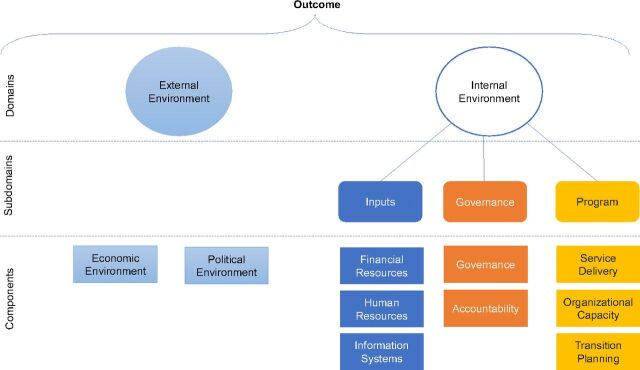
Using a theory-based conceptual framework-Transition Preparedness Assessment of Tuberculosis and HIV/AIDS programs-we investigated transition-related challenges through a health systems lens in 10 countries of the Eastern Europe and Central Asia region during 2015-2017. Study findings were derived from systematic collection of quantitative data on socioeconomic indicators and disease epidemics as well as qualitative data from in-depth interviews with 264 stakeholders. These findings were then compared with other donor transition experiences documented elsewhere.
We found numerous common transition challenges, such as poor monitoring of a country's macroeconomic performance along with weakness in estimating financial needs for successful transition; limited political will of governments to replace donor-funded programs; punitive legislation criminalizing certain behaviors and constraining the government's ability to allocate funds and contract civil society organizations essential to providing services for key populations; limited coordination function of governments and weak decision-making power of coordinating mechanisms obscuring the latter's future role; and inadequate function of national procurement and supply chain management systems undermining an uninterrupted supply of quality-assured drugs and commodities. These challenges are compounded by the risks related to health workforce management leading to specialist shortages and/or inadequately skilled and qualified professionals and by limited funding for critical surveillance activities.
The complex and multidimensional transition process requires a multipronged approach through well-planned collective and coordinated responses from global, bilateral, and national partners in coming years. Other similar transition processes may provide guidance. Although no "one-size-fits-all" approach exists, previous experiences highlight a need for both early planning and monitoring of the transition along several key dimensions. Issues that could threaten the maintenance of health gains include ongoing stigma against key populations; continued heavy reliance on external funding in some countries, especially for preventive services; the institutional viability of the country coordinating mechanisms; and emerging difficulties with procurement of quality drugs at reasonable prices.
在发展援助卫生资金不断减少的时代,将外部供资的项目过渡给政府成为捐助者的当务之急。然而,这一过程不仅需要谨慎处理,以维护已经取得的公共卫生成果,而且需要在此基础上进一步发展。在东欧和中亚地区,各国预计将在 2025 年或之前从全球抗击艾滋病、结核病和疟疾基金获得的支持中毕业。我们旨在描述过渡风险,并确定解决这些风险的可能方法。
使用基于理论的概念框架——结核病和艾滋病毒/艾滋病规划的过渡准备评估,我们从卫生系统的角度调查了 10 个东欧和中亚国家在 2015-2017 年期间与过渡相关的挑战。研究结果源自对社会经济指标和疾病流行情况的定量数据的系统收集,以及对 264 名利益攸关方的深入访谈的定性数据。然后将这些结果与其他捐助者在别处记录的过渡经验进行了比较。
我们发现了许多共同的过渡挑战,例如监测一国宏观经济表现的能力较差,同时难以估计成功过渡所需的财政需求;政府替换供资方案的政治意愿有限;惩罚性立法将某些行为定罪,并限制政府分配资金和与民间社会组织签订合同的能力,这些组织对于向重点人群提供服务至关重要;政府的协调职能有限,协调机制的决策能力较弱,掩盖了后者的未来作用;国家采购和供应链管理系统功能不足,破坏了质量保证药物和商品的不间断供应。由于与卫生人力管理相关的风险,这些挑战更加复杂,导致专业人员短缺和/或专业人员技能和资质不足,以及用于关键监测活动的资金有限。
复杂和多层面的过渡进程需要通过全球、双边和国家伙伴在未来几年采取多管齐下的方法,进行精心规划的集体和协调应对。其他类似的过渡进程可能提供指导。尽管不存在“一刀切”的方法,但以往的经验表明,需要在几个关键方面提前规划和监测过渡。可能威胁到维护卫生成果的问题包括对重点人群的持续污名化;一些国家继续严重依赖外部供资,尤其是用于预防服务;国家协调机制的机构可行性;以及以合理价格采购高质量药物方面出现的新困难。
