Inflammation Program, University of Iowa, Iowa City, IA, United States of America.
Department of Internal Medicine, University of Iowa, Iowa City, IA, United States of America.
PLoS Negl Trop Dis. 2019 Jul 1;13(7):e0007533. doi: 10.1371/journal.pntd.0007533. eCollection 2019 Jul.
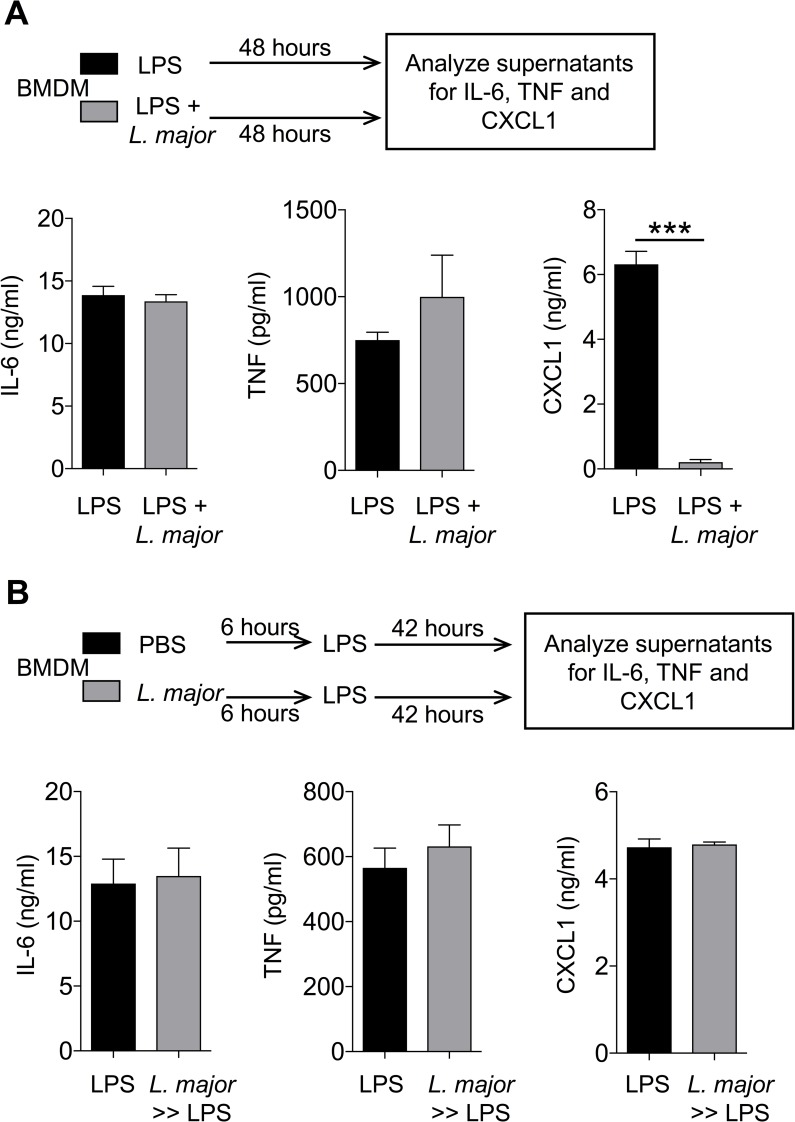
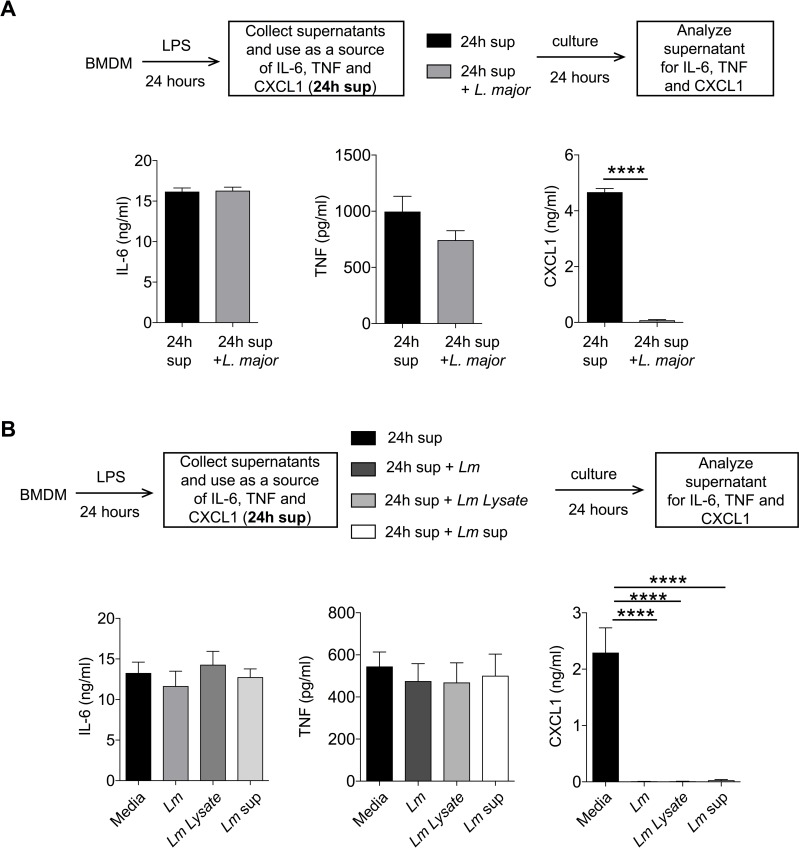
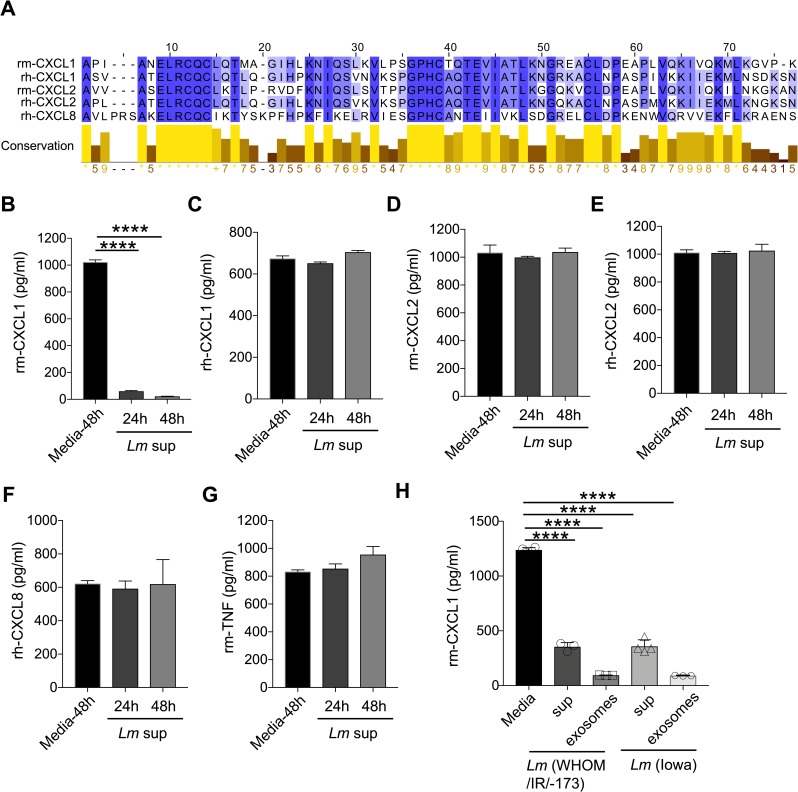
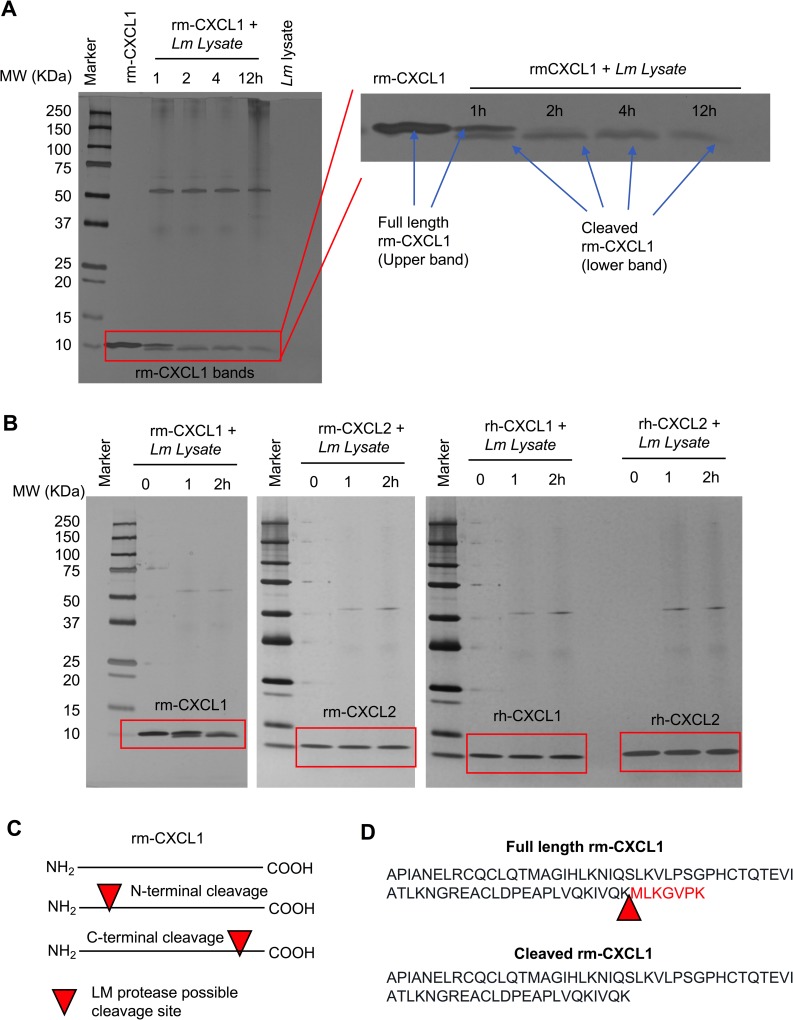
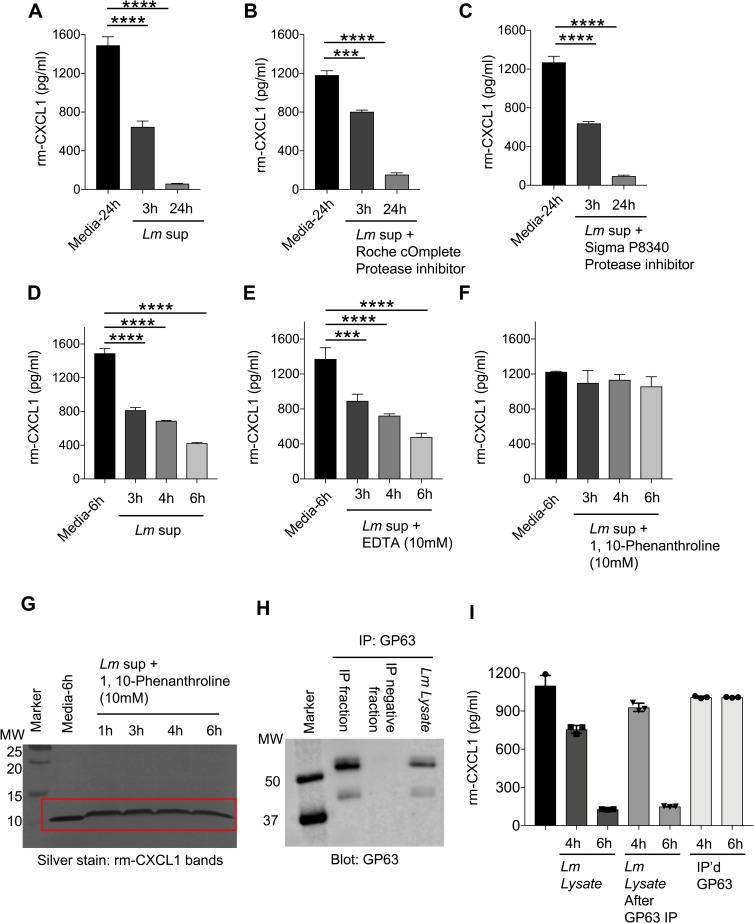
Leishmaniasis is a global health problem with an estimated report of 2 million new cases every year and more than 1 billion people at risk of contracting this disease in endemic areas. The innate immune system plays a central role in controlling L. major infection by initiating a signaling cascade that results in production of pro-inflammatory cytokines and recruitment of both innate and adaptive immune cells. Upon infection with L. major, CXCL1 is produced locally and plays an important role in the recruitment of neutrophils to the site of infection. Herein, we report that L. major specifically targets murine CXCL1 for degradation. The degradation of CXCL1 is not dependent on host factors as L. major can directly degrade recombinant CXCL1 in a cell-free system. Using mass spectrometry, we discovered that the L. major protease cleaves at the C-terminal end of murine CXCL1. Finally, our data suggest that L. major metalloproteases are involved in the direct cleavage and degradation of CXCL1, and a synthetic peptide spanning the CXCL1 cleavage site can be used to inhibit L. major metalloprotease activity. In conclusion, our study has identified an immune evasion strategy employed by L. major to evade innate immune responses in mice, likely reservoirs in the endemic areas, and further highlights that targeting these L. major metalloproteases may be important in controlling infection within the reservoir population and transmittance of the disease.
利什曼病是一个全球性的健康问题,据估计每年有 200 万例新发病例,在流行地区有超过 10 亿人面临感染这种疾病的风险。先天免疫系统在控制 L. major 感染中起着核心作用,它启动信号级联反应,导致促炎细胞因子的产生和固有免疫和适应性免疫细胞的募集。在感染 L. major 后,CXCL1 在局部产生,并在招募中性粒细胞到感染部位方面发挥重要作用。在此,我们报告 L. major 专门针对小鼠 CXCL1 进行降解。CXCL1 的降解不依赖于宿主因素,因为 L. major 可以在无细胞系统中直接降解重组 CXCL1。通过质谱分析,我们发现 L. major 蛋白酶在小鼠 CXCL1 的 C 端末端切割。最后,我们的数据表明,L. major 金属蛋白酶参与了 CXCL1 的直接切割和降解,跨越 CXCL1 切割位点的合成肽可用于抑制 L. major 金属蛋白酶的活性。总之,我们的研究确定了 L. major 逃避先天免疫反应的免疫逃避策略,可能是流行地区的潜在宿主,进一步强调了靶向这些 L. major 金属蛋白酶可能对控制储存人群中的感染和疾病传播很重要。