Mukherjee Shayanti, Darzi Saeedeh, Paul Kallyanashis, Werkmeister Jerome A, Gargett Caroline E
The Ritchie Centre, Hudson Institute of Medical Research, Clayton, Victoria 3168, Australia.
Department of Obstetrics and Gynaecology, Monash University, Clayton, Victoria 3168, Australia.
Interface Focus. 2019 Aug 6;9(4):20180089. doi: 10.1098/rsfs.2018.0089. Epub 2019 Jun 14.
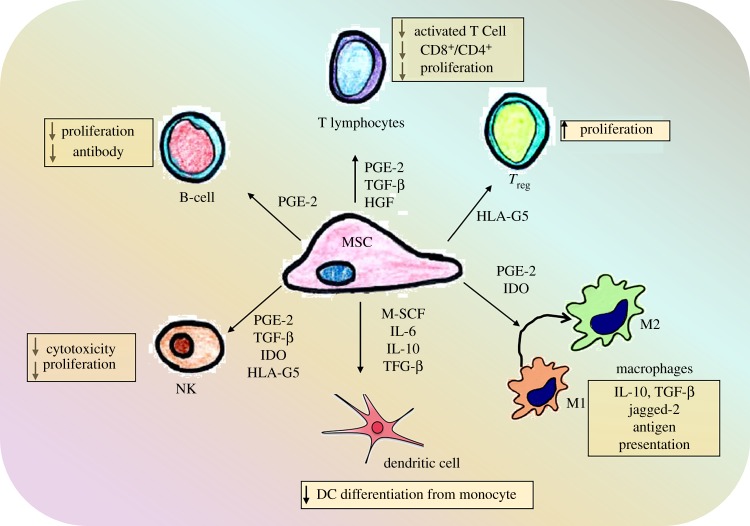
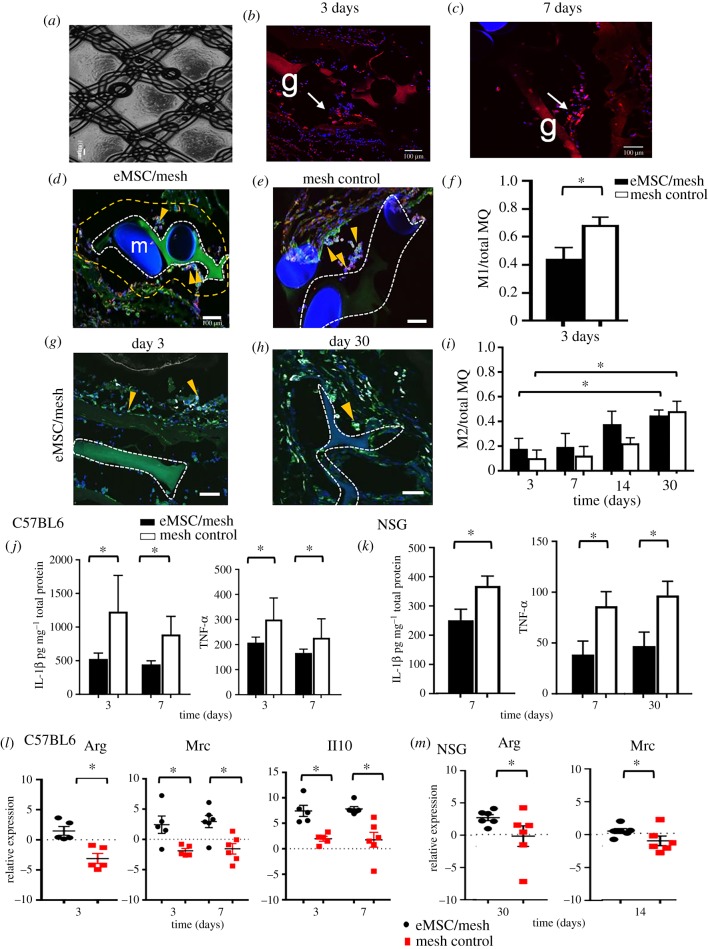
An excessive foreign body response (FBR) has contributed to the adverse events associated with polypropylene mesh usage for augmenting pelvic organ prolapse surgery. Consequently, current biomaterial research considers the critical role of the FBR and now focuses on developing better biocompatible biomaterials rather than using inert implants to improve the clinical outcomes of their use. Tissue engineering approaches using mesenchymal stem cells (MSCs) have improved outcomes over traditional implants in other biological systems through their interaction with macrophages, the main cellular player in the FBR. The unique angiogenic, immunomodulatory and regenerative properties of MSCs have a direct impact on the FBR following biomaterial implantation. In this review, we focus on key aspects of the FBR to tissue-engineered MSC-based implants for supporting pelvic organs and beyond. We also discuss the immunomodulatory effects of the recently discovered endometrial MSCs on the macrophage response to new biomaterials designed for use in pelvic floor reconstructive surgery. We conclude with a focus on considerations in biomaterial design that take into account the FBR and will likely influence the development of the next generation of biomaterials for gynaecological applications.
过度的异物反应(FBR)导致了与聚丙烯网片用于盆底器官脱垂手术相关的不良事件。因此,当前的生物材料研究认识到FBR的关键作用,现在专注于开发生物相容性更好的生物材料,而不是使用惰性植入物来改善其使用的临床结果。在其他生物系统中,使用间充质干细胞(MSC)的组织工程方法通过与巨噬细胞(FBR中的主要细胞参与者)相互作用,比传统植入物取得了更好的效果。MSC独特的血管生成、免疫调节和再生特性对生物材料植入后的FBR有直接影响。在这篇综述中,我们关注FBR对基于MSC的组织工程植入物支撑盆腔器官及其他方面的关键作用。我们还讨论了最近发现的子宫内膜MSC对巨噬细胞对用于盆底重建手术的新型生物材料反应的免疫调节作用。我们最后重点讨论生物材料设计中考虑FBR的因素,这些因素可能会影响下一代妇科应用生物材料的开发。