Glaser Tjaša Kraševac, Plohl Olivija, Vesel Alenka, Ajdnik Urban, Ulrih Nataša Poklar, Hrnčič Maša Knez, Bren Urban, Fras Zemljič Lidija
Laboratory for Characterization and Processing of Polymers, Faculty of Mechanical Engineering, University of Maribor, Smetanova 17, SI-2000 Maribor, Slovenia.
Department of Surface Engineering and Optoelectronics, Jožef Stefan Institute, Teslova 30, SI-1000 Ljubljana, Slovenia.
Materials (Basel). 2019 Jul 1;12(13):2118. doi: 10.3390/ma12132118.
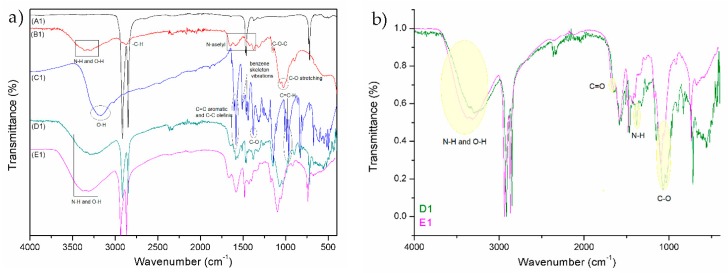
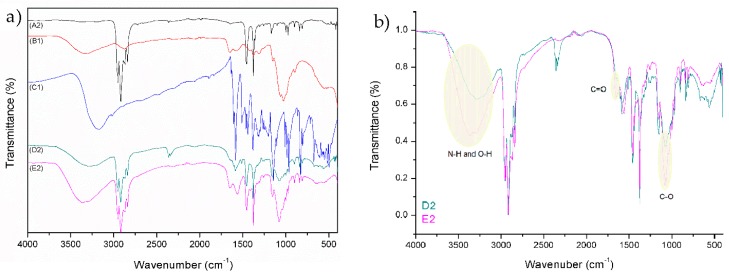
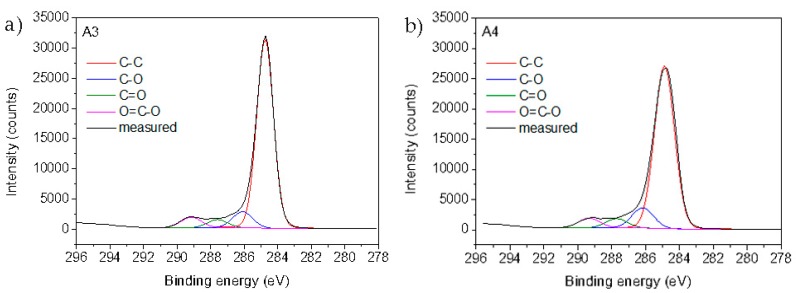
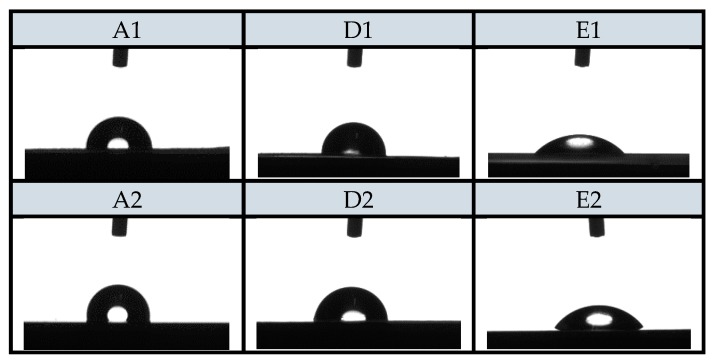
The present paper reports a novel method to improve the properties of polyethylene (PE) and polypropylene (PP) polymer foils suitable for applications in food packaging. It relates to the adsorption of chitosan-colloidal systems onto untreated and oxygen plasma-treated foil surfaces. It is hypothesized that the first coated layer of chitosan macromolecular solution enables excellent antibacterial properties, while the second (uppermost) layer contains a network of polyphenol resveratrol, embedded into chitosan nanoparticles, which enables antioxidant and antimicrobial properties simultaneously. X-ray photon spectroscopy (XPS) and infrared spectroscopy (FTIR) showed successful binding of both coatings onto foils as confirmed by gravimetric method. In addition, both attached layers (chitosan macromolecular solution and dispersion of chitosan nanoparticles with incorporated resveratrol) onto foils reduced oxygen permeability and wetting contact angle of foils; the latter indicates good anti-fog foil properties. Reduction of both oxygen permeability and wetting contact angle is more pronounced when foils are previously activated by O plasma. Moreover, oxygen plasma treatment improves stability and adhesion of chitosan structured adsorbates onto PP and PE foils. Foils also exhibit over 90% reduction of and over 77% reduction of as compared to untreated foils and increase antioxidant activity for over a factor of 10. The present method may be useful in different packaging applications such as food (meat, vegetables, dairy, and bakery products) and pharmaceutical packaging, where such properties of foils are desired.
本文报道了一种改进适用于食品包装的聚乙烯(PE)和聚丙烯(PP)聚合物薄膜性能的新方法。它涉及壳聚糖胶体系统在未处理和氧等离子体处理的薄膜表面上的吸附。据推测,壳聚糖大分子溶液的第一层涂层具有优异的抗菌性能,而第二层(最上层)包含嵌入壳聚糖纳米颗粒中的多酚白藜芦醇网络,可同时实现抗氧化和抗菌性能。X射线光电子能谱(XPS)和红外光谱(FTIR)表明,通过重量法证实,两种涂层均成功地结合到了薄膜上。此外,附着在薄膜上的两层(壳聚糖大分子溶液和含有白藜芦醇的壳聚糖纳米颗粒分散体)均降低了薄膜的透氧率和湿润接触角;后者表明薄膜具有良好的防雾性能。当薄膜预先用氧等离子体活化时,透氧率和湿润接触角的降低更为明显。此外,氧等离子体处理提高了壳聚糖结构吸附物在PP和PE薄膜上的稳定性和附着力。与未处理的薄膜相比,薄膜的[具体物质1]减少了90%以上,[具体物质2]减少了77%以上,抗氧化活性提高了10倍以上。本方法可用于不同的包装应用,如食品(肉类、蔬菜、乳制品和烘焙产品)和药品包装,这些包装需要薄膜具备此类性能。