Chen Yen-Ming, Huang Jian-Zhi, Hou Ting-Wen, Pan I-Chun
Department of Horticulture, National Chung Hsing University, No. 145, Xingda Road, Taichung, 402, Taiwan.
Department of Plant Industry, National Pingtung University of Science and Technology, No. 1, Shuefu Road, Neipu, 912, Pingtung, Taiwan.
Bot Stud. 2019 Jul 2;60(1):10. doi: 10.1186/s40529-019-0257-y.
Haworthia are desert succulents belonging to the Asphodelaceae family. Haworthia species are cultivated commercially as ornamentals and some rare species are quite valuable at retail market but growth slowly and difficult to propagation. However, an efficient micropropagation protocol was remained insufficient.
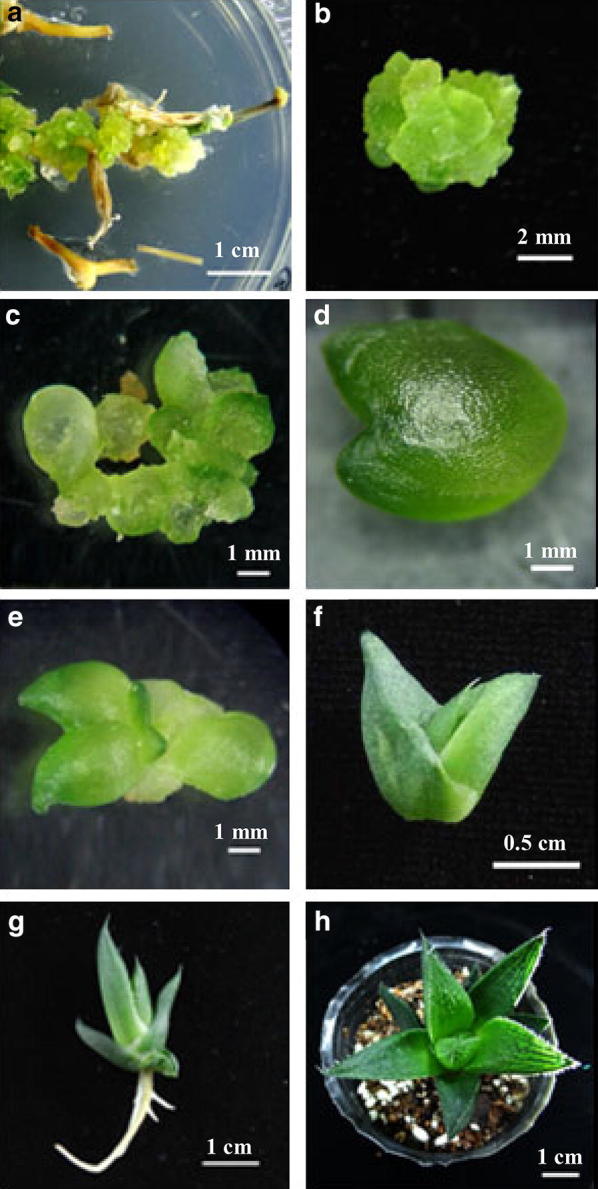
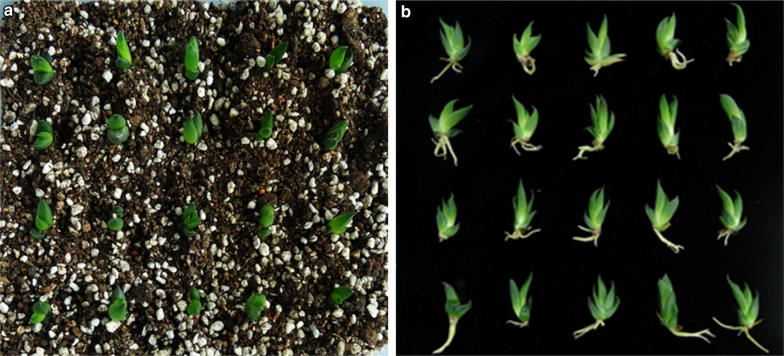
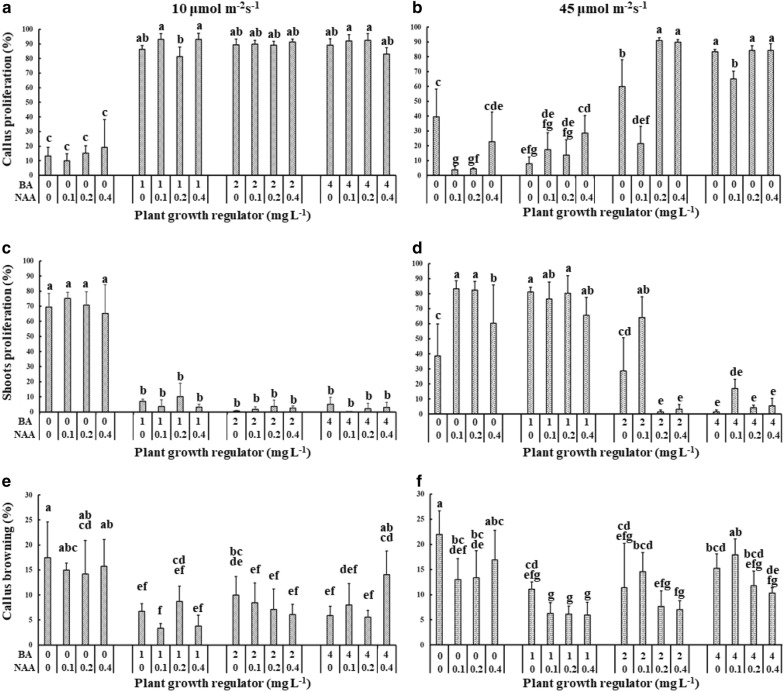
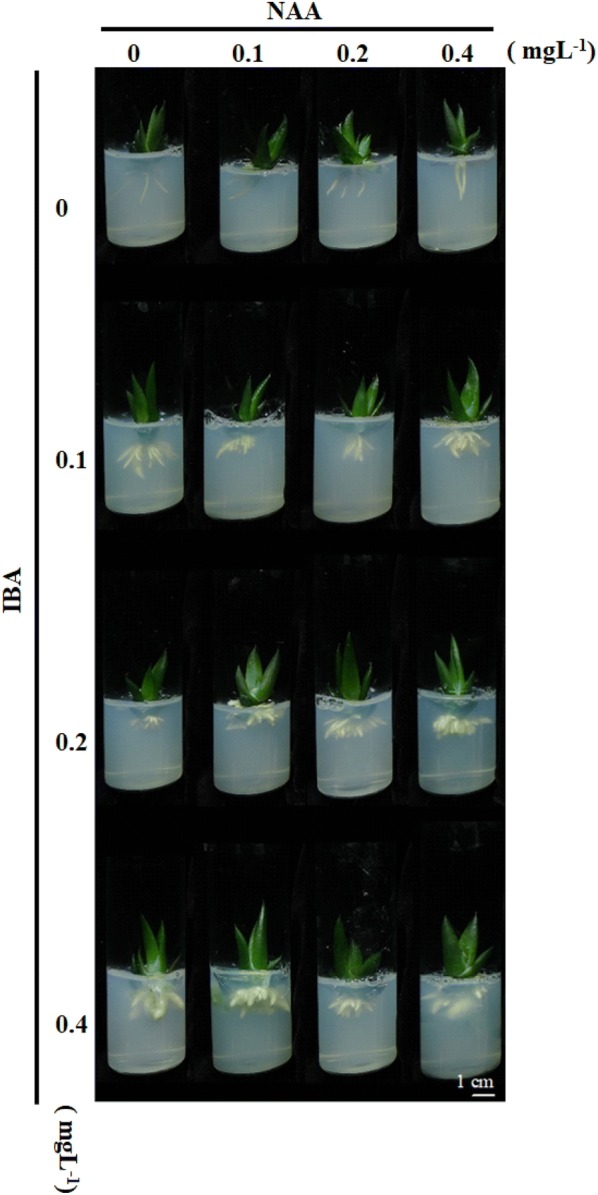
The organogenic cultures obtained from inflorescence explants were cultured on Murashige and Skoog (MS) medium supplemented with various combinations of 6-benzylaminopurine (BA) and α-naphthalene acetic acid (NAA) under a light intensity of 10 μmol m s or 45 μmol m s. The highest callus proliferation index (93.15%) with 1.0 mg L BA + 0.1 mg L NAA under a light intensity of 10 μmol m s. The best shoot proliferation rates were on media with either 1 mg L BA + 0-0.4 mg L NAA (65.57-81.01%) under a light intensity of 45 μmol m s. The highest root length (15.57 mm) and the highest rooting frequency (17 roots per shoot) were obtained when adventitious shoots were inoculated on MS medium with 0.4 mg L NAA + 0.4 mg L IBA. The survival rate of the transplanted plantlets was about 100%. The efficient micropropagation protocol proliferated Haworthia regenerate plants from inflorescence within 11 weeks.
The present study determined the best combination of light intensity and plant growth regulators (PGRs) for improved organogenesis of Haworthia during propagation by tissue culture. This optimized protocol showed light intensity is an important factor for efficient callus or shoot regeneration. These results indicate that it will be useful to optimize the light conditions for future commercial cultivation, germplasm conservation, genetic engineering and molecular biology research of this ornamental plant.
十二卷属植物是属于阿福花科的沙漠多肉植物。十二卷属植物作为观赏植物进行商业种植,一些稀有品种在零售市场上很有价值,但生长缓慢且繁殖困难。然而,高效的微繁殖方案仍然不足。
从花序外植体获得的器官发生培养物在补充有不同组合的6-苄基腺嘌呤(BA)和α-萘乙酸(NAA)的Murashige和Skoog(MS)培养基上,在10 μmol m s或45 μmol m s的光照强度下培养。在10 μmol m s的光照强度下,1.0 mg L BA + 0.1 mg L NAA时愈伤组织增殖指数最高(93.15%)。在45 μmol m s的光照强度下,最佳的芽增殖率出现在含有1 mg L BA + 0 - 0.4 mg L NAA的培养基上(65.57 - 81.01%)。当不定芽接种在含有0.4 mg L NAA + 0.4 mg L IBA的MS培养基上时,获得了最高根长(15.57 mm)和最高生根频率(每株芽17条根)。移栽苗的成活率约为100%。高效的微繁殖方案在11周内从花序中增殖出十二卷属再生植株。
本研究确定了光照强度和植物生长调节剂(PGRs)的最佳组合,以改善十二卷属植物在组织培养繁殖过程中的器官发生。这种优化方案表明光照强度是愈伤组织或芽高效再生的重要因素。这些结果表明,优化光照条件对于这种观赏植物未来的商业种植、种质保存、基因工程和分子生物学研究将是有用的。