Programa de Mestrado Profissional em Cirurgia e Pesquisa Experimental, Universidade do Estado do Pará - Uepa, Belém, PA, Brasil.
Int Braz J Urol. 2019 Sep-Oct;45(5):1013-1019. doi: 10.1590/S1677-5538.IBJU.2019.0092.
to validate an experimental non-animal model for training of vasectomy reversal.
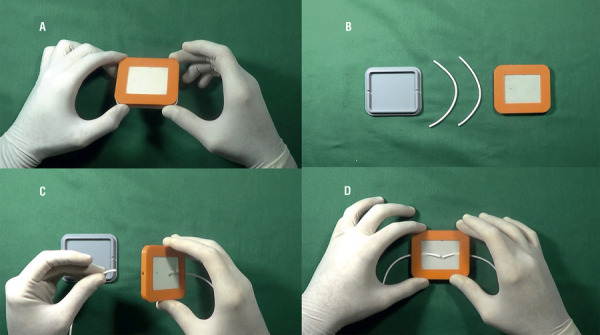
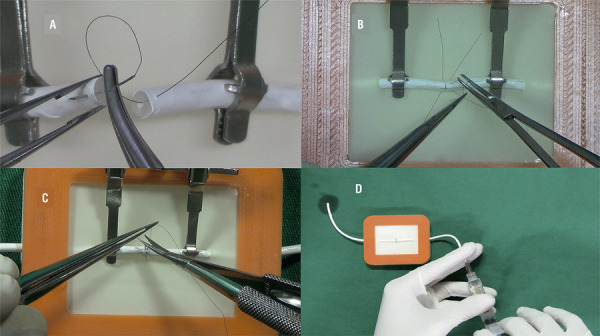
The model consisted of two artificial vas deferens, made with silicon tubes, covered by a white resin, measuring 10 cm (length) and internal and external diameters of 0.5 and 1.5 mm, respectively. The holder of the ducts is made by a small box developed with polylactic acid, using a 3D print. The objective of the invention is to simulate the surgical field of vasovasostomy, when the vas deferens are isolated from other cord structures. For validation, it was verified the acquisition of microsurgical skills during its use, in a capacitation course with 5 urology residents from a Hospital of the region. Along the training sessions, it was analyzed the time (speed) of microsurgical sutures, and quantification of the performance using a checklist. Collected data were analyzed using de BioEstat®5.4 software.
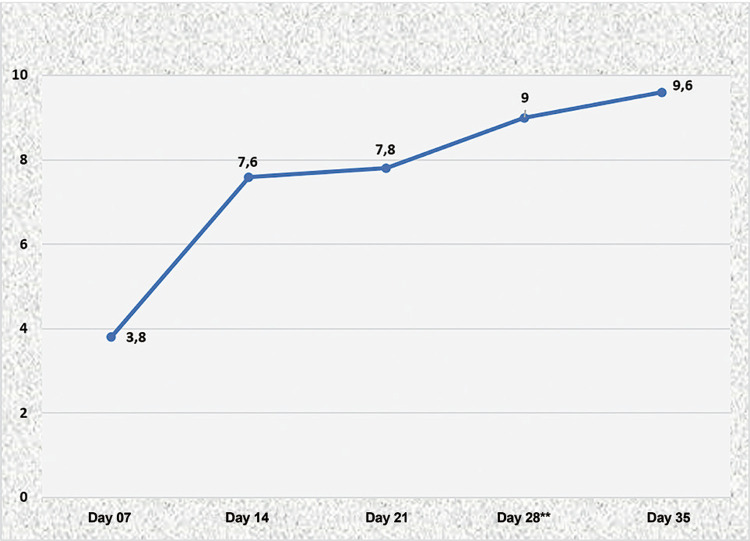
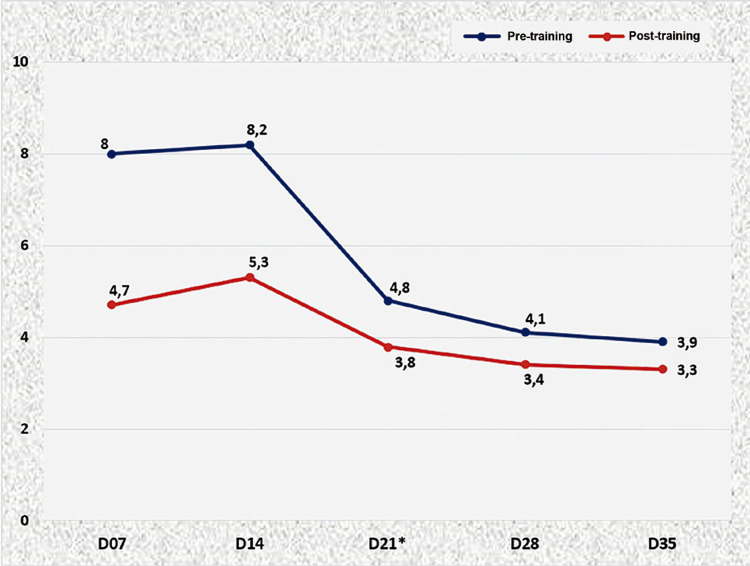
Medium time for the completion of microsurgical sutures improved considerably during the course, and reached a plateau after the third day of training (p=0.0365). In relation to the checklist, it was verified that during capacitation, there was significant improvement of the scores of each participant, that reached a plateau after the fourth day of training with the model (p=0.0035).
The developed model was able to allow the students that attended the course to gain skills in microsurgery, being considered appropriate for training vasectomy reversal.
验证一种用于输精管复通术培训的实验性非动物模型。
该模型由两个硅管制成的人工输精管组成,外覆白色树脂,长 10 厘米,内径和外径分别为 0.5 和 1.5 毫米。导管的固定器由一个使用聚乳酸制成的小盒子组成,采用 3D 打印技术。本发明的目的是模拟输精管吻合术的手术领域,此时输精管与其他精索结构分离。为了验证其有效性,在一个地区医院的 5 名泌尿科住院医师的能力提升课程中,验证了在使用过程中获得显微外科技能的情况。在培训过程中,分析了显微缝合的时间(速度),并使用清单对表现进行量化。收集的数据使用 BioEstat®5.4 软件进行分析。
在课程中,完成显微缝合的平均时间有了显著提高,并且在训练的第三天达到了一个平台期(p=0.0365)。关于清单,在能力提升期间,每个参与者的得分都有显著提高,在使用模型的第四天达到了一个平台期(p=0.0035)。
所开发的模型能够使参加课程的学生获得显微外科技能,被认为适合输精管复通术的培训。