Immunology Program, Memorial Sloan-Kettering Cancer Center, New York, NY, United States of America.
PLoS One. 2019 Jul 3;14(7):e0210377. doi: 10.1371/journal.pone.0210377. eCollection 2019.
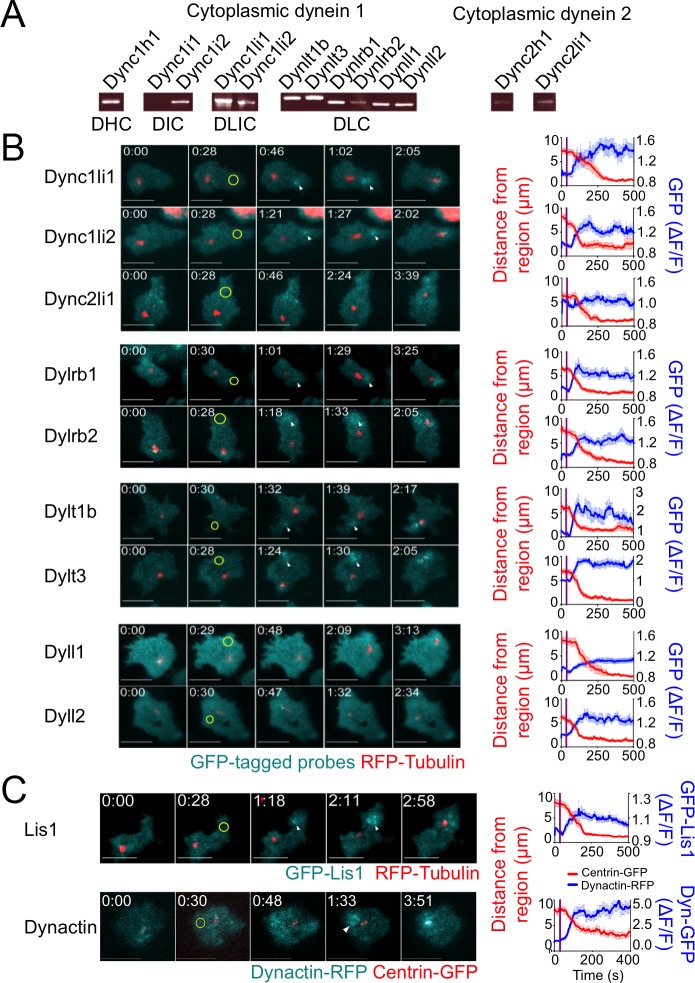
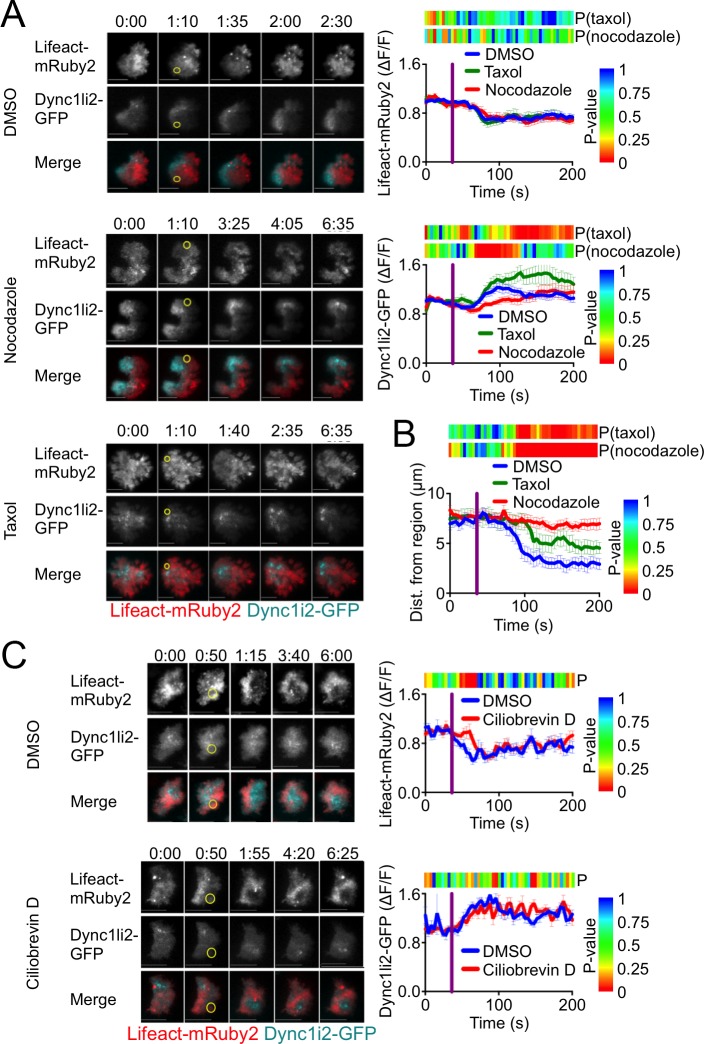
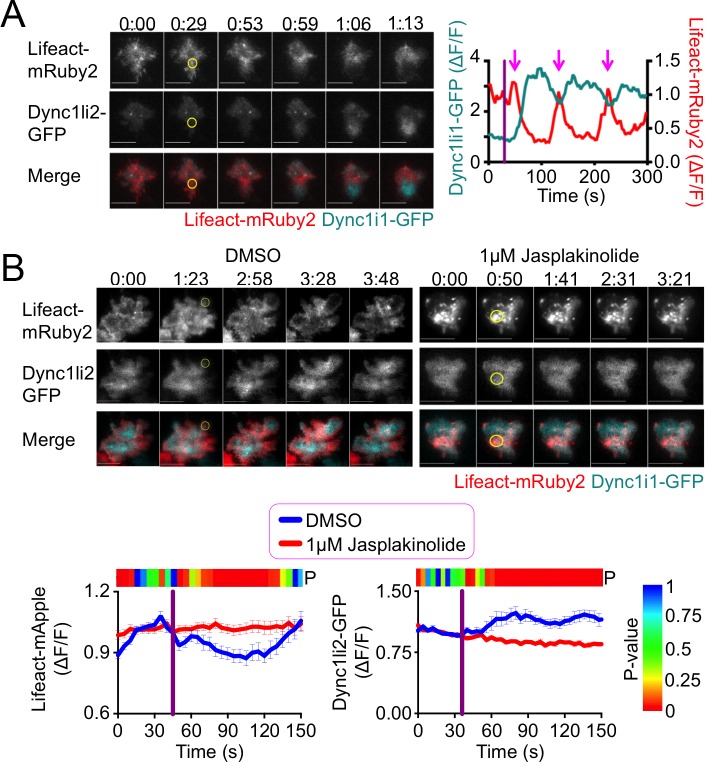
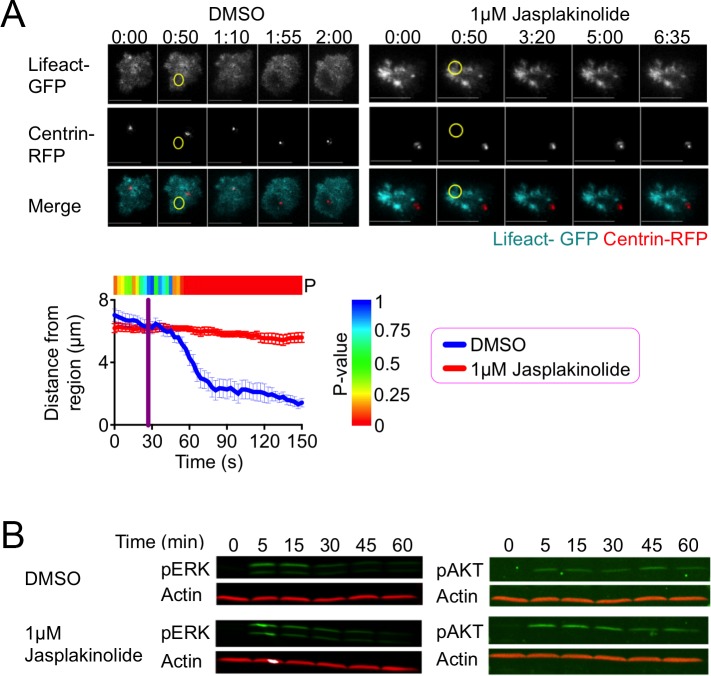
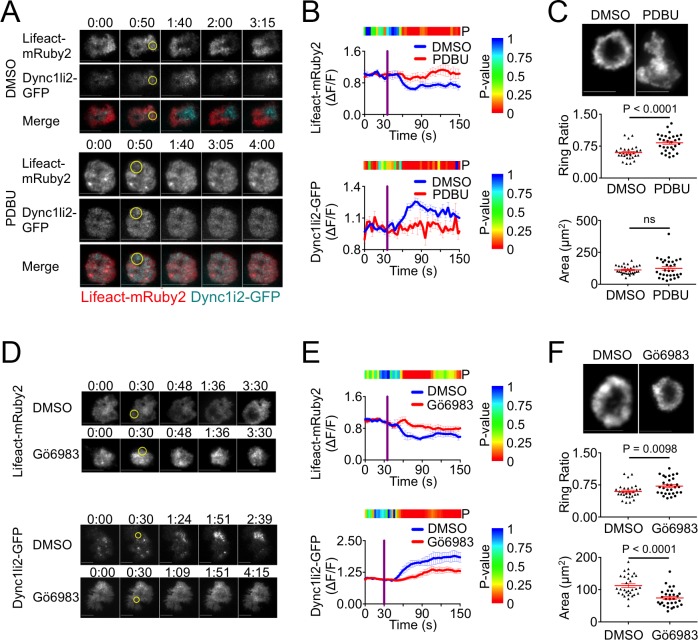
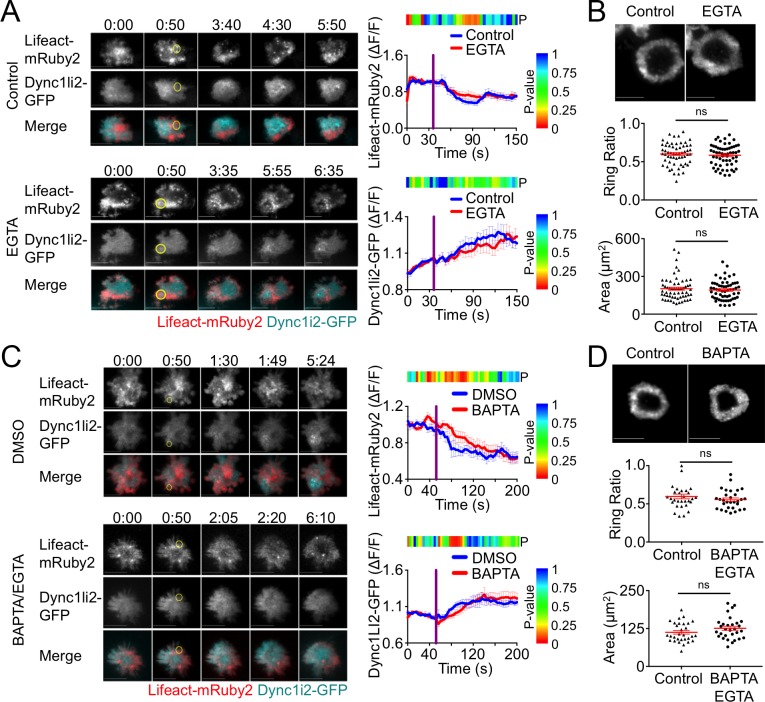
Immunological synapse (IS) formation between a T cell and an antigen-presenting cell is accompanied by the reorientation of the T cell centrosome toward the interface. This polarization response is thought to enhance the specificity of T cell effector function by enabling the directional secretion of cytokines and cytotoxic factors toward the antigen-presenting cell. Centrosome reorientation is controlled by polarized signaling through diacylglycerol (DAG) and protein kinase C (PKC). This drives the recruitment of the motor protein dynein to the IS, where it pulls on microtubules to reorient the centrosome. Here, we used T cell receptor photoactivation and imaging methodology to investigate the mechanisms controlling dynein accumulation at the synapse. Our results revealed a remarkable spatiotemporal correlation between dynein recruitment to the synaptic membrane and the depletion of cortical filamentous actin (F-actin) from the same region, suggesting that the two events were causally related. Consistent with this hypothesis, we found that pharmacological disruption of F-actin dynamics in T cells impaired both dynein accumulation and centrosome reorientation. DAG and PKC signaling were necessary for synaptic F-actin clearance and dynein accumulation, while calcium signaling and microtubules were dispensable for both responses. Taken together, these data provide mechanistic insight into the polarization of cytoskeletal regulators and highlight the close coordination between microtubule and F-actin architecture at the IS.
免疫突触(IS)形成于 T 细胞和抗原呈递细胞之间,伴随着 T 细胞中心体向界面的重新定向。这种极化反应被认为通过使细胞因子和细胞毒性因子朝向抗原呈递细胞的定向分泌来增强 T 细胞效应功能的特异性。中心体的重新定向由通过二酰基甘油(DAG)和蛋白激酶 C(PKC)的极化信号控制。这促使动力蛋白 dynein 向 IS 募集,在那里它拉动微管以重新定向中心体。在这里,我们使用 T 细胞受体光激活和成像方法来研究控制突触处 dynein 积累的机制。我们的结果揭示了 dynein 向突触膜募集与同一区域皮质丝状肌动蛋白(F-actin)耗竭之间的显著时空相关性,表明这两个事件存在因果关系。与该假设一致,我们发现 T 细胞中 F-actin 动力学的药理学破坏会损害 dynein 积累和中心体的重新定向。DAG 和 PKC 信号对于突触 F-actin 清除和 dynein 积累是必需的,而钙离子信号和微管对于这两种反应都是可有可无的。总之,这些数据提供了对细胞骨架调节剂极化的机制见解,并强调了微管和 F-actin 结构在 IS 处的紧密协调。