Tytgat Institute for Intestinal and Liver Research, Amsterdam UMC, University of Amsterdam, Amsterdam 1105 BK, The Netherlands.
Department of Surgery, Catharina Hospital, 5623 EJ Eindhoven, The Netherlands.
Cells. 2019 Jul 2;8(7):670. doi: 10.3390/cells8070670.
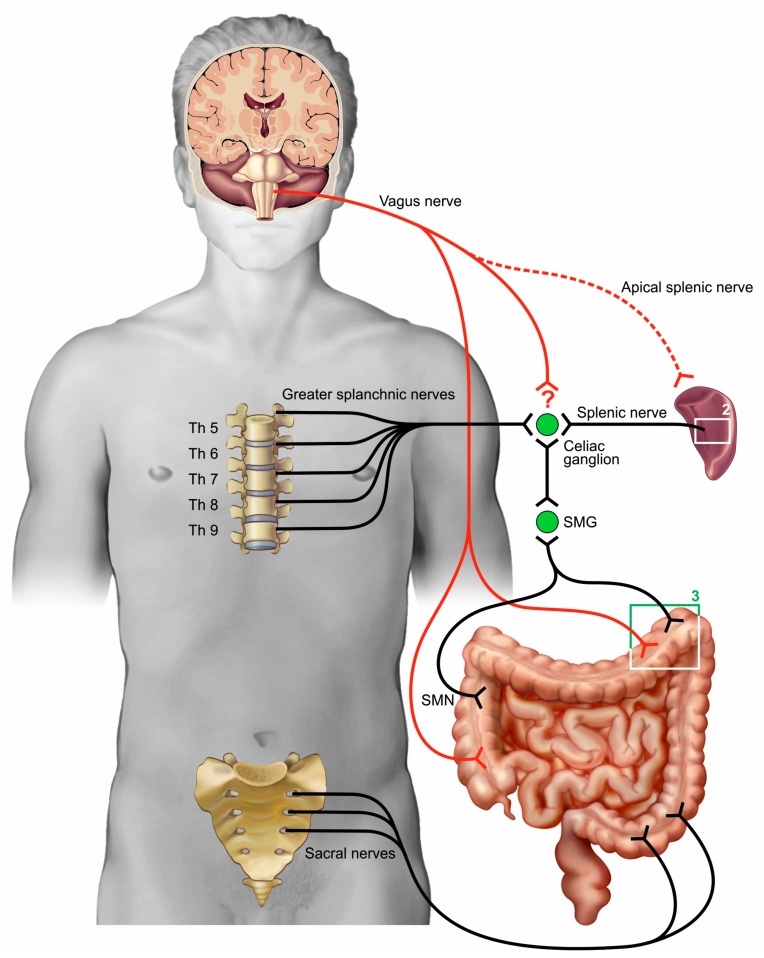
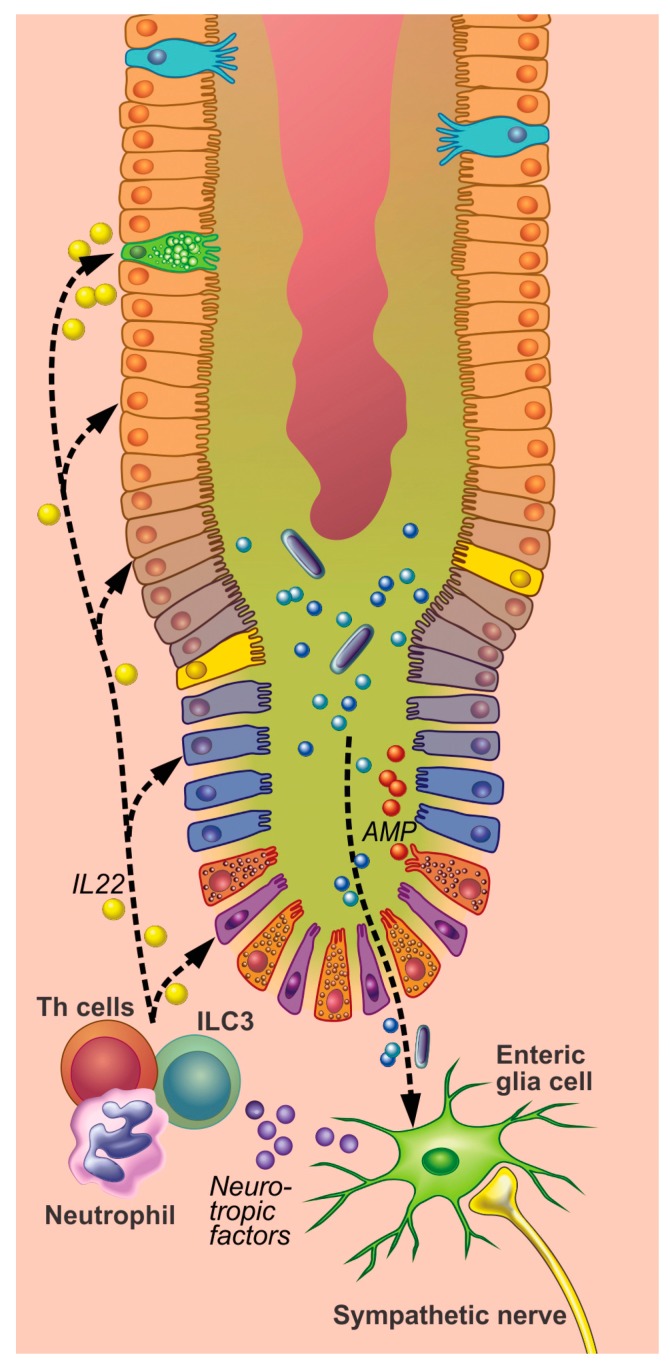
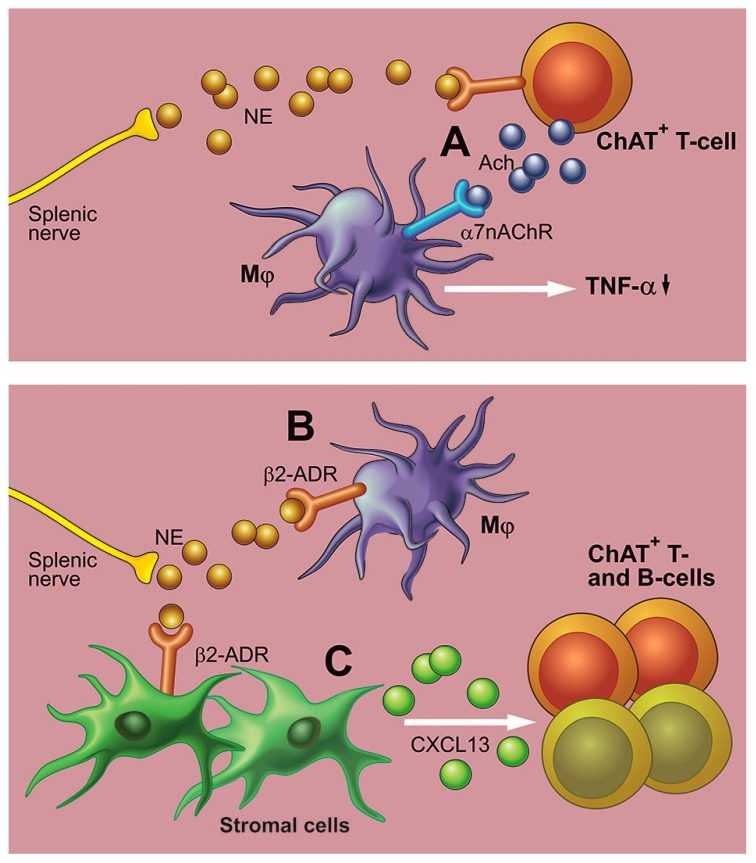
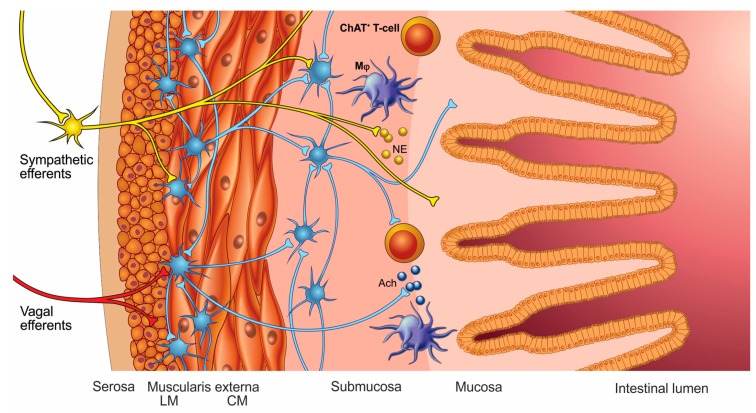
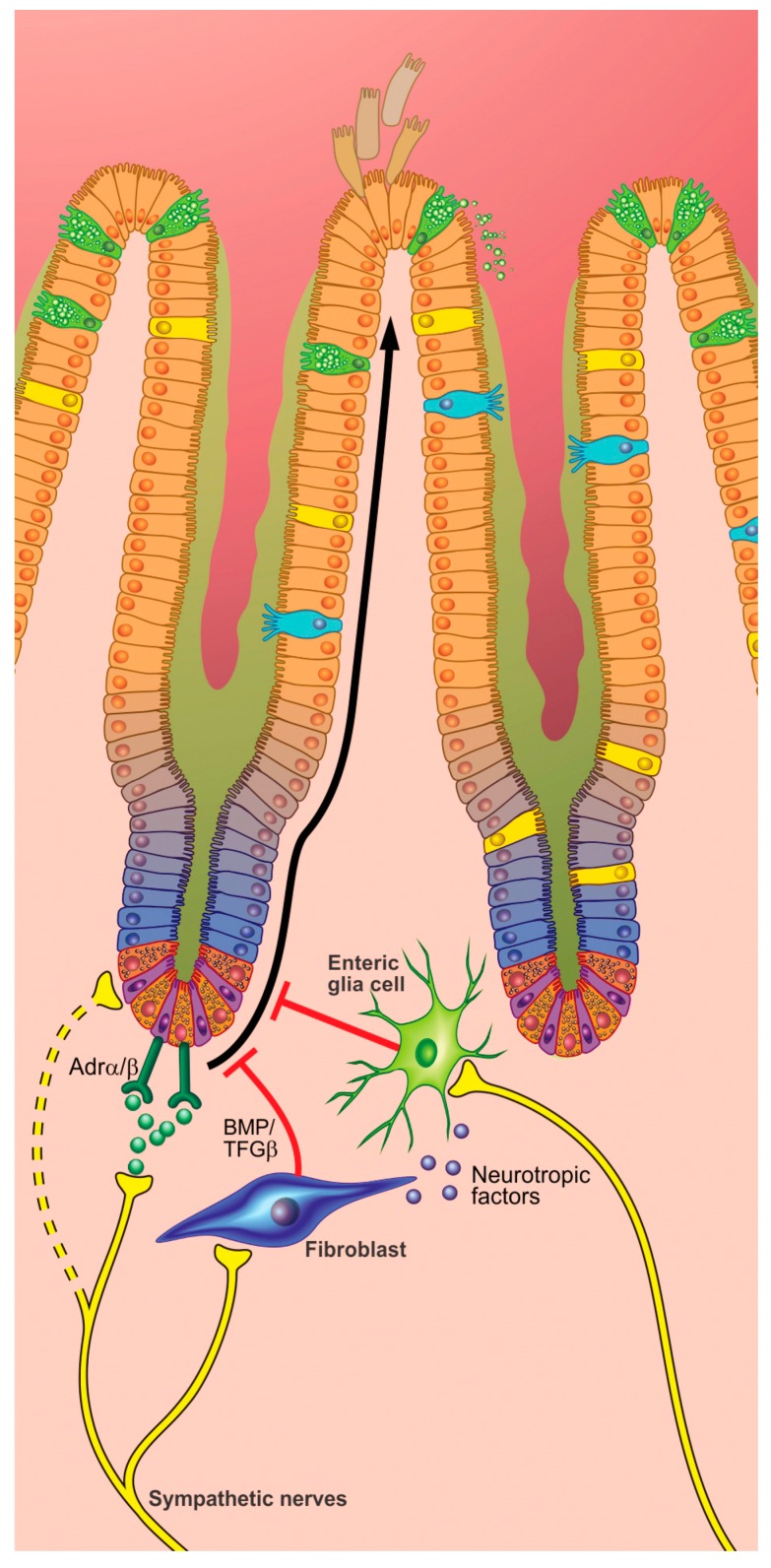
Inflammatory bowel diseases (IBD) have a complex, multifactorial pathophysiology with an unmet need for effective treatment. This calls for novel strategies to improve disease outcome and quality of life for patients. Increasing evidence suggests that autonomic nerves and neurotransmitters, as well as neuropeptides, modulate the intestinal immune system, and thereby regulate the intestinal inflammatory processes. Although the autonomic nervous system is classically divided in a sympathetic and parasympathetic branch, both play a pivotal role in the crosstalk with the immune system, with the enteric nervous system acting as a potential interface. Pilot clinical trials that employ vagus nerve stimulation to reduce inflammation are met with promising results. In this paper, we review current knowledge on the innervation of the gut, the potential of cholinergic and adrenergic systems to modulate intestinal immunity, and comment on ongoing developments in clinical trials.
炎症性肠病(IBD)具有复杂的多因素病理生理学,治疗效果仍不理想。这需要新的策略来改善患者的疾病结局和生活质量。越来越多的证据表明,自主神经和神经递质以及神经肽调节肠道免疫系统,从而调节肠道炎症过程。尽管自主神经系统经典地分为交感和副交感分支,但两者在与免疫系统的相互作用中都起着关键作用,肠神经系统作为潜在的接口。采用迷走神经刺激来减轻炎症的试点临床试验取得了有希望的结果。在本文中,我们综述了肠道神经支配、胆碱能和肾上腺素能系统调节肠道免疫的潜力,并评论了临床试验的最新进展。