Bartley Akeem, Yang Tao, Arocha Rebeca, Malphurs Wendi L, Larkin Riley, Magee Kacy L, Vickroy Thomas W, Zubcevic Jasenka
Department of Physiological Sciences, College of Veterinary Medicine, University of Florida, Gainesville, FL, United States.
Front Physiol. 2018 Nov 13;9:1593. doi: 10.3389/fphys.2018.01593. eCollection 2018.
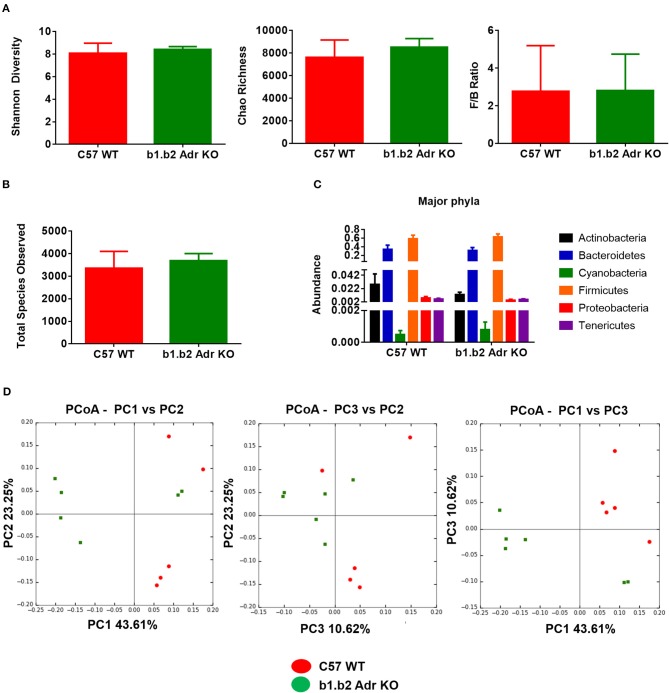
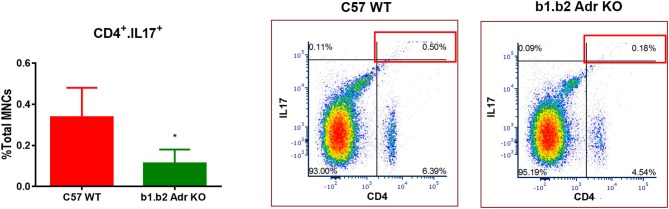
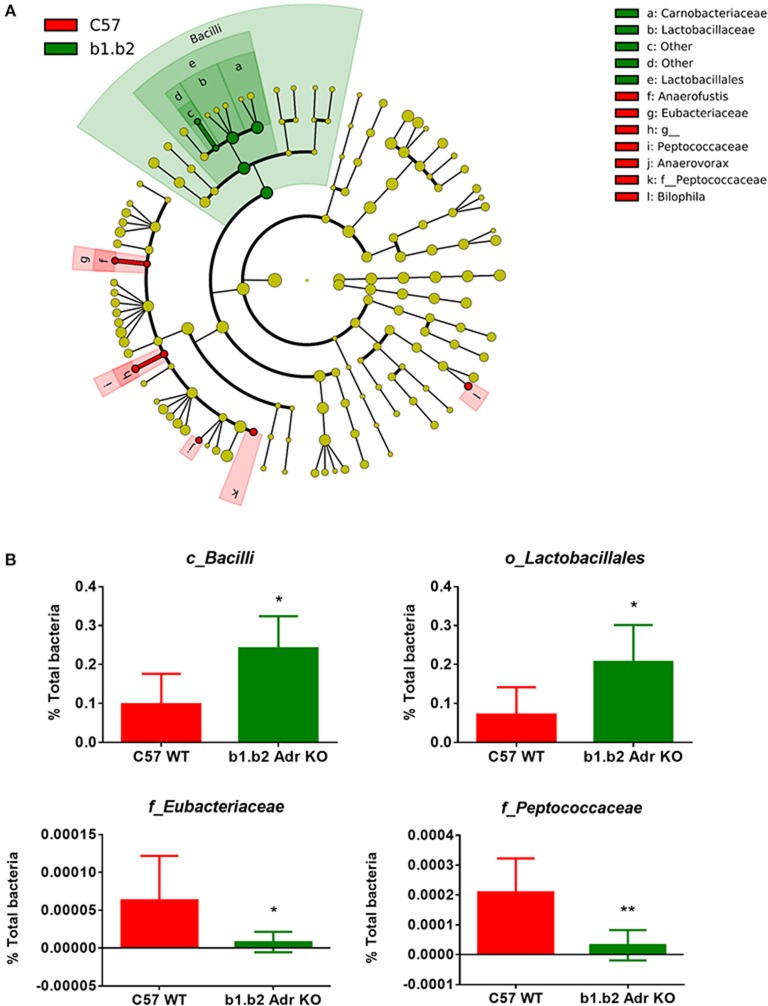
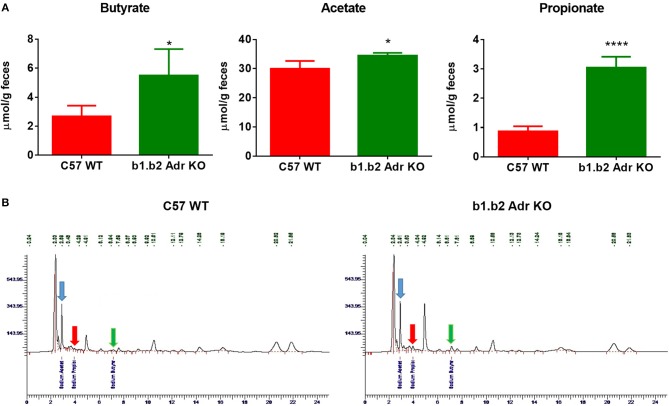
Emerging evidence suggests an associative link between gut dysbiosis, the autonomic nervous system (ANS) and the immune system in pathophysiology of neurogenic hypertension (HTN). However, the close interplay between these three systems presents us with difficulties in deciphering the cause-effect relationship in disease. The present study utilized beta 1 and 2 adrenergic receptor knock out (AdrB1AdrB2/J KO) mice to isolate the effects of reduced overall sympathetic drive on gut microbiota and systemic immune system. We observed the following: (i) Diminished beta adrenergic signaling mainly reflects in shifts in the Firmicutes phyla, with a significant increase in abundance of largely beneficial Bacilli Lactobacillales in the KO mice; (ii) This was associated with increased colonic production of beneficial short chain fatty acids (SCFAs) butyrate, acetate and propionate, confirming functional microbiota shifts in the KO mice; (iii) Dampened systemic immune responses in the KO mice reflected in reduction on circulating CD4.IL17 T cells and increase in young neutrophils, both previously associated with shifts in the gut microbiota. Taken together, these observations demonstrate that reduced expression of beta adrenergic receptors may lead to beneficial shifts in the gut microbiota and dampened systemic immune responses. Considering the role of both in hypertension, this suggests that dietary intervention may be a viable option for manipulation of blood pressure via correcting gut dysbiosis.
新出现的证据表明,在神经源性高血压(HTN)的病理生理学中,肠道微生物群失调、自主神经系统(ANS)和免疫系统之间存在关联。然而,这三个系统之间密切的相互作用给我们解读疾病中的因果关系带来了困难。本研究利用β1和β2肾上腺素能受体敲除(AdrB1AdrB2/J KO)小鼠,以分离整体交感神经驱动降低对肠道微生物群和全身免疫系统的影响。我们观察到以下几点:(i)β肾上腺素能信号减弱主要反映在厚壁菌门的变化上,KO小鼠中大量有益的芽孢杆菌纲乳酸杆菌目丰度显著增加;(ii)这与结肠中有益的短链脂肪酸(SCFA)丁酸、乙酸和丙酸的产生增加有关,证实了KO小鼠中微生物群的功能变化;(iii)KO小鼠全身免疫反应减弱表现为循环CD4.IL17 T细胞减少和年轻中性粒细胞增加,这两者之前都与肠道微生物群的变化有关。综上所述,这些观察结果表明,β肾上腺素能受体表达降低可能导致肠道微生物群的有益变化和全身免疫反应减弱。考虑到两者在高血压中的作用,这表明饮食干预可能是通过纠正肠道微生物群失调来控制血压的一个可行选择。