Department of Biology, College of Natural Sciences, Jimma University, Jimma, Ethiopia.
International Center of Insect Physiology and Ecology, Addis Ababa, Ethiopia.
Malar J. 2019 Jul 4;18(1):224. doi: 10.1186/s12936-019-2641-1.
PermaNet 3.0 is a deltamethrin-treated combination long-lasting insecticidal net with the addition of synergist piperonylbutoxide (PBO) on its roof section. It is designed to overcome the challenge posed by pyrethroid resistant vector populations against mainstream long-lasting insecticidal nets impregnated with pyrethroids only. The objective of this study was to determine insecticide resistance status of Anopheline and Culicine mosquitoes, to evaluate the bio-efficacy of PermaNet 3.0 nets and to assess household factors affecting the physical integrity of PermaNet 3.0 after 3 years of use.
Insecticide susceptibility test was conducted using the WHO tube test. Bio-activity of PermaNet 3.0 samples was evaluated using the WHO cone bioassay. Cross-sectional survey was conducted on 150 randomly selected households from two districts to determine household factors affecting net utilization. One hundred fifty PermaNet 3.0 nets were randomly collected from the community with replacement after 3 years of deployment and physical integrity of each net was assessed.
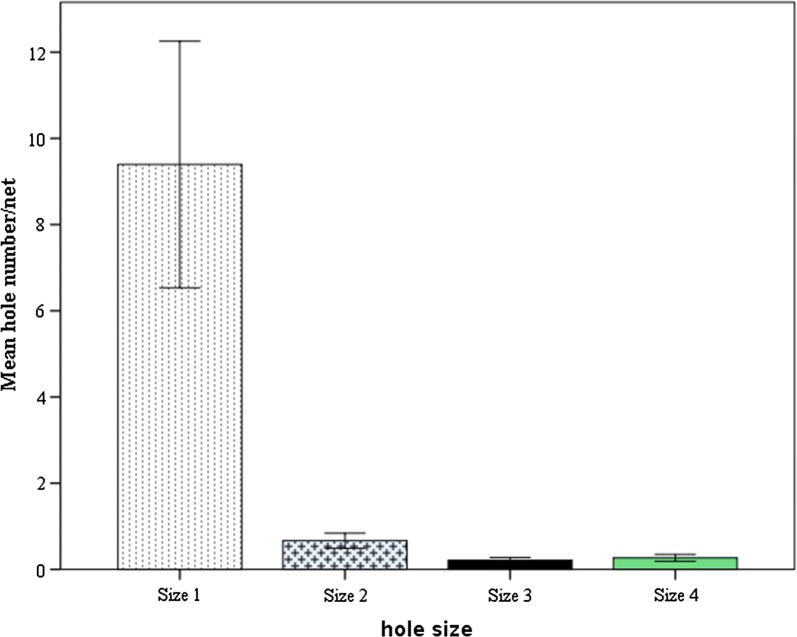
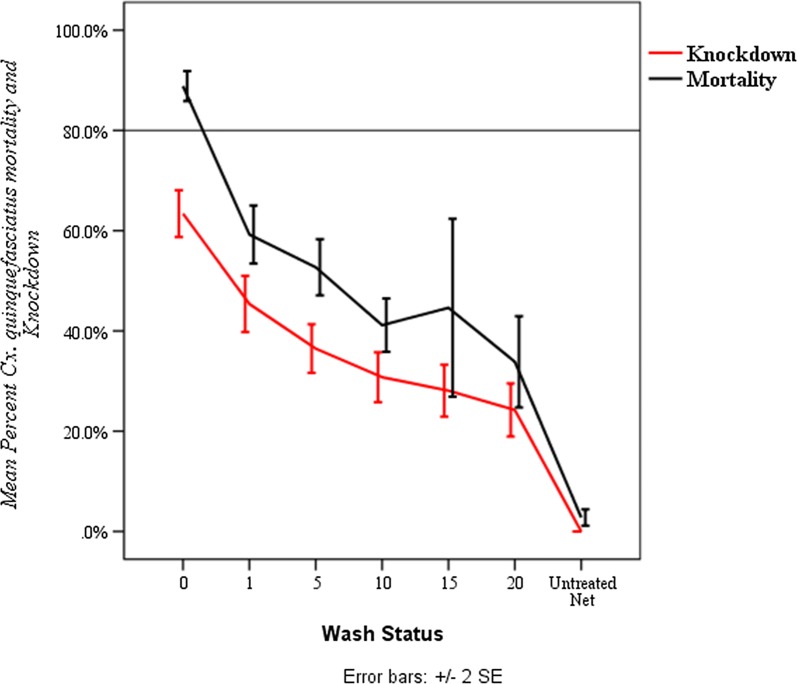
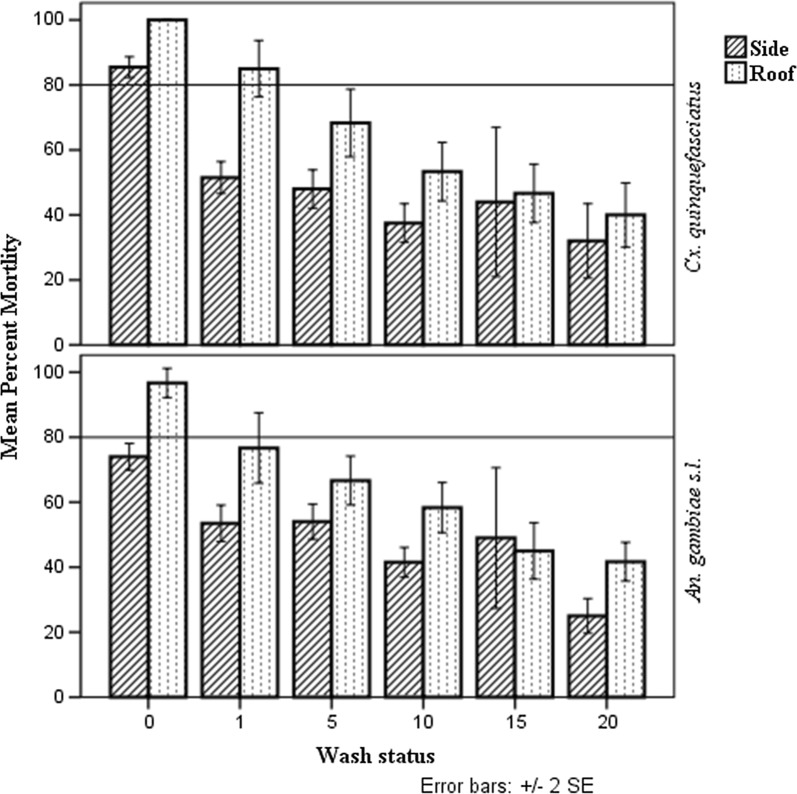
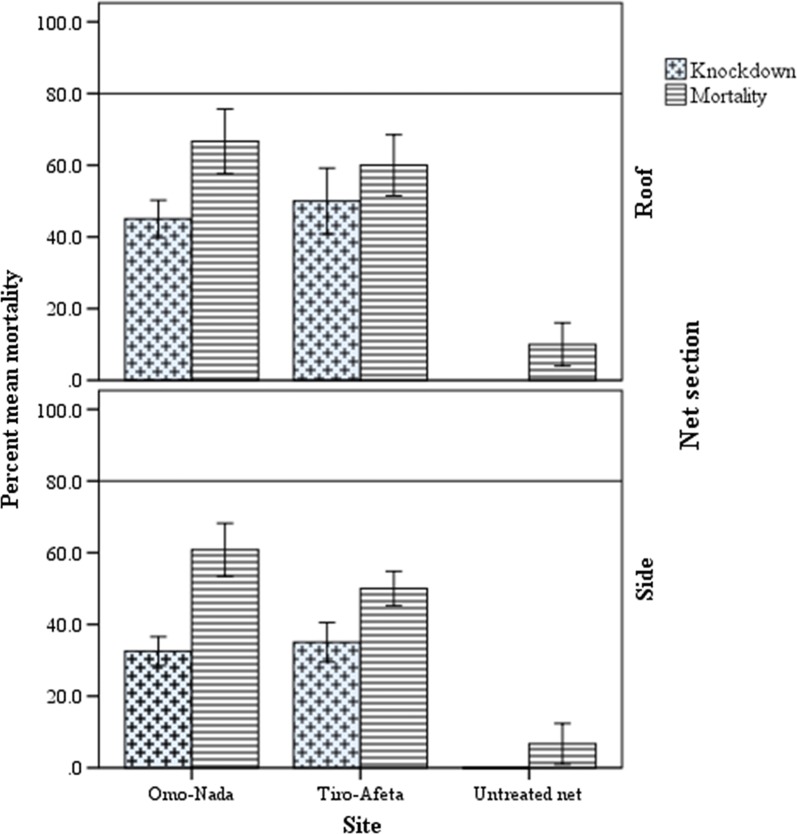
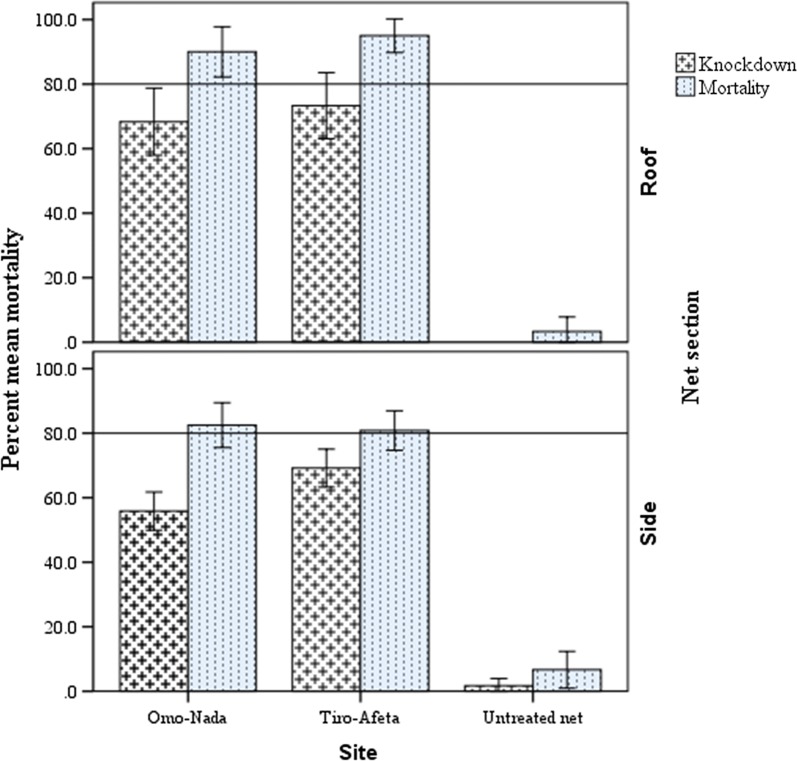
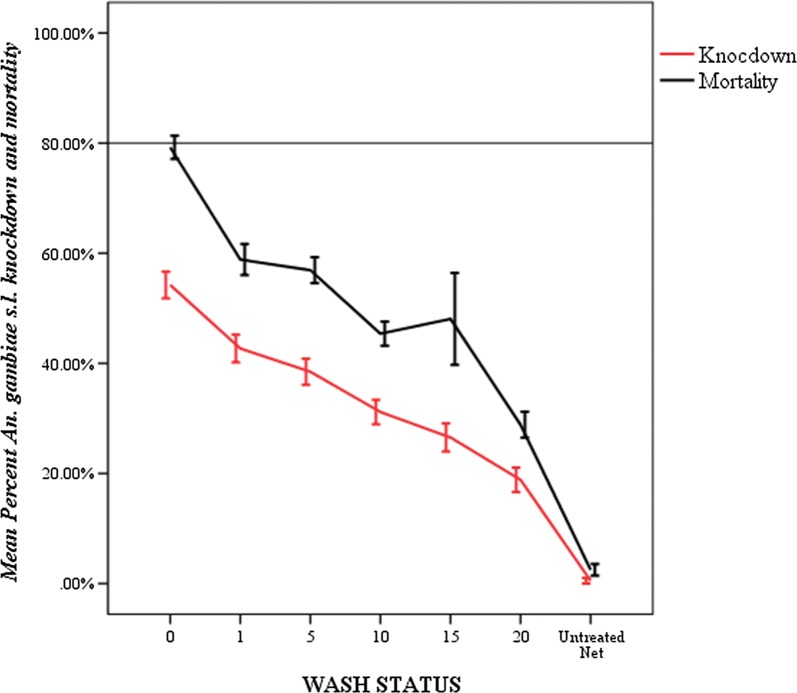
Both Anopheles gambiae sensu lato and Culex quinquefasciatus developed resistance against permethrin and deltamethrin. However, following pre-exposure to synergist PBO the susceptibility of mosquito population increased to both permethrin (from 39% without to 92% with PBO against An. gambiae and from 28% without to 94% with PBO against Culex quinquefasciatus) and deltamethrin (from 52% without to 99% with PBO against An. gambiae and from 43% without to 98% with PBO against Culex quinquefasciatus). Eighty percent (80%) mortality was recorded in wild population of An. gambiae s.l. exposed to unused PermaNet 3.0, but its bioactivity subsequently declined as washing frequency increased from 0 to 20. The PBO coated roof section of unused PermaNet 3.0 resulted in higher mosquito mortality (100%) compared to the side panels without PBO (85%). House structure, cooking and washing habits, and damage due to household pests were cited as determinants associated with bed net deterioration. Bed net proportionate hole index (pHI) was ranged from 0 to 6064. Of the 150 PermaNet 3.0 nets assessed 80, 29 and 41 were considered as 'good', 'acceptable' and 'too torn', respectively.
The bio-efficacy evaluation of PermaNet 3.0 from Jimma area, southwestern Ethiopia showed moderate efficacy against pyrethroid resistant population of An. gambiae and Culex quinquefasciatus. Thus, NMCPs in parallel to deployment of LLINs, should implement timely insecticide resistance management and integrated vector management strategies to slowdown the evolution and further spread of insecticide resistance. Household factors such as, housing conditions, open flame fire used for cooking and rodent attack were identified as factors contributing to the observed reduced bed net physical integrity in the study area. Universal coverage of bed nets should be accompanied with community awareness creation and training on net utilization and handling.
PermaNet 3.0 是一种氯菊酯处理的长效驱虫蚊帐,在其屋顶部分添加增效剂胡椒基丁醚 (PBO)。它旨在克服对主要长效驱虫蚊帐的挑战,这些蚊帐仅用拟除虫菊酯浸渍。本研究的目的是确定按蚊和库蚊的杀虫剂抗性状况,评估 PermaNet 3.0 蚊帐的生物功效,并评估使用 3 年后影响 PermaNet 3.0 物理完整性的家庭因素。
使用世界卫生组织管测试进行杀虫剂敏感性测试。使用世界卫生组织锥形生物测定法评估 PermaNet 3.0 样品的生物活性。在两个地区随机选择 150 户家庭进行横断面调查,以确定影响蚊帐使用的家庭因素。在部署 3 年后,从社区中随机收集 150 个 PermaNet 3.0 蚊帐进行更换,并评估每个蚊帐的物理完整性。
按蚊和库蚊均对拟除虫菊酯和氯菊酯产生抗药性。然而,在预先接触增效剂 PBO 后,蚊群对两者的敏感性增加了:对按蚊(接触 PBO 前为 39%,接触 PBO 后为 92%;接触 PBO 前为 28%,接触 PBO 后为 94%)和库蚊(接触 PBO 前为 52%,接触 PBO 后为 99%;接触 PBO 前为 43%,接触 PBO 后为 98%)。未使用的 PermaNet 3.0 暴露于野生按蚊种群中,死亡率为 80%(80%),但随着洗涤频率从 0 增加到 20,其生物活性随后下降。未使用的 PermaNet 3.0 的 PBO 涂层屋顶部分导致蚊子死亡率更高(100%),而没有 PBO 的侧面板(85%)。房屋结构、烹饪和洗涤习惯以及家庭害虫造成的损害被认为是与蚊帐恶化有关的决定因素。蚊帐比例孔指数(pHI)范围为 0 至 6064。在所评估的 150 个 PermaNet 3.0 蚊帐中,80%、29%和 41%分别被认为是“良好”、“可接受”和“太破烂”。
来自埃塞俄比亚西南部吉马地区的 PermaNet 3.0 的生物功效评估表明,它对耐拟除虫菊酯的按蚊和库蚊种群具有中等功效。因此,国家疟疾控制规划除了部署长效驱虫蚊帐外,还应实施及时的杀虫剂耐药性管理和综合病媒管理战略,以减缓杀虫剂耐药性的演变和进一步传播。住房条件、用于烹饪的明火以及啮齿动物攻击等家庭因素被确定为导致研究地区观察到的蚊帐物理完整性降低的因素。普遍覆盖蚊帐应辅以社区意识的创建以及对蚊帐使用和处理的培训。