Department of Biomedical Engineering, The Pennsylvania State University, University Park, PA, 16802, USA.
Department of Animal Science and Center for Reproductive Biology and Health, and the Huck Institute for the Life Sciences, The Pennsylvania State University, University Park, PA, 16802, USA.
Sci Rep. 2019 Jul 4;9(1):9713. doi: 10.1038/s41598-019-46085-z.
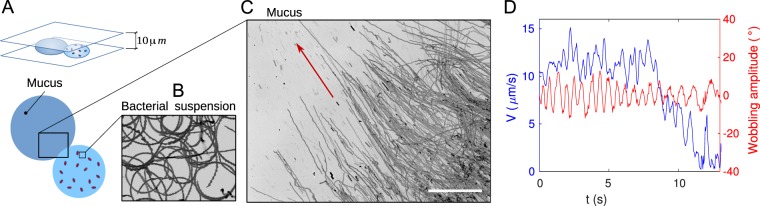
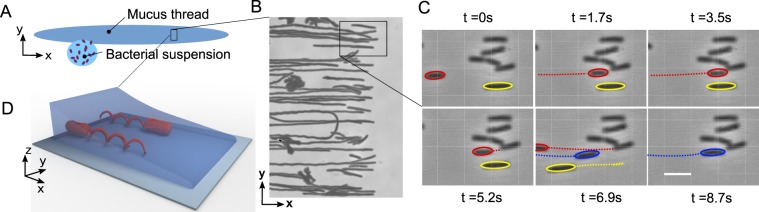
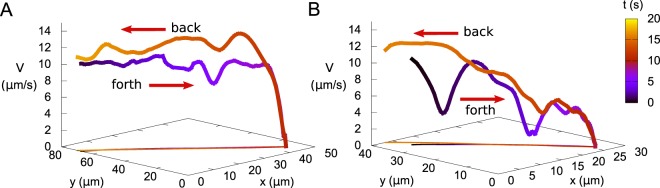
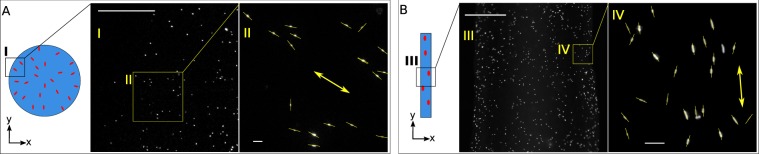
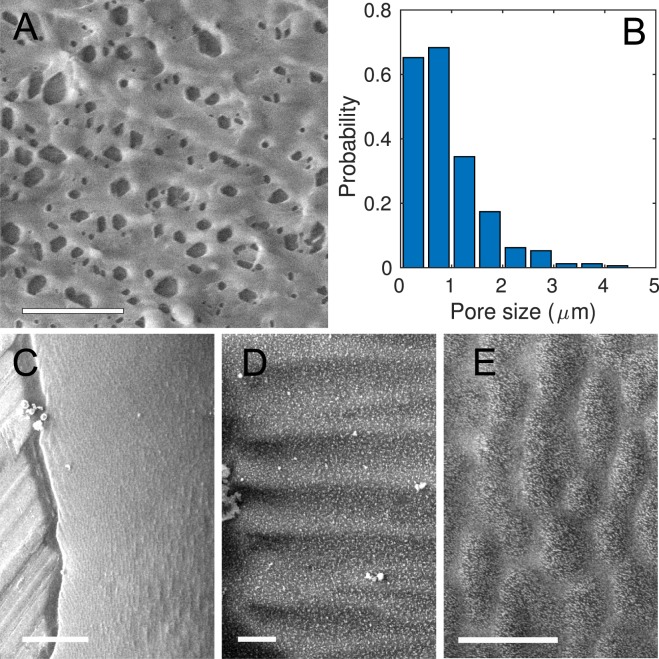
Mucus plays crucial roles in higher organisms, from aiding fertilization to protecting the female reproductive tract. Here, we investigate how anisotropic organization of mucus affects bacterial motility. We demonstrate by cryo electron micrographs and elongated tracer particles imaging, that mucus anisotropy and heterogeneity depend on how mechanical stress is applied. In shallow mucus films, we observe bacteria reversing their swimming direction without U-turns. During the forward motion, bacteria burrowed tunnels that last for several seconds and enable them to swim back faster, following the same track. We elucidate the physical mechanism of direction reversal by fluorescent visualization of the flagella: when the bacterial body is suddenly stopped by the mucus structure, the compression on the flagellar bundle causes buckling, disassembly and reorganization on the other side of the bacterium. Our results shed light into motility of bacteria in complex visco-elastic fluids and can provide clues in the propagation of bacteria-born diseases in mucus.
黏液在高等生物中起着至关重要的作用,从协助受精到保护女性生殖道。在这里,我们研究了黏液的各向异性组织如何影响细菌的运动性。我们通过冷冻电子显微镜和拉长示踪粒子成像证明,黏液的各向异性和异质性取决于机械应力的施加方式。在浅层黏液膜中,我们观察到细菌在不进行 U 型转弯的情况下改变游动方向。在向前运动过程中,细菌钻入持续数秒的隧道,使它们能够更快地沿着同一路径游回。我们通过荧光可视化鞭毛阐明了方向反转的物理机制:当细菌体突然被黏液结构停止时,对鞭毛束的压缩会导致在细菌另一侧发生弯曲、解体和重组。我们的研究结果揭示了细菌在复杂粘弹性流体中的运动机制,并为黏液中细菌源性疾病的传播提供了线索。