Wang Liyuan, Liu Yichen, Du Tingting, Yang Heng, Lei Lei, Guo Mengqi, Ding Han-Fei, Zhang Junran, Wang Hongbo, Chen Xiaoguang, Yan Chunhong
Institute of Materia Medica, Chinese Academy of Medical Sciences and Peking Union Medical College, Beijing, China.
Georgia Cancer Center, Augusta University, Augusta, GA, USA.
Cell Death Differ. 2020 Feb;27(2):662-675. doi: 10.1038/s41418-019-0380-z. Epub 2019 Jul 4.
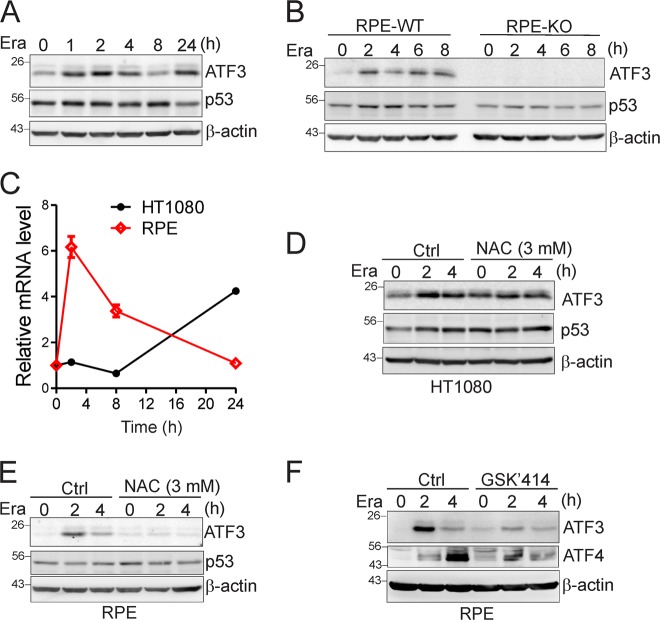
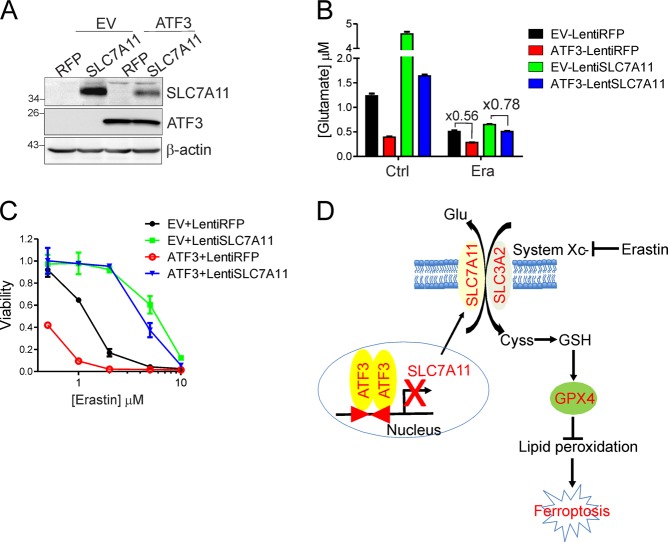
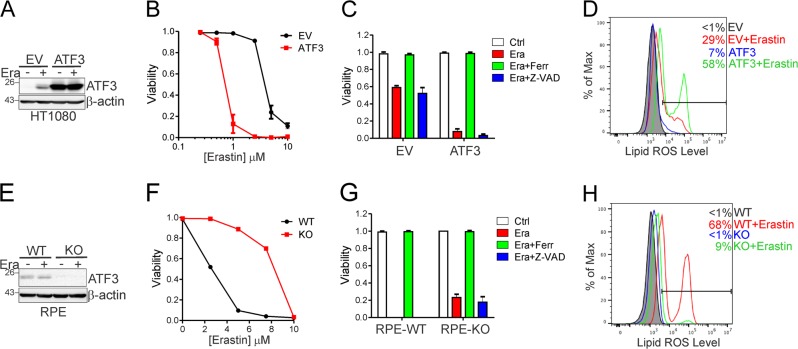
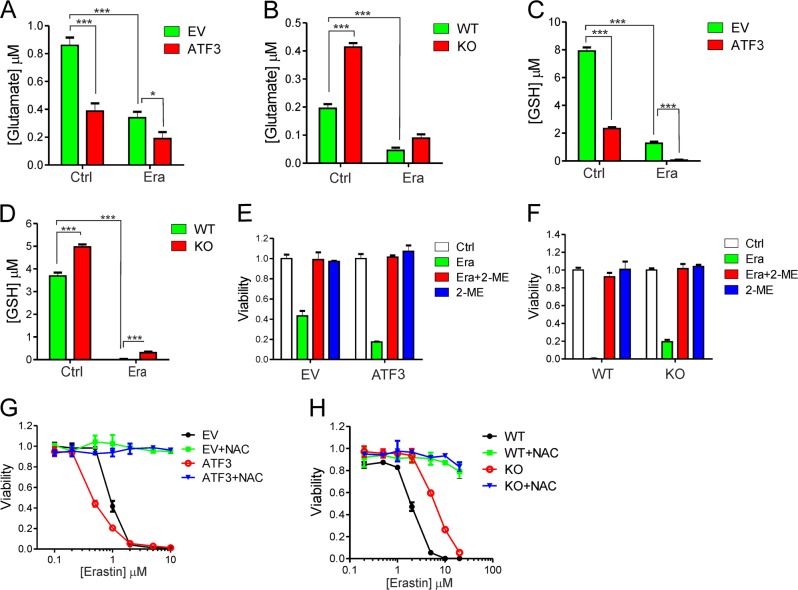
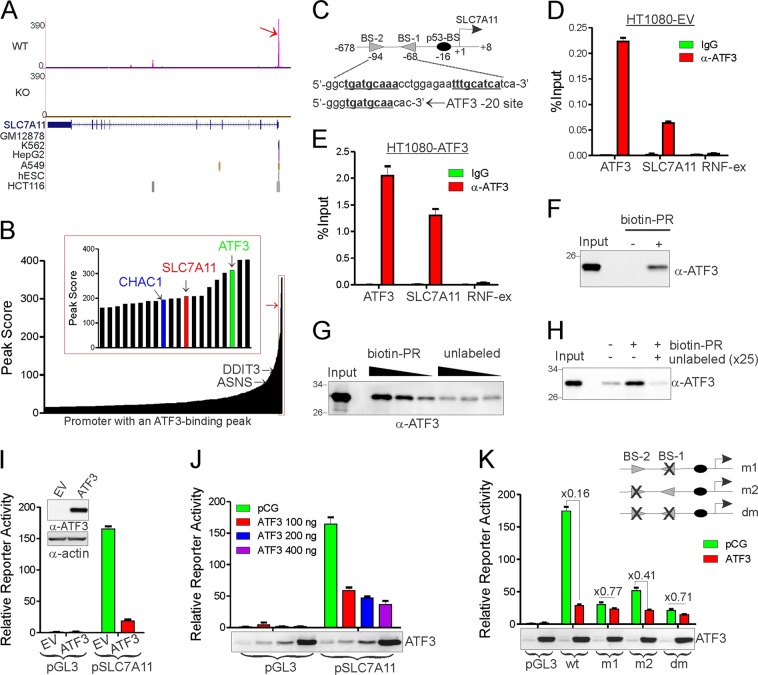
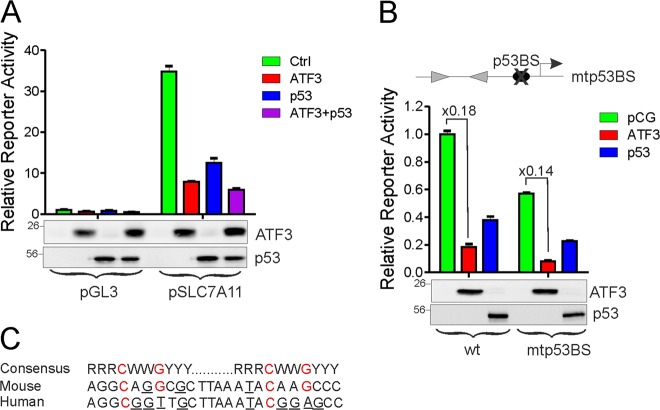
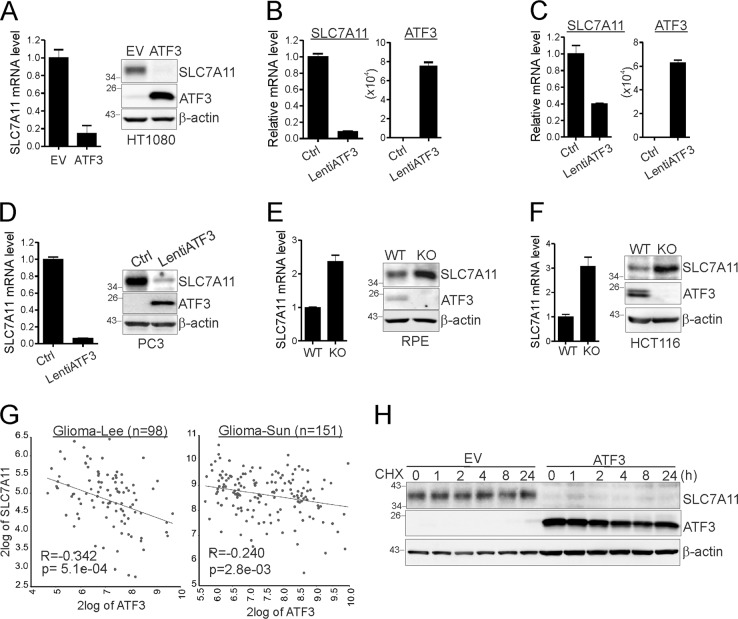
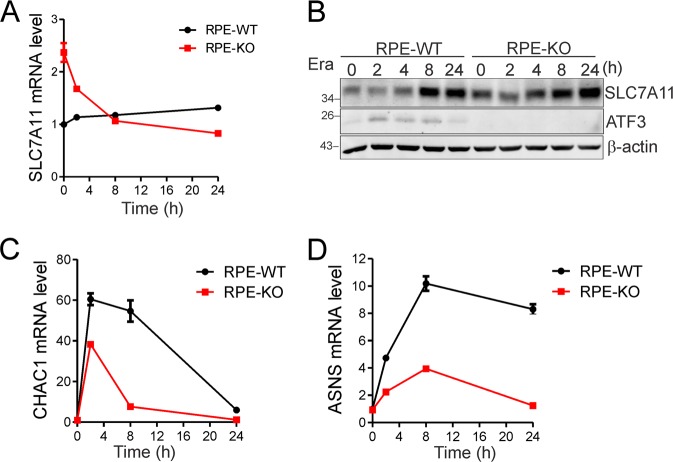
The amino acid antiporter system Xc is important for the synthesis of glutathione (GSH) that functions to prevent lipid peroxidation and protect cells from nonapoptotic, iron-dependent death (i.e., ferroptosis). While the activity of system Xc often positively correlates with the expression level of its light chain encoded by SLC7A11, inhibition of system Xc activity by small molecules (e.g., erastin) causes a decrease in the intracellular GSH level, leading to ferroptotic cell death. How system Xc is regulated during ferroptosis remains largely unknown. Here we report that activating transcription factor 3 (ATF3), a common stress sensor, can promote ferroptosis induced by erastin. ATF3 suppressed system Xc, depleted intracellular GSH, and thereby promoted lipid peroxidation induced by erastin. ATF3 achieved this activity through binding to the SLC7A11 promoter and repressing SLC7A11 expression in a p53-independent manner. These findings thus add ATF3 to a short list of proteins that can regulate system Xc and promote ferroptosis repressed by this antiporter.
氨基酸反向转运体系统Xc对于谷胱甘肽(GSH)的合成很重要,谷胱甘肽的作用是防止脂质过氧化并保护细胞免受非凋亡性铁依赖性死亡(即铁死亡)。虽然系统Xc的活性通常与其由SLC7A11编码的轻链的表达水平呈正相关,但小分子(如艾拉司丁)对系统Xc活性的抑制会导致细胞内谷胱甘肽水平降低,从而导致铁死亡细胞死亡。在铁死亡过程中系统Xc如何被调控在很大程度上仍然未知。在此我们报告,作为一种常见应激传感器的激活转录因子3(ATF3)可促进艾拉司丁诱导的铁死亡。ATF3抑制系统Xc,消耗细胞内谷胱甘肽,从而促进艾拉司丁诱导的脂质过氧化。ATF3通过与SLC7A11启动子结合并以不依赖p53的方式抑制SLC7A11表达来实现这一活性。因此,这些发现将ATF3添加到了可调节系统Xc并促进被这种反向转运体抑制的铁死亡的蛋白质的简短列表中。