Yamamoto-Furusho Jesús K, Sarmiento-Aguilar Andrea, Toledo-Mauriño Joel J, Bozada-Gutiérrez Katya E, Bosques-Padilla Francisco J, Martínez-Vázquez Manuel A, Marroquín-Jiménez Virgilio, García-Figueroa Rosalva, Jaramillo-Buendía Christian, Miranda-Cordero Rosa M, Valenzuela-Pérez Jesús A, Cortes-Aguilar Yolanda, Jacobo-Karam Janett S, Bermudez-Villegas Emilio F
Inflammatory Bowel Disease Clinic, Department of Gastroenterology, Instituto Nacional de Ciencias Médicas y Nutrición Salvador Zubirán.
Inflammatory Bowel Disease Clinic, Department of Gastroenterology, Escuela Nacional de Medicina Sistema Tec Salud, Monterrey, Nuevo León.
Medicine (Baltimore). 2019 Jul;98(27):e16291. doi: 10.1097/MD.0000000000016291.
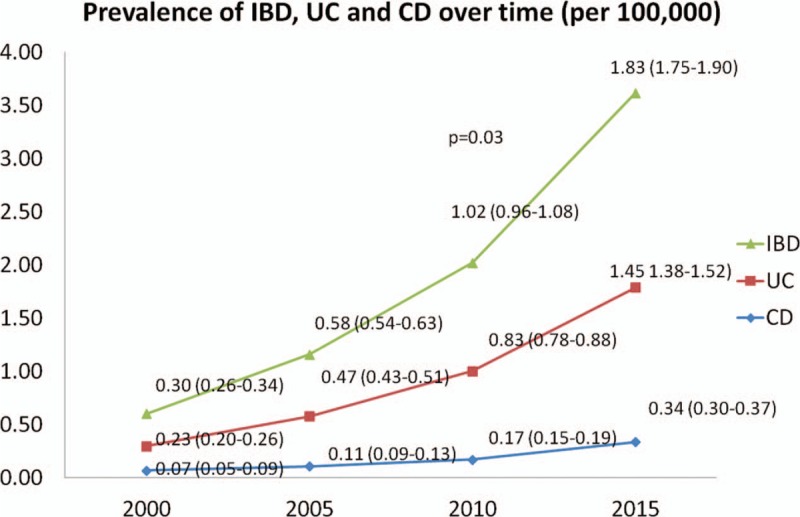
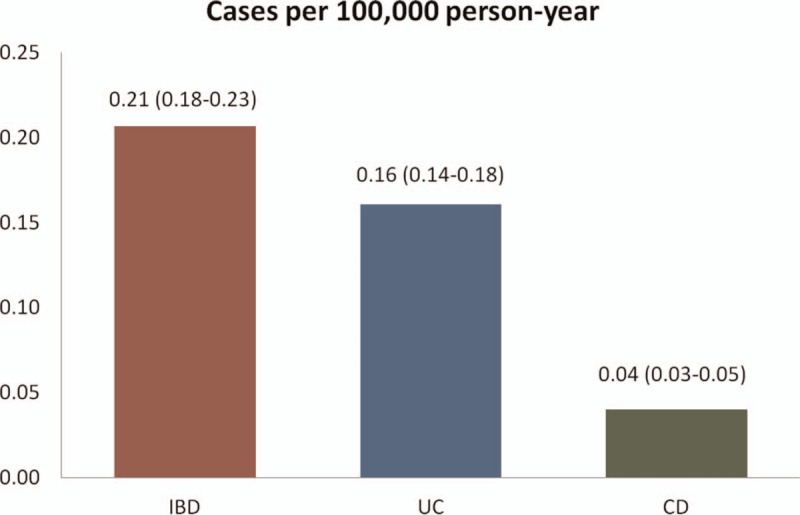
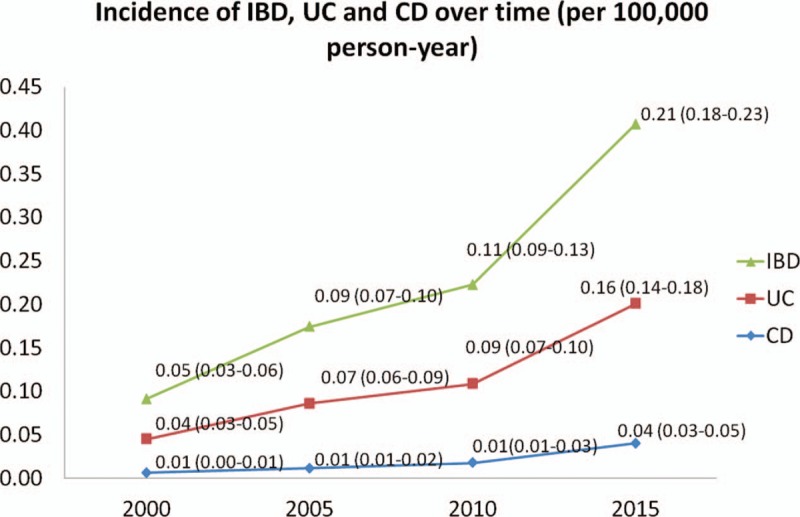
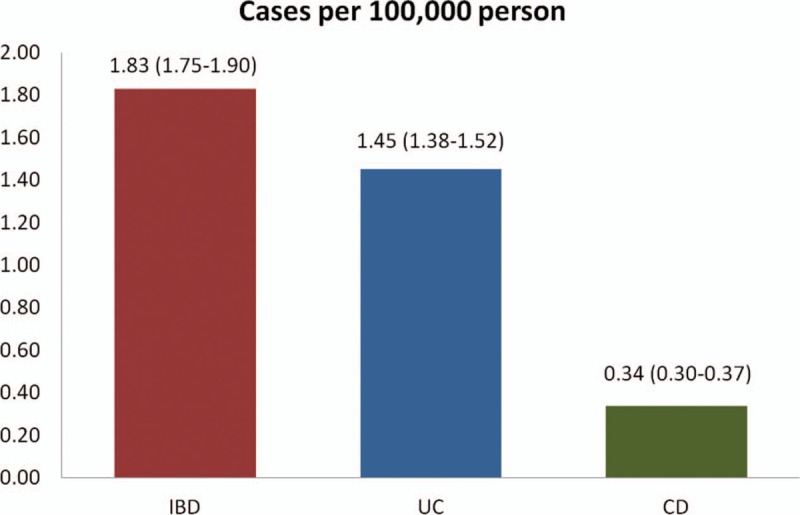
Despite the worldwide increasing incidence and prevalence of Inflammatory Bowel Disease (IBD), our knowledge about it in Mexico is still limited. The aim of this study is to describe the incidence and prevalence of IBD as well as its clinical and socio-demographical characteristics in Mexico from a nation-wide perspective.Multicenter nation-wide cohort study that included 42 IBD clinics from all over the country that participated with electronically register of the new cases over 17 years as well as all known existing cases together with their clinical and socio-demographical characteristics from patients with IBD (ulcerative colitis [UC], Crohn disease [CD], and inflammatory bowel disease unclassified [IBDU]). The data collection was conducted between January and October 2017. Incidence, prevalence, and mean incidence over 2 decades were then calculated. Data base was analyzed using SPSS v24 program SPSS (version 24, IBM Corp., Armonk, NY, USA).A total of 2645 patients with IBD were registered. The crude incidence rates of IBD, UC, and CD, respectively, were 0.21, 0.16, and 0.04 cases per 100,000-person year. The highest incidence was registered in the year 2015, compared with to the previous years. The mean incidence of IBD has increased steadily from 0.05 to 0.21 per 100,000 person-years over the past 15 years (P = .06). The incidence of IBD new cases have increased significantly throughout the last 16 years, 5.9-fold for IBD, 5.3-fold for UC, and 9.5-fold for CD. The prevalence rates of IBD, UC, and CD, respectively, were 1.83, 1.45, and 0.34 cases per 100,000-person-year.This is the first study from a nation-wide perspective that demonstrated a significant increase of prevalence and incidence of IBD in Mexico in the last 15 years.
尽管炎症性肠病(IBD)在全球范围内的发病率和患病率不断上升,但我们对其在墨西哥的了解仍然有限。本研究的目的是从全国范围的角度描述墨西哥IBD的发病率、患病率及其临床和社会人口学特征。
一项多中心全国队列研究,纳入了来自全国各地的42个IBD诊所,这些诊所参与了为期17年的新病例电子登记,以及所有已知的现有病例及其IBD(溃疡性结肠炎[UC]、克罗恩病[CD]和未分类的炎症性肠病[IBDU])患者的临床和社会人口学特征。数据收集于2017年1月至10月进行。然后计算发病率、患病率和20年期间的平均发病率。使用SPSS v24程序(版本24,IBM公司,美国纽约州阿蒙克)对数据库进行分析。
共登记了2645例IBD患者。IBD、UC和CD的粗发病率分别为每10万人年0.21例、0.16例和0.04例。与前几年相比,2015年的发病率最高。在过去15年中,IBD的平均发病率从每10万人年0.05例稳步上升至0.21例(P = 0.06)。在过去16年中,IBD新病例的发病率显著增加,IBD增加了5.9倍,UC增加了5.3倍,CD增加了9.5倍。IBD、UC和CD的患病率分别为每10万人年1.83例、1.45例和0.34例。
这是第一项从全国范围角度进行的研究,表明在过去15年中墨西哥IBD的患病率和发病率显著增加。