Computating Directorate, Lawrence Livermore National Laboratory, Livermore, California, United States of America.
Physical and Life Sciences Directorate, Lawrence Livermore National Laboratory, Livermore, California, United States of America.
PLoS One. 2020 Apr 29;15(4):e0231838. doi: 10.1371/journal.pone.0231838. eCollection 2020.
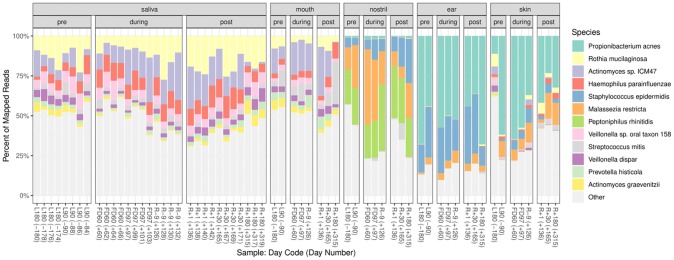
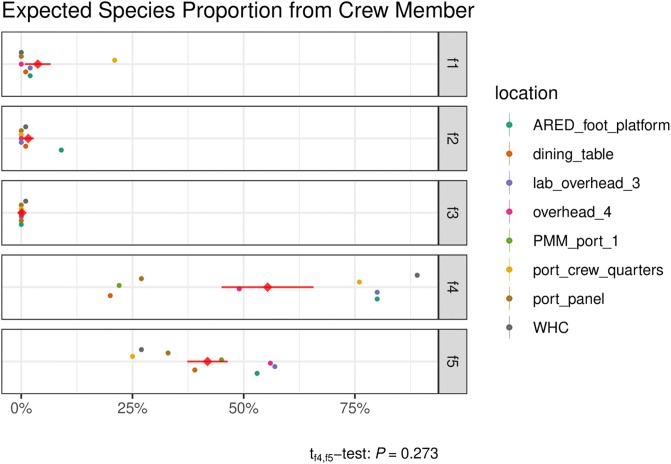
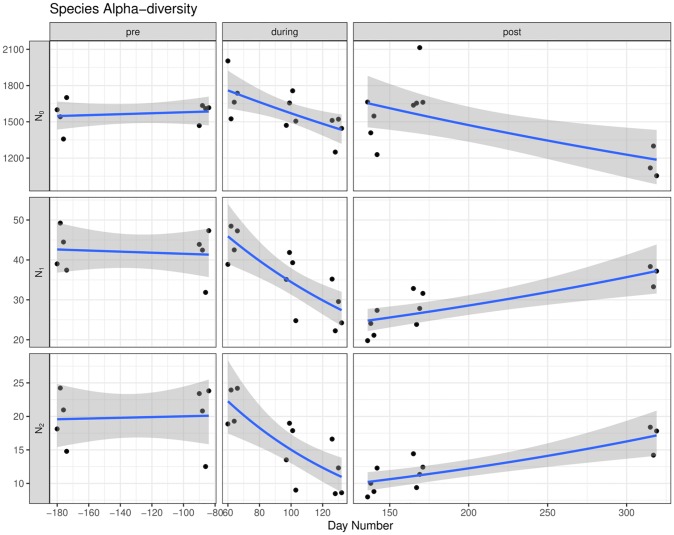
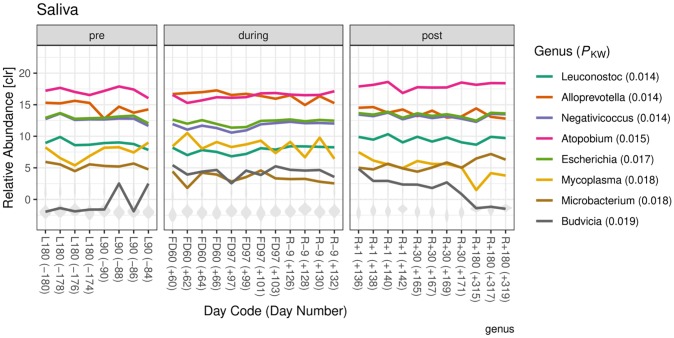
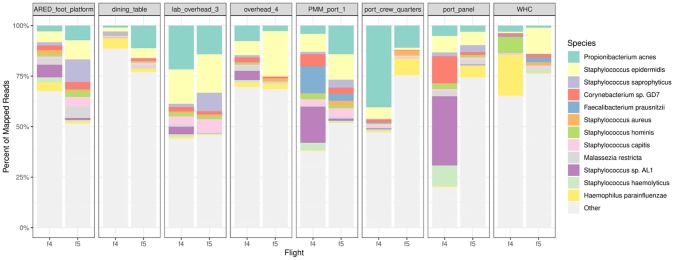
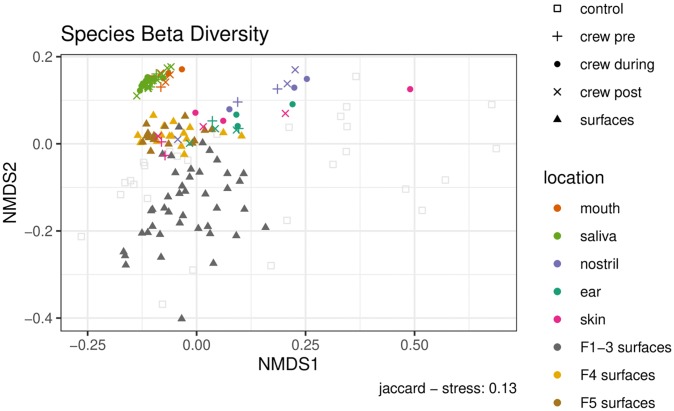
The International Space Station (ISS) is a complex built environment physically isolated from Earth. Assessing the interplay between the microbial community of the ISS and its crew is important for preventing biomedical and structural complications for long term human spaceflight missions. In this study, we describe one crewmember's microbial profile from body swabs of mouth, nose, ear, skin and saliva that were collected at eight different time points pre-, during and post-flight. Additionally, environmental surface samples from eight different habitable locations in the ISS were collected from two flights. Environmental samples from one flight were collected by the crewmember and samples from the next flight were collected after the crewmember departed. The microbial composition in both environment and crewmember samples was measured using shotgun metagenomic sequencing and processed using the Livermore Metagenomics Analysis Toolkit. Ordination of sample to sample distances showed that of the eight crew body sites analyzed, skin, nostril, and ear samples are more similar in microbial composition to the ISS surfaces than mouth and saliva samples; and that the microbial composition of the crewmember's skin samples are more closely related to the ISS surface samples collected by the crewmember on the same flight than ISS surface samples collected by other crewmembers on different flights. In these collections, species alpha diversity in saliva samples appears to decrease during flight and rebound after returning to Earth. This is the first study to compare the ISS microbiome to a crewmember's microbiome via shotgun metagenomic sequencing. We observed that the microbiome of the surfaces inside the ISS resemble those of the crew's skin. These data support future crew and ISS microbial surveillance efforts and the design of preventive measures to maintain crew habitat onboard spacecraft destined for long term space travel.
国际空间站(ISS)是一个与地球物理隔离的复杂建筑环境。评估 ISS 微生物群落与其船员之间的相互作用对于防止长期载人航天任务中的生物医学和结构并发症非常重要。在这项研究中,我们描述了一名机组人员的微生物谱,该人员的口腔、鼻腔、耳朵、皮肤和唾液的拭子样本在飞行前、飞行中和飞行后八个不同时间点采集。此外,还从 ISS 中八个不同可居住的位置收集了 ISS 的环境表面样本,来自两次飞行。一次飞行的环境样本由机组人员收集,下一次飞行的样本在机组人员离开后收集。使用 shotgun 宏基因组测序测量环境和机组人员样本的微生物组成,并使用 Livermore 宏基因组分析工具包进行处理。样本到样本距离的排序表明,在所分析的 8 个机组人员身体部位中,皮肤、鼻孔和耳朵样本的微生物组成与 ISS 表面更相似,而口腔和唾液样本则不相似;并且机组人员皮肤样本的微生物组成与机组人员在同一飞行中收集的 ISS 表面样本比其他机组人员在不同飞行中收集的 ISS 表面样本更密切相关。在这些样本中,唾液样本的物种 alpha 多样性在飞行期间似乎下降,返回地球后反弹。这是第一项通过 shotgun 宏基因组测序比较 ISS 微生物组与机组人员微生物组的研究。我们观察到,ISS 内部表面的微生物组与机组人员皮肤的微生物组相似。这些数据支持未来对机组人员和 ISS 微生物的监测工作,并为设计长期太空旅行的航天器上的船员栖息地的预防措施提供支持。