Department of Molecular and Integrative Physiology, University of Michigan Medical School, Ann Arbor, MI, 48109, USA.
Center for Computational Medicine and Bioinformatics, University of Michigan Medical School, Ann Arbor, MI, 48109, USA.
Metabolomics. 2019 Jul 9;15(7):103. doi: 10.1007/s11306-019-1564-8.
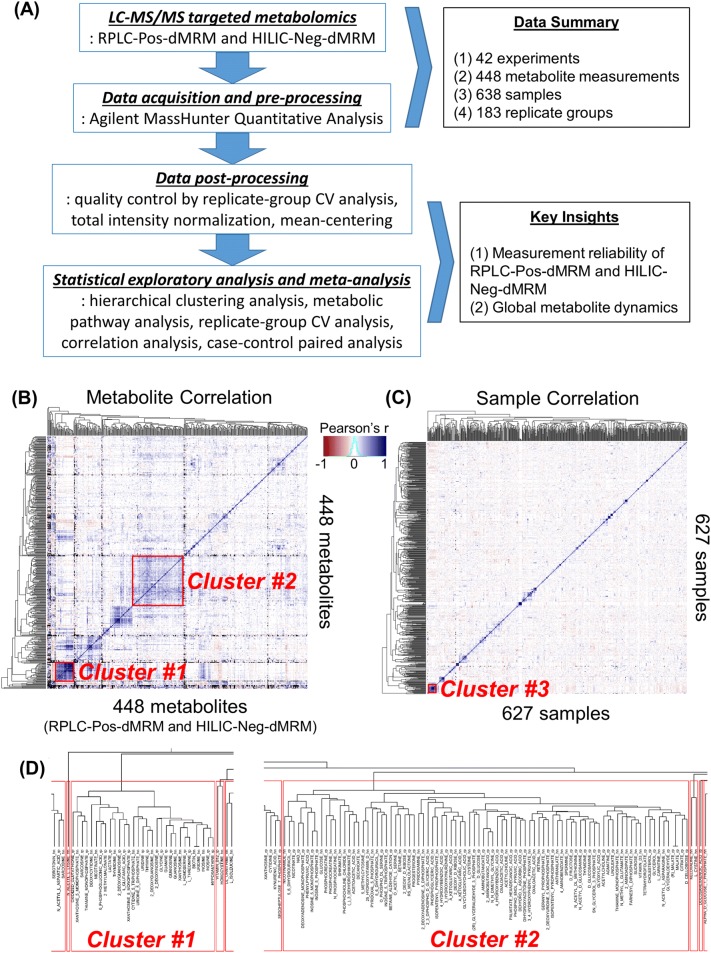
We previously developed a tandem mass spectrometry-based label-free targeted metabolomics analysis framework coupled to two distinct chromatographic methods, reversed-phase liquid chromatography (RPLC) and hydrophilic interaction liquid chromatography (HILIC), with dynamic multiple reaction monitoring (dMRM) for simultaneous detection of over 200 metabolites to study core metabolic pathways.
We aim to analyze a large-scale heterogeneous data compendium generated from our LC-MS/MS platform with both RPLC and HILIC methods to systematically assess measurement quality in biological replicate groups and to investigate metabolite abundance changes and patterns across different biological conditions.
Our metabolomics framework was applied in a wide range of experimental systems including cancer cell lines, tumors, extracellular media, primary cells, immune cells, organoids, organs (e.g. pancreata), tissues, and sera from human and mice. We also developed computational and statistical analysis pipelines, which include hierarchical clustering, replicate-group CV analysis, correlation analysis, and case-control paired analysis.
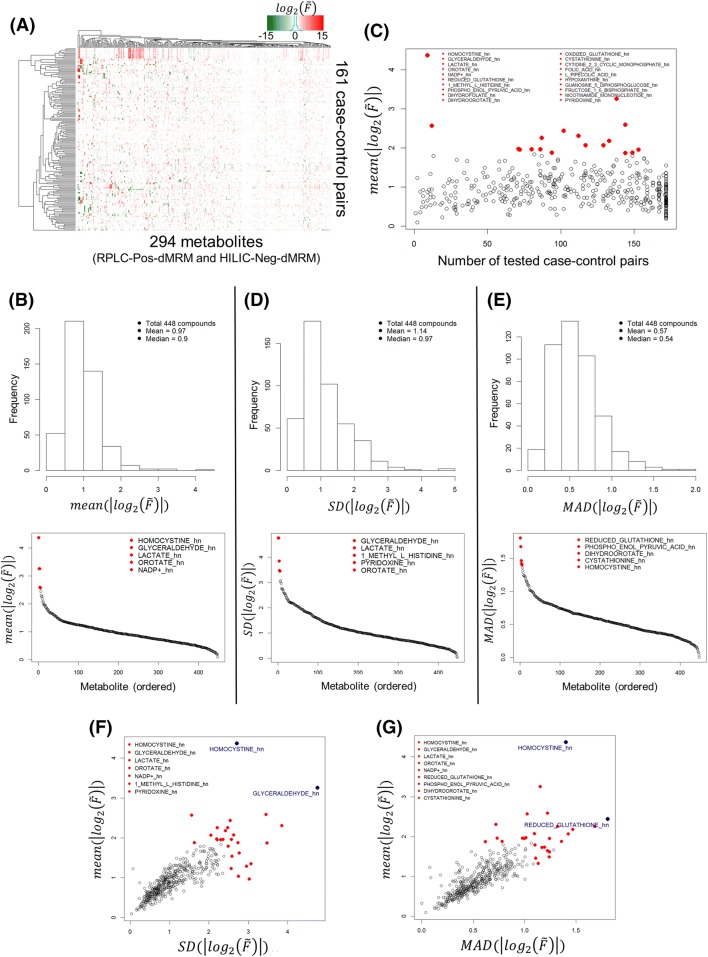
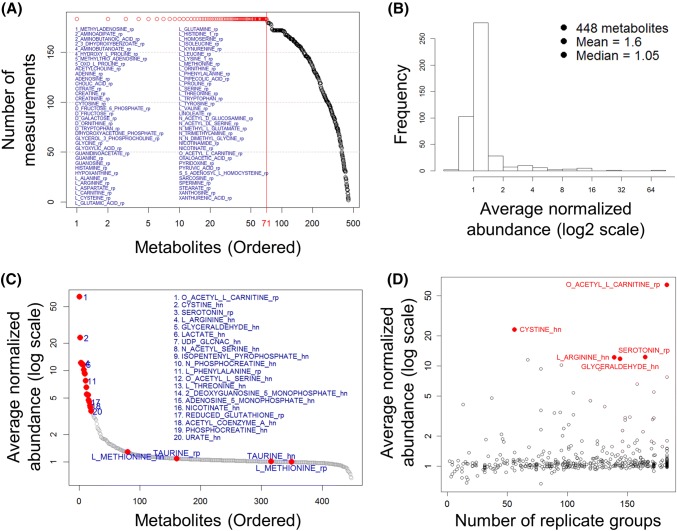
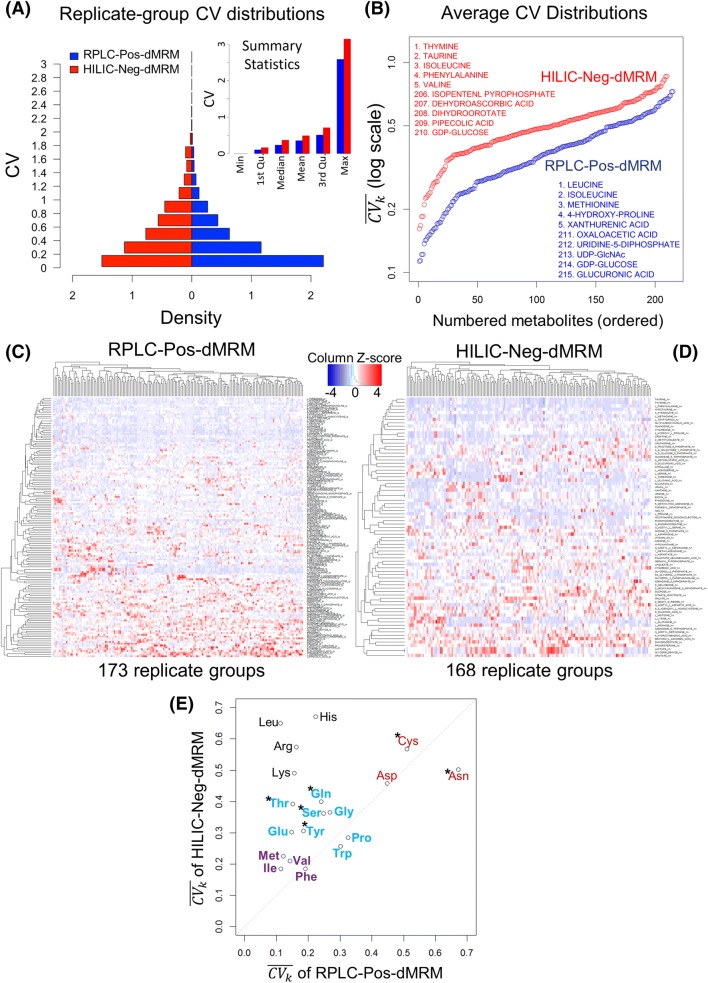
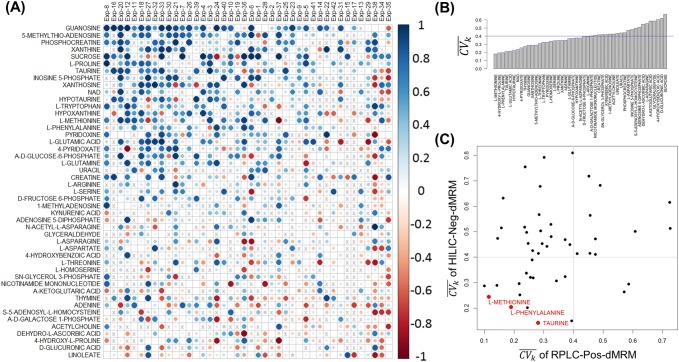
We generated a compendium of 42 heterogeneous deidentified datasets with 635 samples using both RPLC and HILIC methods. There exist metabolite signatures that correspond to various phenotypes of the heterogeneous datasets, involved in several metabolic pathways. The RPLC method shows overall better reproducibility than the HILIC method for most metabolites including polar amino acids. Correlation analysis reveals high confidence metabolites irrespective of experimental systems such as methionine, phenylalanine, and taurine. We also identify homocystine, reduced glutathione, and phosphoenolpyruvic acid as highly dynamic metabolites across all case-control paired samples.
Our study is expected to serve as a resource and a reference point for a systematic analysis of label-free LC-MS/MS targeted metabolomics data in both RPLC and HILIC methods with dMRM.
我们之前开发了一种基于串联质谱的无标记靶向代谢组学分析框架,该框架结合了两种不同的色谱方法(反相液相色谱(RPLC)和亲水相互作用液相色谱(HILIC)),并采用动态多重反应监测(dMRM)同时检测 200 多种代谢物,以研究核心代谢途径。
我们旨在使用 RPLC 和 HILIC 方法分析从我们的 LC-MS/MS 平台生成的大规模异质数据集,以系统评估生物重复组中的测量质量,并研究不同生物条件下代谢物丰度的变化和模式。
我们的代谢组学框架已应用于广泛的实验系统,包括癌细胞系、肿瘤、细胞外介质、原代细胞、免疫细胞、类器官、器官(如胰腺)、组织以及来自人和小鼠的血清。我们还开发了计算和统计分析管道,包括层次聚类、重复组 CV 分析、相关性分析和病例对照配对分析。
我们使用 RPLC 和 HILIC 方法生成了包含 42 个异质去识别数据集的综合数据集,其中包含 635 个样本。存在与异质数据集的各种表型相对应的代谢物特征,涉及多种代谢途径。对于包括极性氨基酸在内的大多数代谢物,RPLC 方法的重现性总体优于 HILIC 方法。相关性分析揭示了无论实验系统如何,都具有高度置信度的代谢物,例如蛋氨酸、苯丙氨酸和牛磺酸。我们还确定了高胱氨酸、还原型谷胱甘肽和磷酸烯醇丙酮酸作为所有病例对照配对样本中高度动态的代谢物。
我们的研究有望成为使用 dMRM 对 RPLC 和 HILIC 方法中的无标记 LC-MS/MS 靶向代谢组学数据进行系统分析的资源和参考点。