Department of Molecular and Integrative Physiology, University of Michigan, Ann Arbor, MI 48109, USA.
Cancer Research UK, Beatson Institute, Glasgow G61 1BD, UK.
Cell Metab. 2019 Jun 4;29(6):1390-1399.e6. doi: 10.1016/j.cmet.2019.02.001. Epub 2019 Feb 28.
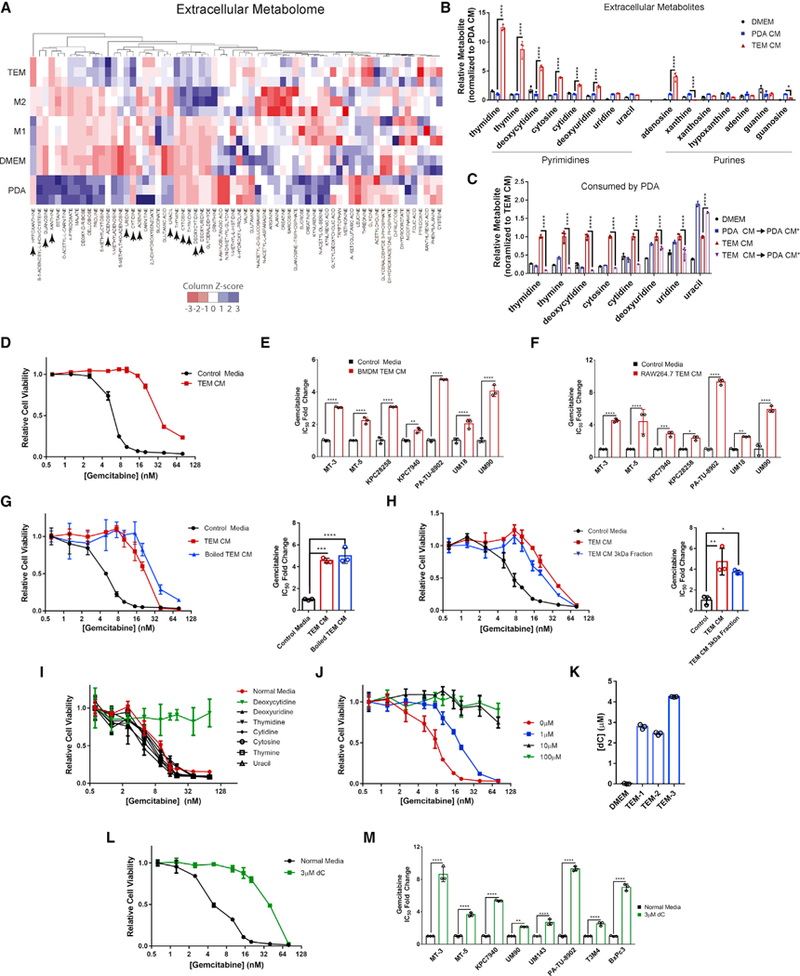
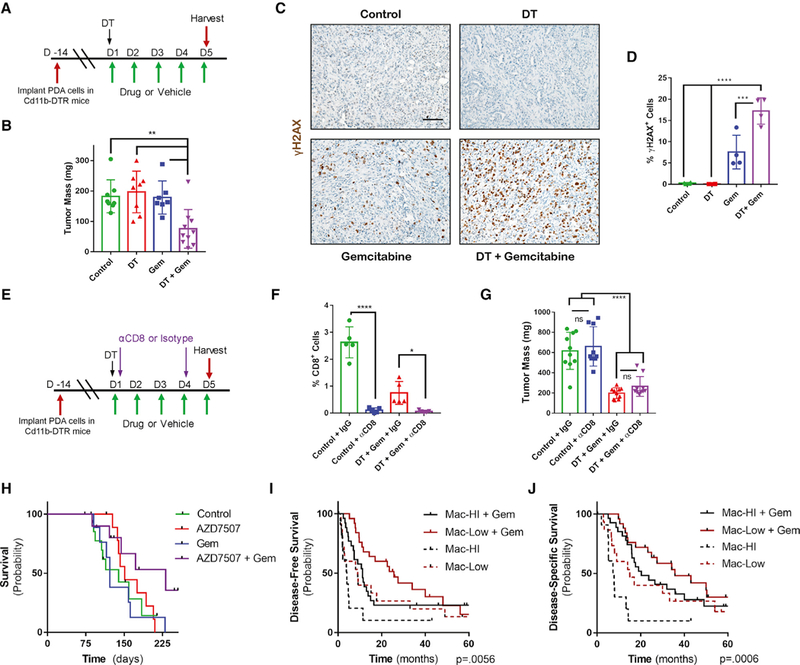
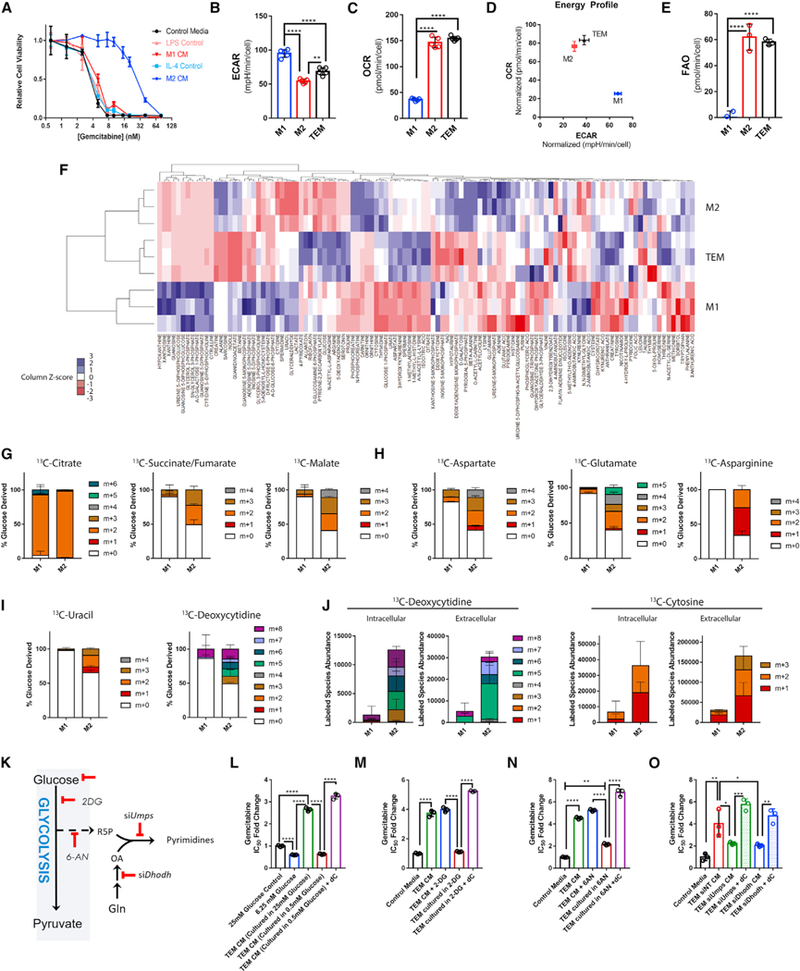
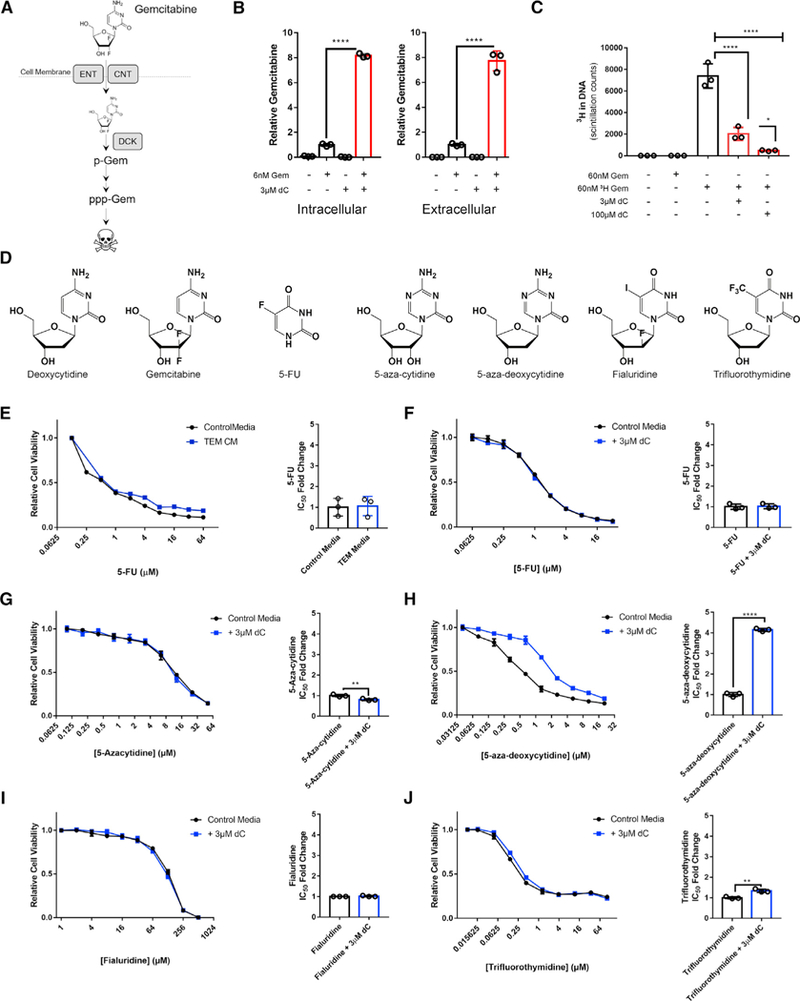
Pancreatic ductal adenocarcinoma (PDA) is characterized by abundant infiltration of tumor-associated macrophages (TAMs). TAMs have been reported to drive resistance to gemcitabine, a frontline chemotherapy in PDA, though the mechanism of this resistance remains unclear. Profiling metabolite exchange, we demonstrate that macrophages programmed by PDA cells release a spectrum of pyrimidine species. These include deoxycytidine, which inhibits gemcitabine through molecular competition at the level of drug uptake and metabolism. Accordingly, genetic or pharmacological depletion of TAMs in murine models of PDA sensitizes these tumors to gemcitabine. Consistent with this, patients with low macrophage burden demonstrate superior response to gemcitabine treatment. Together, these findings provide insights into the role of macrophages in pancreatic cancer therapy and have potential to inform the design of future treatments. Additionally, we report that pyrimidine release is a general function of alternatively activated macrophage cells, suggesting an unknown physiological role of pyrimidine exchange by immune cells.
胰腺导管腺癌(PDA)的特征是大量浸润肿瘤相关巨噬细胞(TAMs)。据报道,TAMs 可导致对 PDA 一线化疗药物吉西他滨产生耐药性,但这种耐药性的机制尚不清楚。通过代谢物交换分析,我们证明 PDA 细胞编程的巨噬细胞释放出一系列嘧啶物质。其中包括脱氧胞苷,它通过在药物摄取和代谢水平上的分子竞争来抑制吉西他滨。因此,在 PDA 的小鼠模型中,通过遗传或药理学方法耗尽 TAMs 可使这些肿瘤对吉西他滨敏感。与此一致的是,巨噬细胞负担低的患者对吉西他滨治疗的反应更好。这些发现为巨噬细胞在胰腺癌治疗中的作用提供了新的见解,并有可能为未来治疗方法的设计提供信息。此外,我们报告嘧啶释放是一种替代激活的巨噬细胞的一般功能,这表明免疫细胞的嘧啶交换具有未知的生理作用。