Zorrilla Eric P, Koob George F
Department of Neuroscience, The Scripps Research Institute, La Jolla, CA, United States.
Neurobiology of Addiction Section, Intramural Research Program, National Institute on Drug Abuse, Baltimore, MD, United States.
Front Behav Neurosci. 2019 Jun 25;13:136. doi: 10.3389/fnbeh.2019.00136. eCollection 2019.
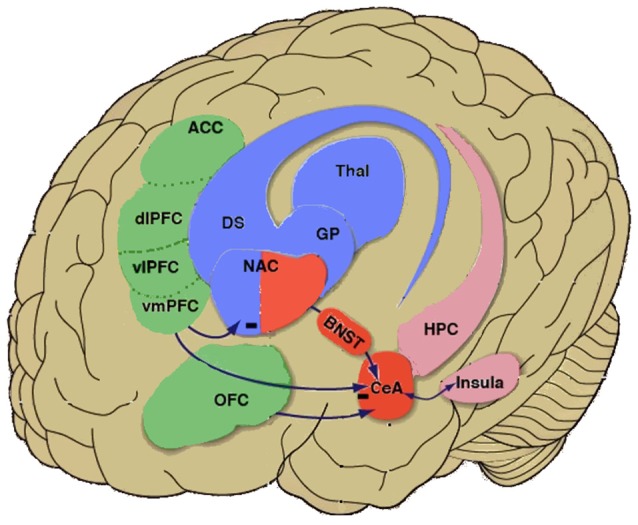
Negative urgency is a unique dimension of impulsivity that involves acting rashly when in extreme distress and impairments in inhibitory control. It has been hypothesized to derive from stress that is related to negative emotional states that are experienced during the stage of the addiction cycle. Classically, a transition to compulsive drug use prevents or relieves negative emotional states that result from abstinence or stressful environmental circumstances. Recent work suggests that this shift to the "dark side" is also implicated in impulsive use that derives from negative urgency. Stress and anxious, depressed, and irritable mood have high comorbidity with addiction. They may trigger bouts of drug seeking in humans both negative reinforcement and negative urgency. The neurocircuitry that has been identified in the "dark side" of addiction involves key neuropeptides in the central extended amygdala, including corticotropin-releasing factor. The present review article summarizes empirical and conceptual advances in the field to understand the role of the "dark side" in driving the risky and detrimental substance use that is associated with negative urgency in addiction.
消极紧迫性是冲动性的一个独特维度,它涉及在极度痛苦时鲁莽行事以及抑制控制受损。据推测,它源于与成瘾周期阶段中所经历的消极情绪状态相关的压力。传统上,向强迫性药物使用的转变可预防或缓解因禁欲或压力环境导致的消极情绪状态。最近的研究表明,这种向“黑暗面”的转变也与源于消极紧迫性的冲动性使用有关。压力与焦虑、抑郁和易怒情绪与成瘾高度共病。它们可能通过消极强化和消极紧迫性引发人类的觅药行为。在成瘾“黑暗面”中已确定的神经回路涉及中央扩展杏仁核中的关键神经肽,包括促肾上腺皮质激素释放因子。本综述文章总结了该领域的实证和概念进展,以了解“黑暗面”在推动与成瘾中消极紧迫性相关的危险且有害的物质使用方面所起的作用。