Zhang Jingzhe, Li Ye, Yang Shoujun, Zhang Lening, Wang Wenjun
Department of Orthopedics, China-Japan Union Hospital of Jilin University, Changchun 130033, People's Republic of China.
Department of Physiatry, China-Japan Union Hospital of Jilin University, Changchun 130033, People's Republic of China.
J Bone Oncol. 2019 Jun 12;17:100245. doi: 10.1016/j.jbo.2019.100245. eCollection 2019 Aug.
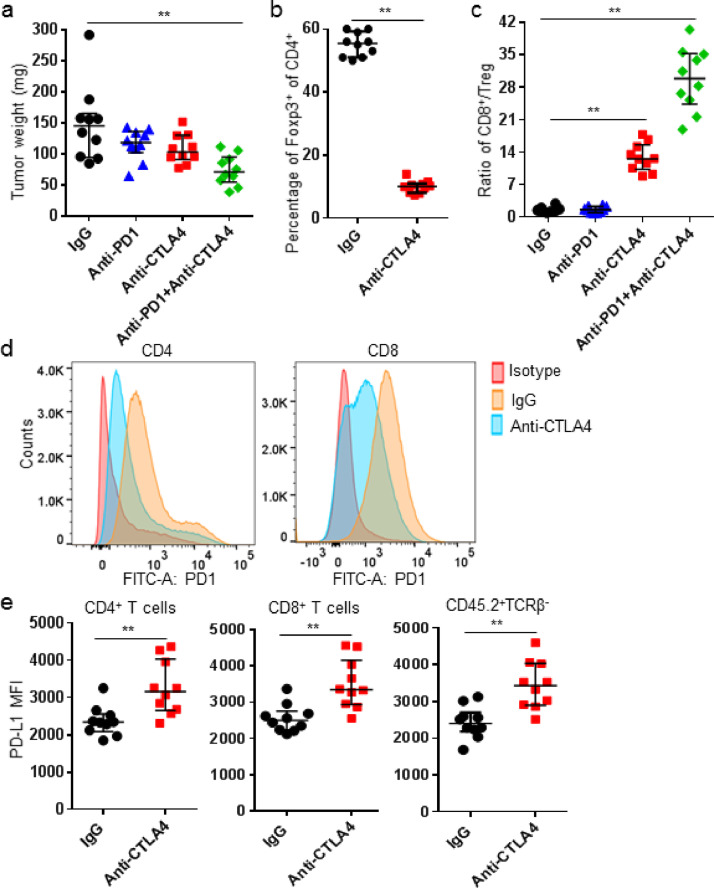
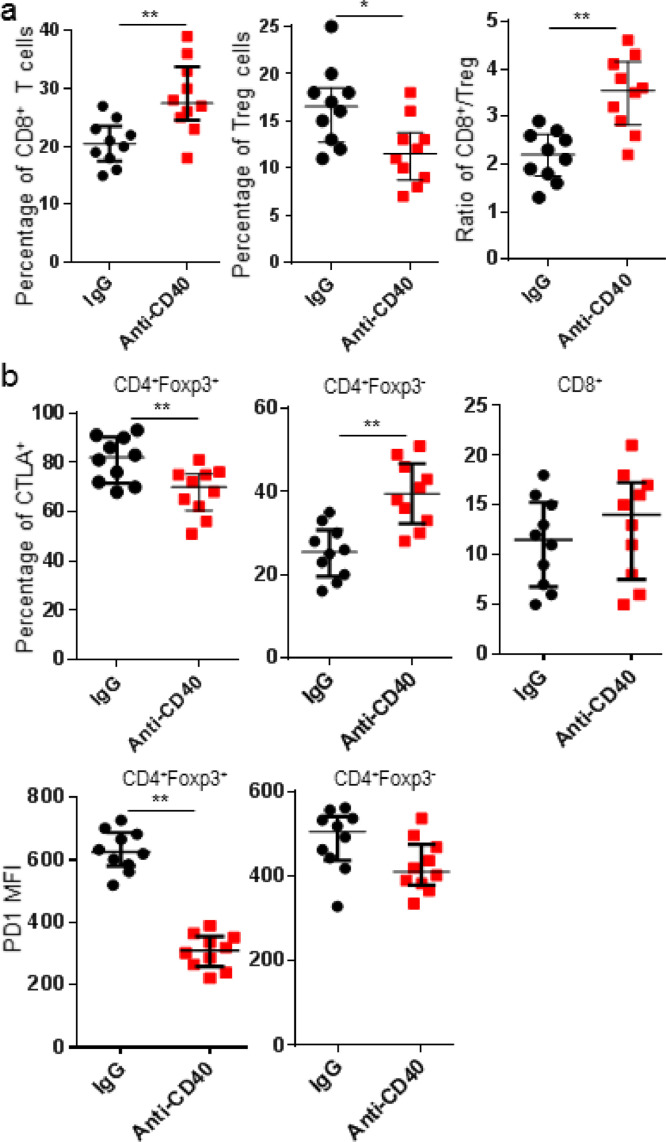
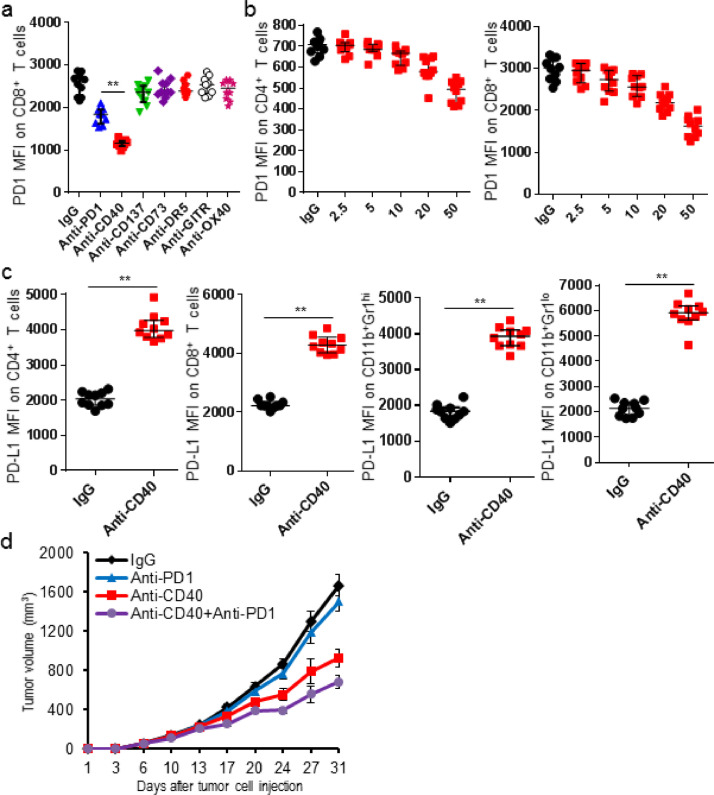
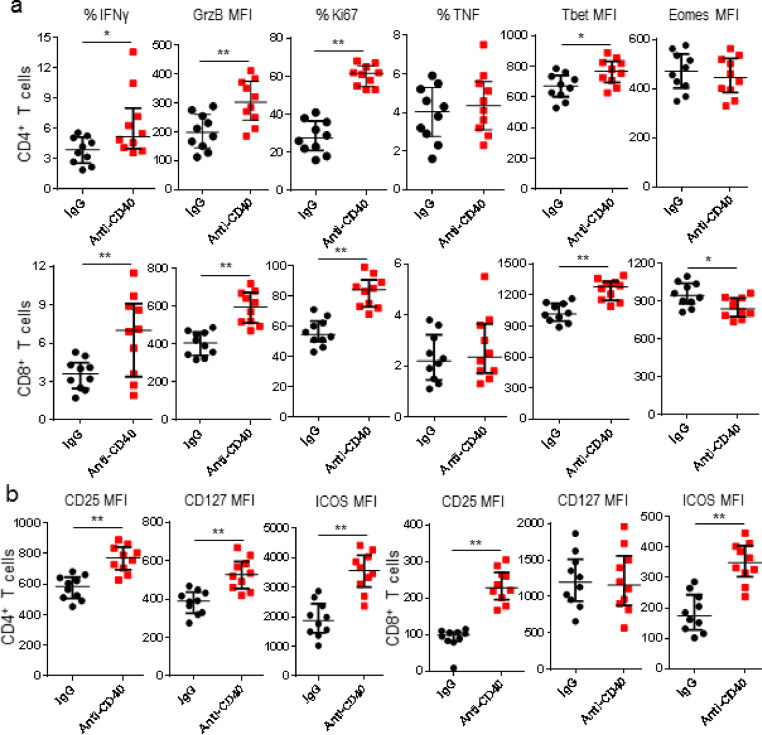
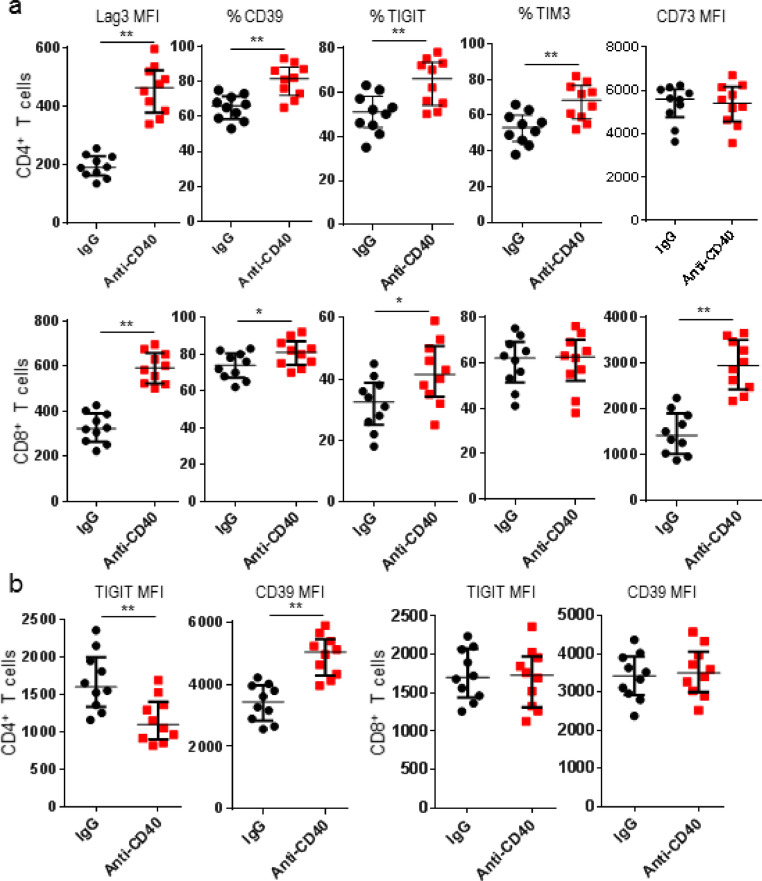
The overall survival rate of patients with osteosarcoma has remained stagnant at 15-30% for several decades. Although immunotherapy has revolutionized the oncology field, largely attributed to the success of immune-checkpoint blockade, the durability and efficacy of anti-PD1 (programmed cell death protein 1) mAb vary across different malignancies. Among the major reasons for tumor resistance to this immune checkpoint therapy is the absence of tumor-infiltrating cytotoxic T lymphocytes. However, the presence of intratumor exhausted PD1 T cells also contributes to insensitivity to anti-PD1 treatment. In this study, we established the osteosarcoma mouse tumor model resistant to anti-PD1 mAb that harbored PD1 T cells. Furthermore, flow cytometry analysis of tumor infiltrating leukocytes after treatment was used as a screening platform to identify agents that could re-sensitize T cells to anti-PD1 mAb. Results showed that anti-CD40 mAb treatment converted PD1 T cells to PD1 T cells, reversing phenotypic T cell exhaustion and sensitizing anti-PD1 refractory tumors to respond to anti-PD1 mAb. Results also showed that intratumor Treg presented with a less activated and attenuated suppressive phenotype after anti-CD40 mAb treatment. Our study provides proof of concept to systematically identify immune conditioning agents, which are able to convert PD1 T cells to PD1 T cells, with clinical implications in the treatment against refractory osteosarcoma to anti-PD1 mAb.
几十年来,骨肉瘤患者的总体生存率一直停滞在15%-30%。尽管免疫疗法给肿瘤学领域带来了变革,这很大程度上归功于免疫检查点阻断的成功,但抗PD1(程序性细胞死亡蛋白1)单克隆抗体在不同恶性肿瘤中的持久性和疗效各不相同。肿瘤对这种免疫检查点疗法产生抗性的主要原因之一是缺乏肿瘤浸润性细胞毒性T淋巴细胞。然而,肿瘤内耗竭的PD1 T细胞的存在也导致对抗PD1治疗不敏感。在本研究中,我们建立了对携带PD1 T细胞的抗PD1单克隆抗体耐药的骨肉瘤小鼠肿瘤模型。此外,治疗后对肿瘤浸润白细胞进行流式细胞术分析,作为筛选平台来识别可使T细胞对抗PD1单克隆抗体重新敏感的药物。结果显示,抗CD40单克隆抗体治疗可将PD1 T细胞转化为PD1 T细胞,逆转T细胞表型耗竭,并使抗PD1难治性肿瘤对抗PD1单克隆抗体产生反应。结果还显示,抗CD40单克隆抗体治疗后,肿瘤内调节性T细胞呈现出激活程度较低和抑制表型减弱的状态。我们的研究为系统识别免疫调节药物提供了概念验证,这些药物能够将PD1 T细胞转化为PD1 T细胞,对难治性骨肉瘤抗PD1单克隆抗体治疗具有临床意义。