Richards Peter, Fothergill Jo, Bernardeau Marion, Wigley Paul
Institute of Infection and Global Health, University of Liverpool, Liverpool, United Kingdom.
DuPont Industrial Biosciences, Genencor International BV, Leiden, Netherlands.
Front Vet Sci. 2019 Jun 25;6:201. doi: 10.3389/fvets.2019.00201. eCollection 2019.
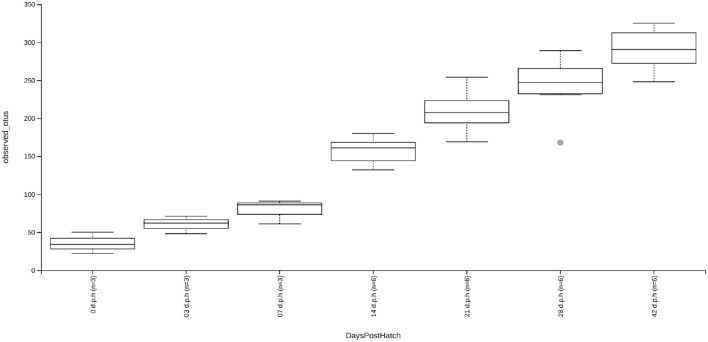
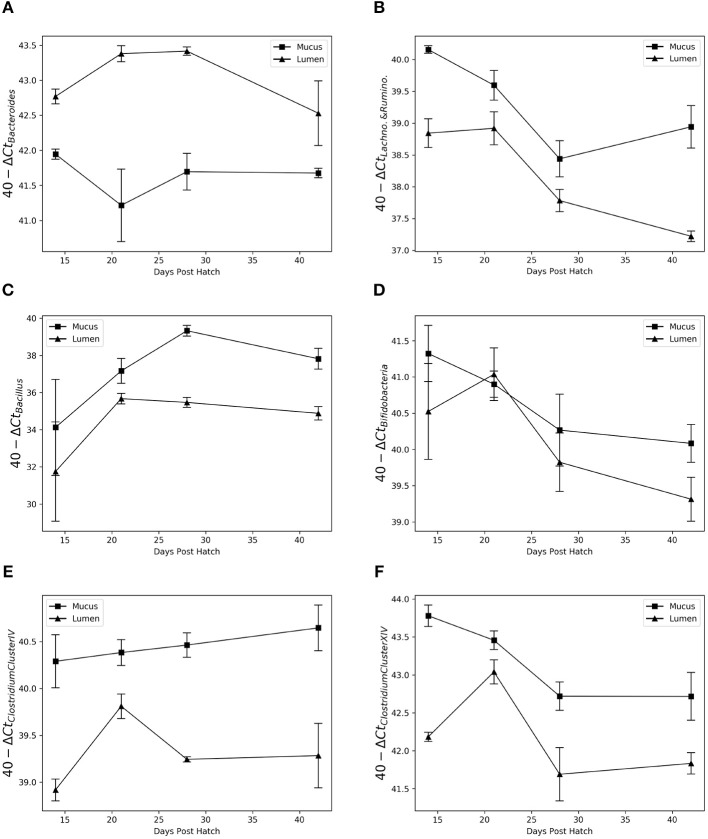
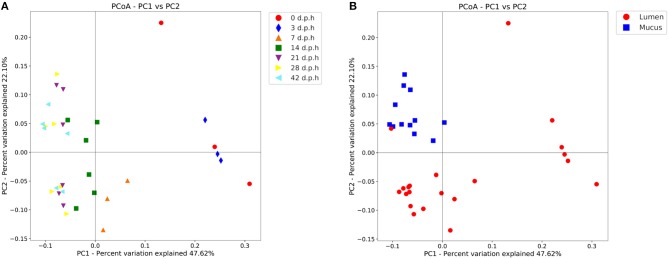
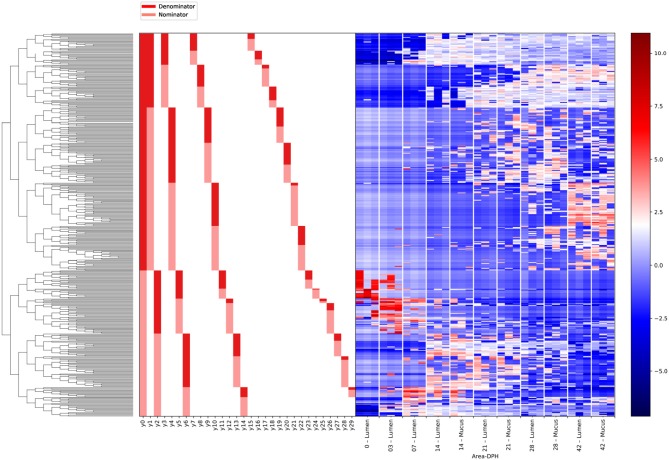
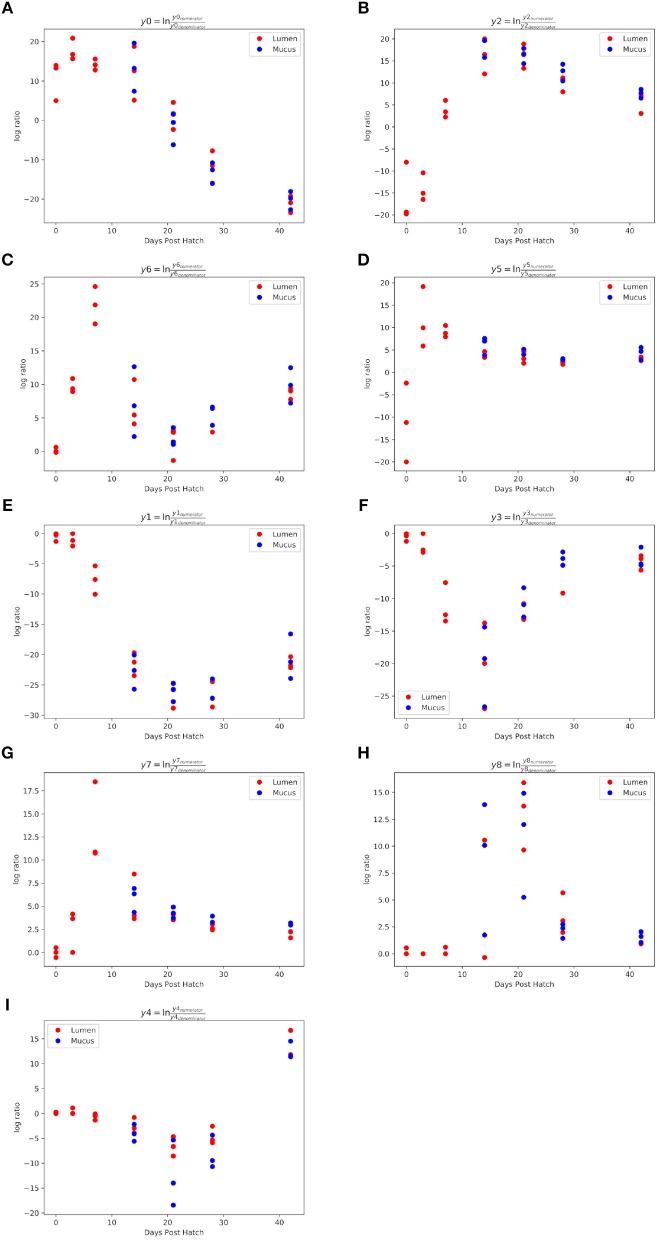
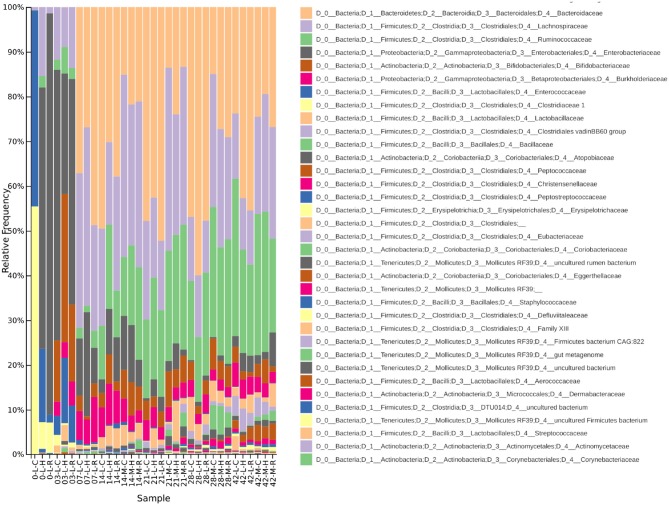
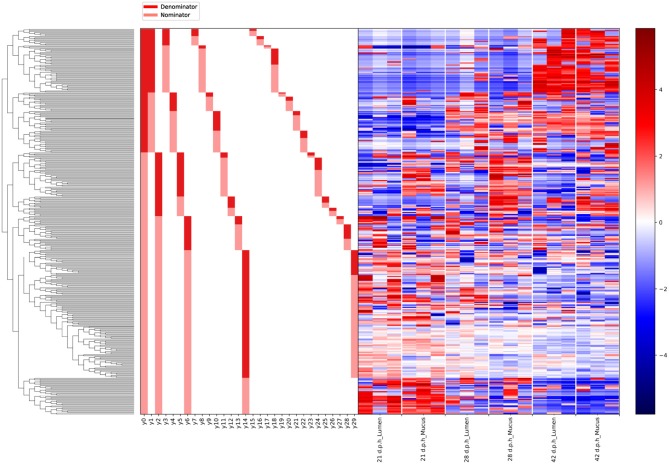
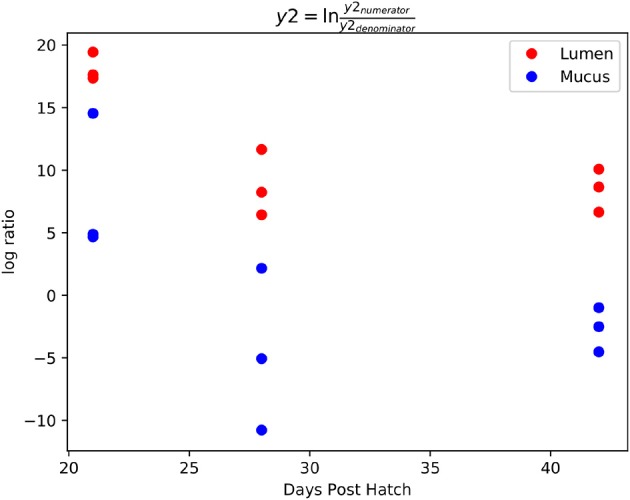
The development of the caecal microbiota plays a role in the metabolism and immune competence of chickens. A detailed understanding of normal succession in the caecal microbiota can inform the use of probiotics and other interventions to optimize the caecal microbiota. The development of the microbiota in caecal mucus and lumen samples from three breeds of broiler chicken (Cobb 500, = 36; Hubbard JA87, = 38; and Ross 308, = 36) was observed between 0 and 42 days post hatch. Chicks were housed in the same room of a climate-controlled, biosecure chicken housing unit. Between 0 and 14 days post hatch, chicks were kept in brooder pens ensuring a mixture of breeds in each brooder. From 22 days post hatch, chicks were removed from the brooders and kept in the same room. DNA was extracted from a pooled sample of caecal mucus and luminal contents from five birds of each breed at 0, 3, 7, 14, 21, 28, and 42 days post hatch. High-throughput Illumina sequencing was performed for the V4 hypervariable region of the 16S rRNA gene. The early caecal microbiota was characterized by poor diversity and dominance by one or two bacterial species. Early colonizers of the caecum included and with some amplicon sequence variants (ASVs) assigned to . Later colonizers of the caecal microbiota were most apparent from 14 d.p.h and included vadin BB60 group, and . The caecal microbiota continued to change until 42 d.p.h when the microbiota was characterized by a high abundance of and . The lumen microbiota was significantly different to the mucus with some ASVs assigned to and showing increased abundance in the mucus. ASVs assigned to and showed a preference for the lumen. Analysis of five caecal mucus samples from each breed at 42 days post hatch showed differences in microbiota composition between Ross and Cobb as well as between Ross and Hubbard. Since performance data was not collected no functional inferences as to the significance of this finding can be made.
盲肠微生物群的发育在鸡的新陈代谢和免疫能力中发挥作用。详细了解盲肠微生物群的正常演替情况可为使用益生菌和其他干预措施来优化盲肠微生物群提供依据。观察了三种肉鸡(科宝500,n = 36;哈伯德JA87,n = 38;罗斯308,n = 36)从出壳后0至42天盲肠黏液和肠腔样本中微生物群的发育情况。雏鸡饲养在一个气候控制、生物安全的鸡舍单元的同一房间内。在出壳后0至14天,雏鸡饲养在育雏栏中,确保每个育雏栏中有不同品种的混合。从出壳后22天起,雏鸡从育雏栏中移出并饲养在同一房间。在出壳后0、3、7、14、21、28和42天,从每个品种的五只鸡的盲肠黏液和肠腔内容物的混合样本中提取DNA。对16S rRNA基因的V4高变区进行高通量Illumina测序。早期盲肠微生物群的特点是多样性差,由一两种细菌主导。盲肠的早期定殖者包括大肠杆菌和沙门氏菌,还有一些扩增子序列变体(ASV)被归类为弯曲杆菌属。盲肠微生物群的后期定殖者在出壳后14天最明显,包括vadin BB60组、梭菌属和双歧杆菌属。盲肠微生物群持续变化,直到出壳后42天,此时微生物群的特点是大肠杆菌和乳酸菌的丰度很高。肠腔微生物群与黏液有显著差异,一些归类为拟杆菌属和双歧杆菌属的ASV在黏液中的丰度增加。归类为大肠杆菌和乳酸菌的ASV表现出对肠腔的偏好。对每个品种出壳后42天的五个盲肠黏液样本的分析表明,罗斯与科宝以及罗斯与哈伯德之间的微生物群组成存在差异。由于未收集性能数据,因此无法对这一发现的意义进行功能推断。