Ashkenazy Yosef
Department of Solar Energy and Environmental Physics, BIDR, Ben-Gurion University, Midreshet Ben-Gurion, Israel.
Heliyon. 2019 Jun 21;5(6):e01908. doi: 10.1016/j.heliyon.2019.e01908. eCollection 2019 Jun.
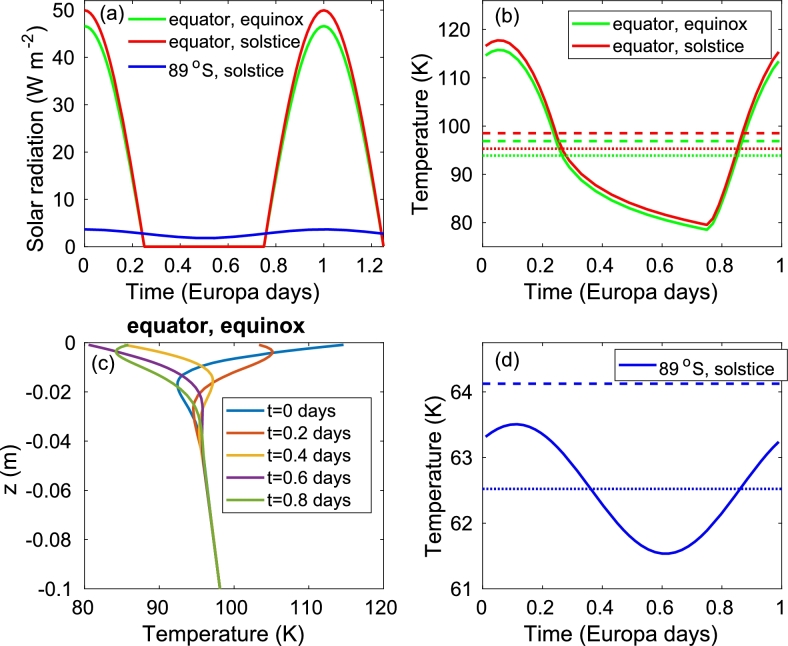
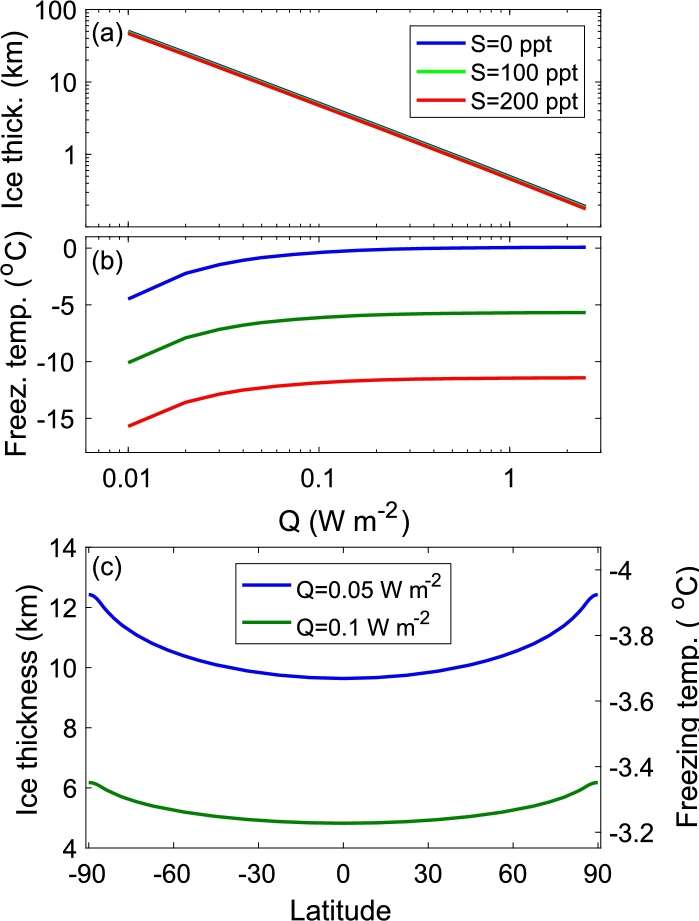
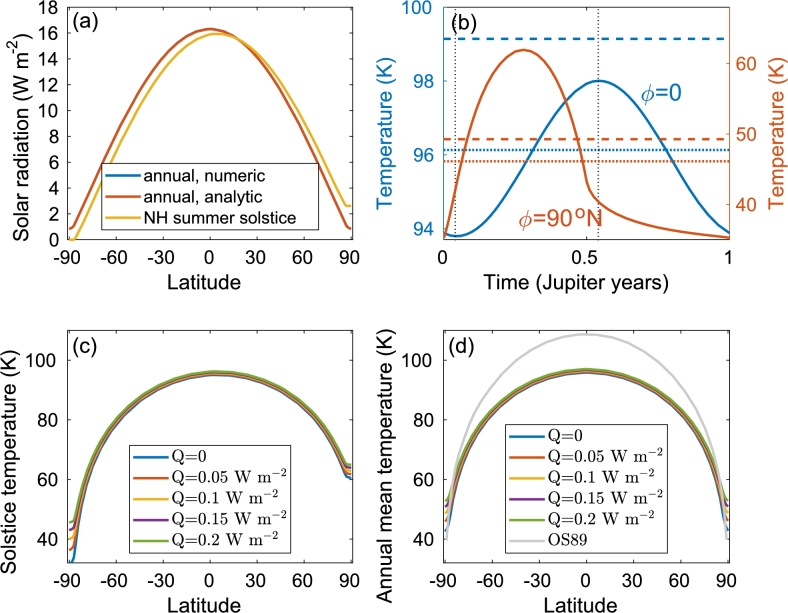
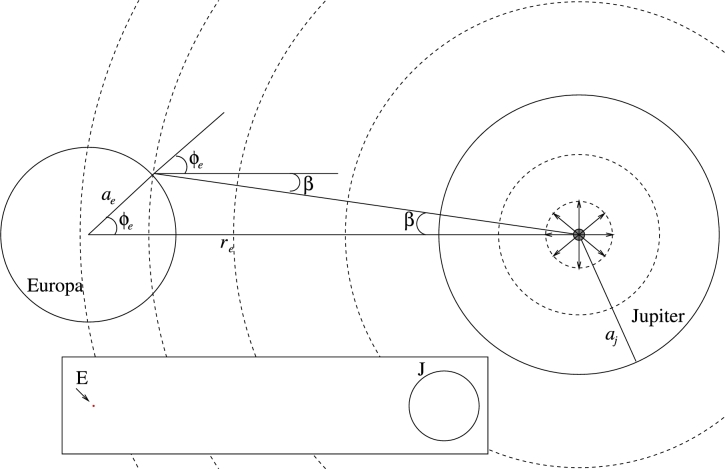
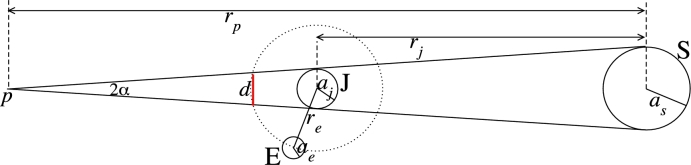
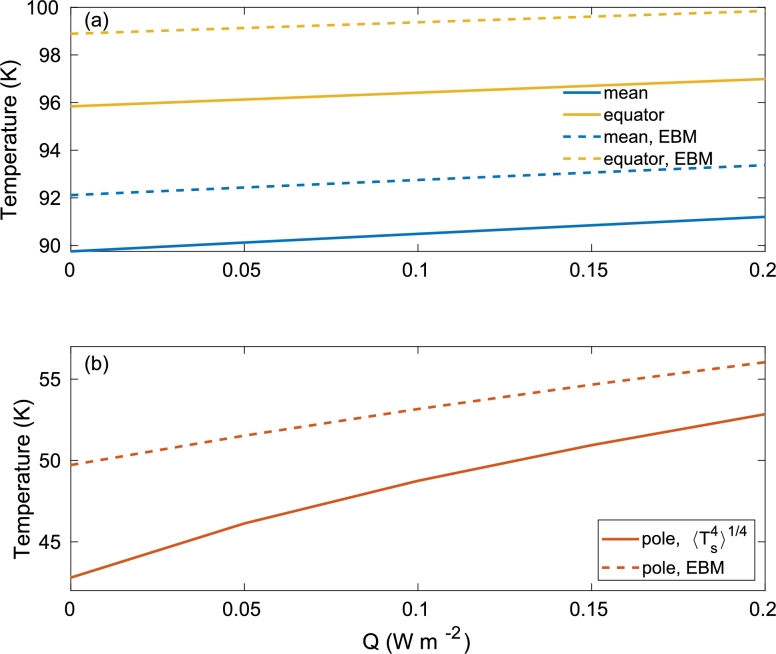
Previous estimates of the annual mean surface temperature of Jupiter's moon, Europa, neglected the effect of the eccentricity of Jupiter's orbit around the Sun, the effect of the emissivity and heat capacity of Europa's ice, the effect of the eclipse of Europa (i.e., the relative time that Europa is within the shadow of Jupiter), the effect of Jupiter's radiation, and the effect of Europa's internal heating. Other studies concentrated on the diurnal cycle but neglected some of the above factors. In addition, to our knowledge, the seasonal cycle of the surface temperature of Europa was not estimated. Here we systematically estimate the diurnal, seasonal and annual mean surface temperature of Europa, when Europa's obliquity, emissivity, heat capacity, and eclipse, as well as Jupiter's radiation, internal heating, and eccentricity, are all taken into account. For a typical internal heating rate of , the equator, pole, and the global and mean annual mean surface temperatures are 96 K, 46 K, and 90 K, respectively. We found that the temperature at the high latitudes is significantly affected by the internal heating, especially during the winter solstice, suggesting that measurements of high latitude surface temperatures can be used to constrain the internal heating. We also estimate the incoming solar radiation to Enceladus, the moon of Saturn.
之前对木星卫星木卫二的年平均表面温度的估计,忽略了木星绕太阳轨道的偏心率的影响、木卫二冰层的发射率和热容量的影响、木卫二被遮挡(即木卫二处于木星阴影内的相对时间)的影响、木星辐射的影响以及木卫二内部加热的影响。其他研究集中在昼夜循环,但忽略了上述一些因素。此外,据我们所知,木卫二表面温度的季节循环尚未得到估计。在此,我们系统地估计了木卫二的昼夜、季节和年平均表面温度,其中考虑了木卫二的倾角、发射率、热容量和被遮挡情况,以及木星的辐射、内部加热和偏心率。对于典型的内部加热速率 ,赤道、极点以及全球和年平均表面温度分别为96K、46K和90K。我们发现高纬度地区的温度受内部加热的影响显著,尤其是在冬至期间,这表明对高纬度表面温度的测量可用于限制内部加热。我们还估计了土星卫星土卫二接收到的太阳辐射。