Department of Hepatobiliary Surgery, ZhongShan Hospital of Xiamen University, Fujian, China.
Fujian Provincial Key Laboratory of Chronic Liver Disease and Hepatocellular Carcinoma, ZhongShan Hospital of Xiamen University, Fujian, China.
Mol Oncol. 2019 Sep;13(9):1993-2009. doi: 10.1002/1878-0261.12544. Epub 2019 Jul 11.
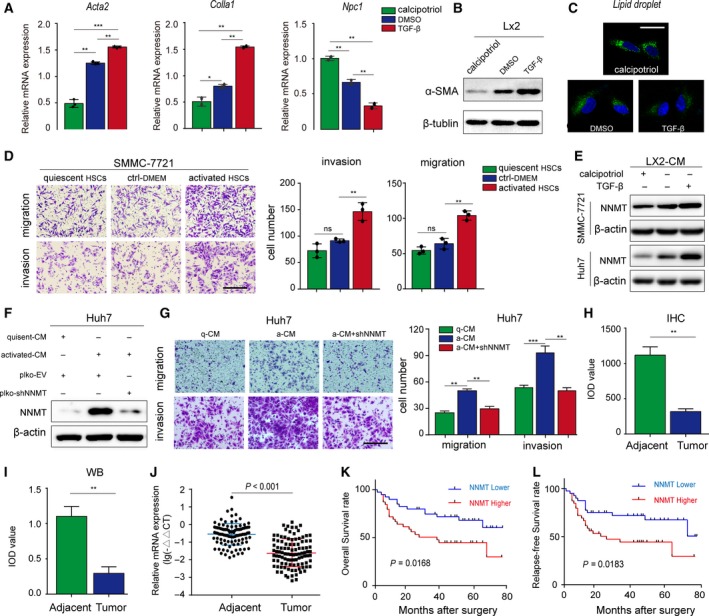
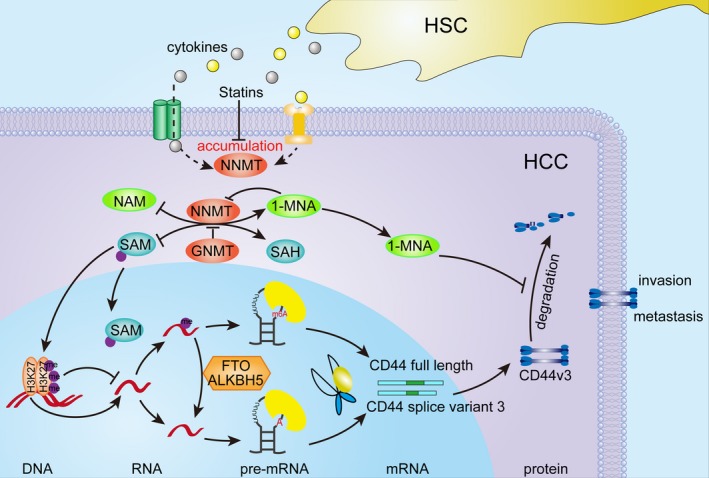
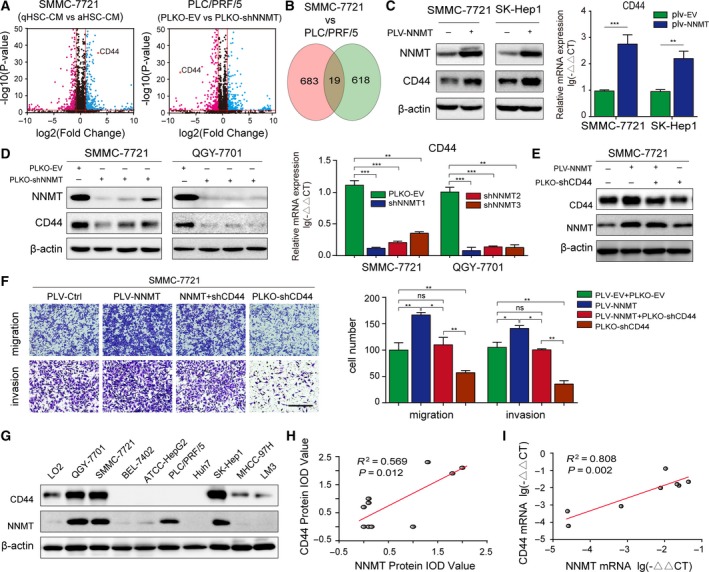
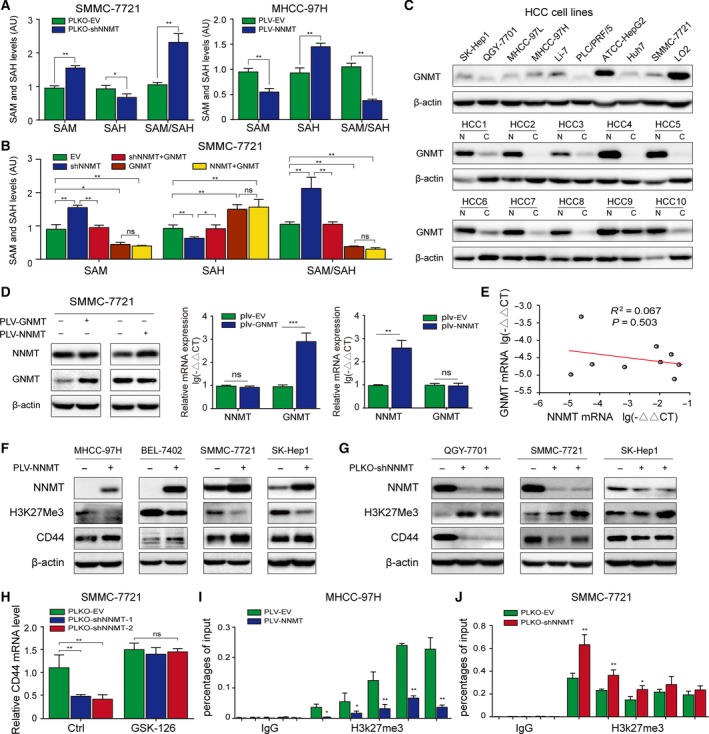
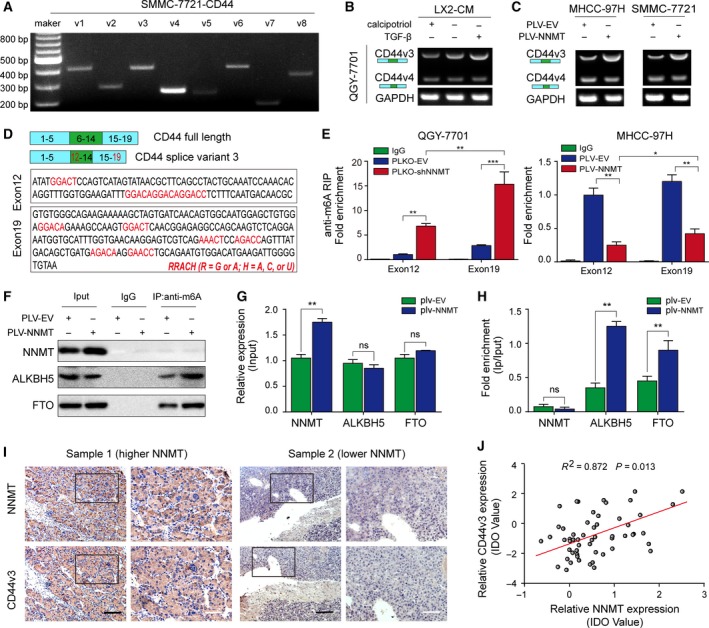
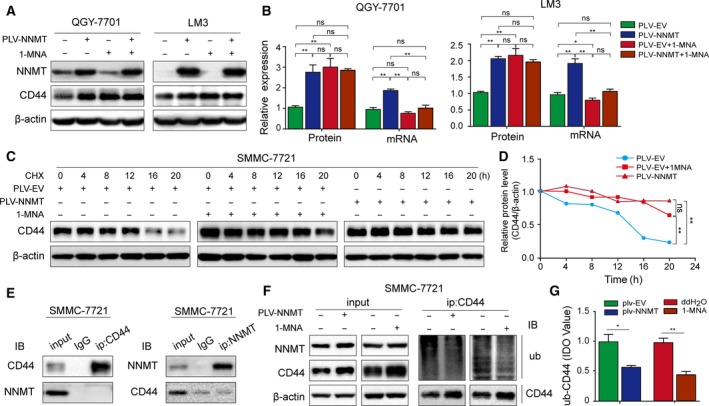
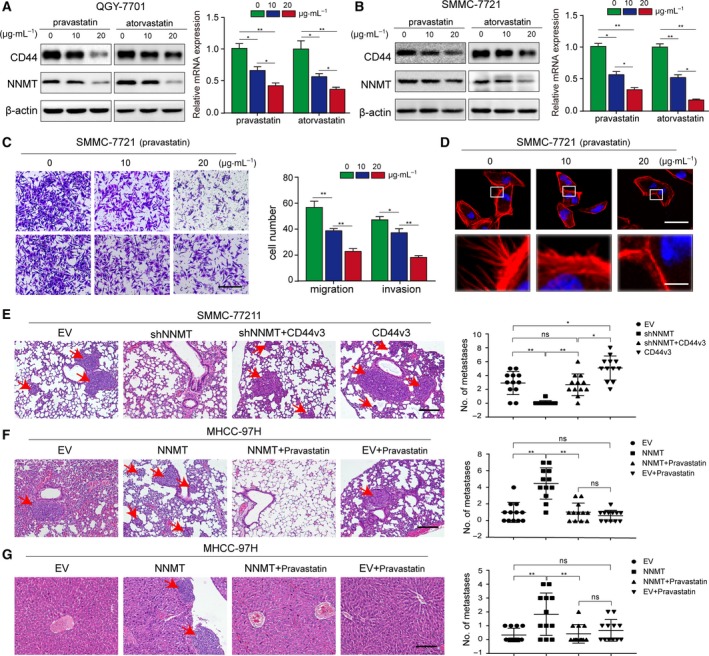
The cross-talk between hepatic stellate cells (HSCs) and hepatic carcinoma cells contributes to hepatocellular carcinoma (HCC) progression, but the underlying mechanism is largely unknown. We report here that activated HSCs induce upregulation of nicotinamide N-methyltransferase (NNMT), which is known to regulate multiple metabolic pathways in hepatoma cells of the liver. High levels of NNMT in HCC tissues were positively correlated with vascular invasion, increased serum HBV-DNA levels, and distant metastasis. In addition, functional assays showed that NNMT promoted HCC cell invasion and metastasis by altering the histone H3 methylation on 27 methylation pattern and transcriptionally activating cluster of differentiation 44 (CD44). NNMT-mediated N6-methyladenosine modification of CD44 mRNA resulted in the formation of a CD44v3 splice variant, while its product 1-methyl-nicotinamide stabilized CD44 protein by preventing ubiquitin-mediated degradation. Finally, NNMT was also shown to be a target of statins that inhibited metastasis of hepatoma cells. Taken together, our study shows for the first time that the NNMT/CD44v3 axis regulates HCC metastasis and presents NNMT as a promising prognostic biomarker and therapeutic target for HCC.
肝星状细胞 (HSCs) 与肝癌细胞之间的串扰促进了肝细胞癌 (HCC) 的进展,但其中的机制在很大程度上尚不清楚。我们在这里报告称,激活的 HSCs 诱导烟酰胺 N-甲基转移酶 (NNMT) 的上调,已知 NNMT 可调节肝脏肝癌细胞中的多种代谢途径。HCC 组织中 NNMT 的高水平与血管侵犯、血清 HBV-DNA 水平升高和远处转移呈正相关。此外,功能测定表明,NNMT 通过改变组蛋白 H3 在 27 位的甲基化并转录激活 CD44,促进 HCC 细胞的侵袭和转移。NNMT 介导的 CD44 mRNA 的 N6-甲基腺苷修饰导致 CD44v3 剪接变体的形成,而其产物 1-甲基烟酰胺通过防止泛素介导的降解稳定 CD44 蛋白。最后,还表明 NNMT 是他汀类药物的靶点,他汀类药物抑制肝癌细胞的转移。总之,我们的研究首次表明,NNMT/CD44v3 轴调节 HCC 转移,并将 NNMT 作为 HCC 的有前途的预后生物标志物和治疗靶标。