Institute of Environmental Sciences, Jagiellonian University, ul. Gronostajowa 7, 30-387, Kraków, Poland.
Centre for Ecology and Evolution in Microbial Model Systems - EEMiS, Linnaeus University, 39182, Kalmar, Sweden.
Sci Rep. 2019 Jul 11;9(1):10045. doi: 10.1038/s41598-019-46422-2.
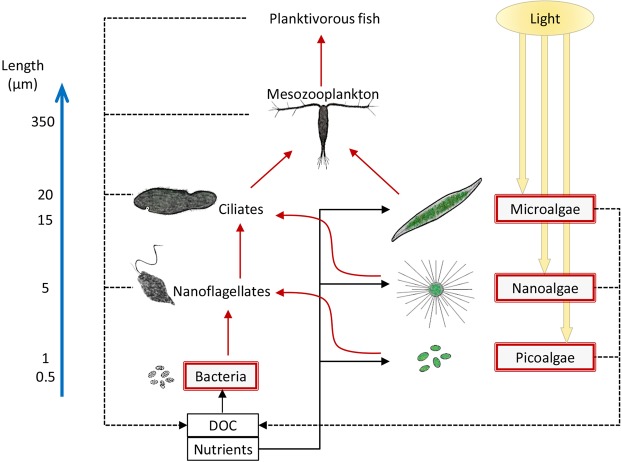
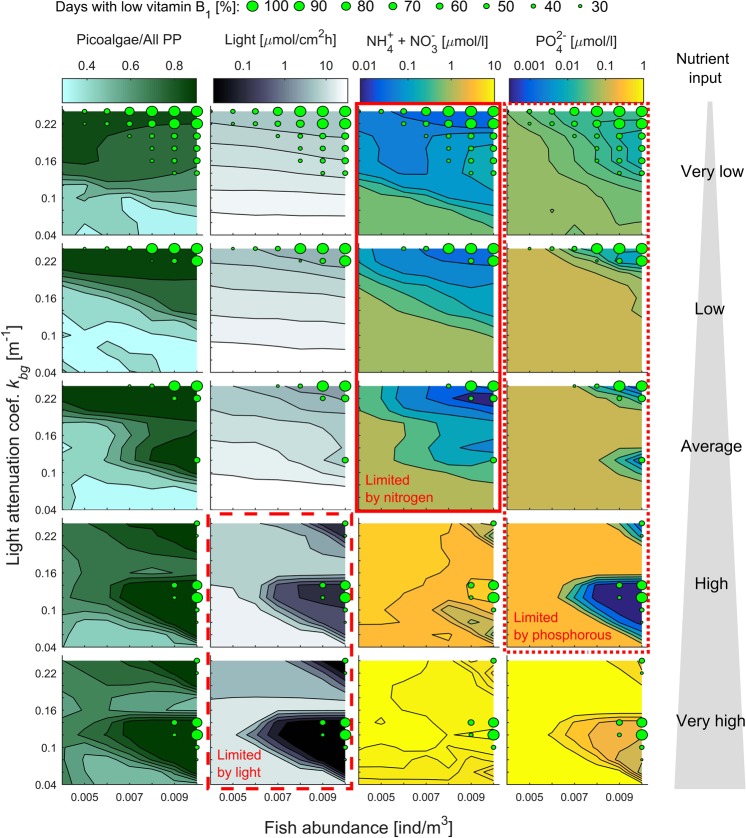
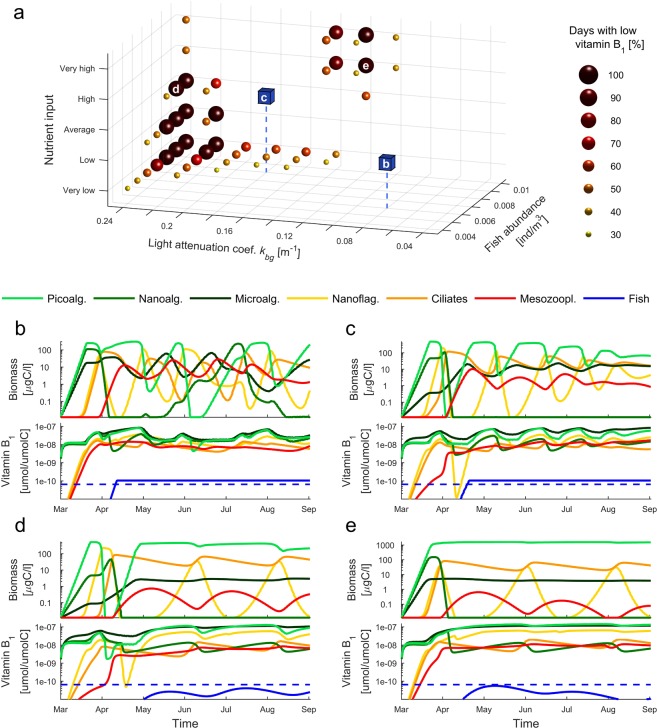
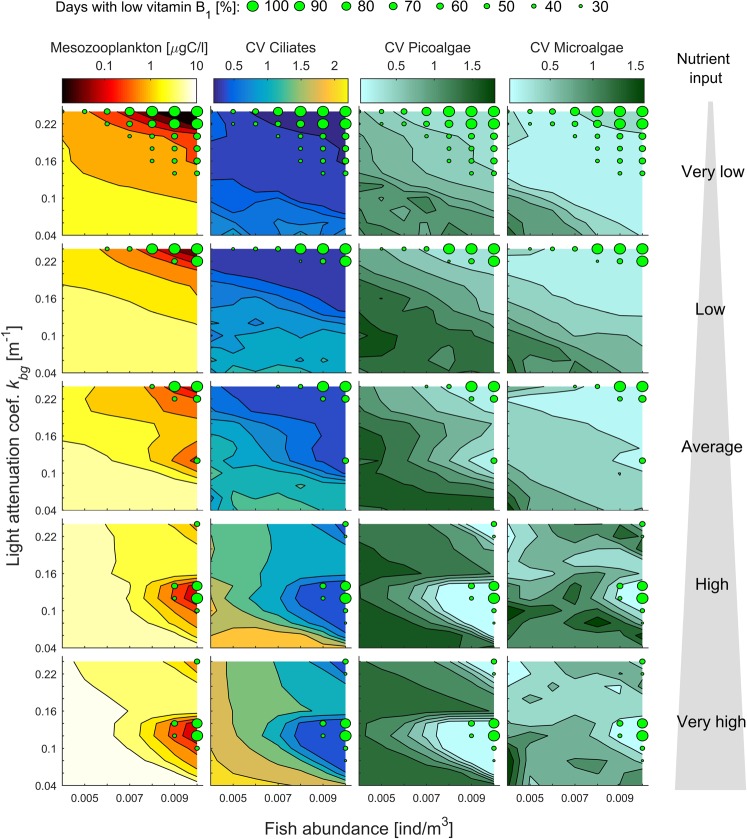
Vitamin B is an essential exogenous micronutrient for animals. Mass death and reproductive failure in top aquatic consumers caused by vitamin B deficiency is an emerging conservation issue in Northern hemisphere aquatic ecosystems. We present for the first time a model that identifies conditions responsible for the constrained flow of vitamin B from unicellular organisms to planktivorous fishes. The flow of vitamin B through the food web is constrained under anthropogenic pressures of increased nutrient input and, driven by climatic change, increased light attenuation by dissolved substances transported to marine coastal systems. Fishing pressure on piscivorous fish, through increased abundance of planktivorous fish that overexploit mesozooplankton, may further constrain vitamin B flow from producers to consumers. We also found that key ecological contributors to the constrained flow of vitamin B are a low mesozooplankton biomass, picoalgae prevailing among primary producers and low fluctuations of population numbers of planktonic organisms.
维生素 B 是动物必需的外源性微量营养素。在北半球水生生态系统中,由于维生素 B 缺乏,导致顶级水生消费者大量死亡和繁殖失败,这是一个新出现的保护问题。我们首次提出了一个模型,该模型确定了导致维生素 B 从单细胞生物向浮游鱼类受限流动的条件。在人为增加营养输入和气候变化导致溶解物质向海洋沿海系统输送导致光衰减增加的压力下,维生素 B 通过食物网的流动受到限制。通过过度开发中型浮游动物的浮游鱼类的增加,对肉食性鱼类的捕捞压力可能进一步限制了维生素 B 从生产者向消费者的流动。我们还发现,限制维生素 B 流动的关键生态因素是中型浮游动物生物量低、浮游植物中以微微型藻类为主以及浮游生物种群数量波动小。