Environmental Archaeology and Materials Science, The National Museum of Denmark, IC Modewegsvej, Brede, DK-2800, Lyngby, Denmark.
Center for Permafrost (CENPERM), Department of Geosciences and Natural Resource Management (IGN), University of Copenhagen, Øster Voldgade 10, DK-1350, Copenhagen, Denmark.
Sci Rep. 2019 Jul 11;9(1):9097. doi: 10.1038/s41598-019-45200-4.
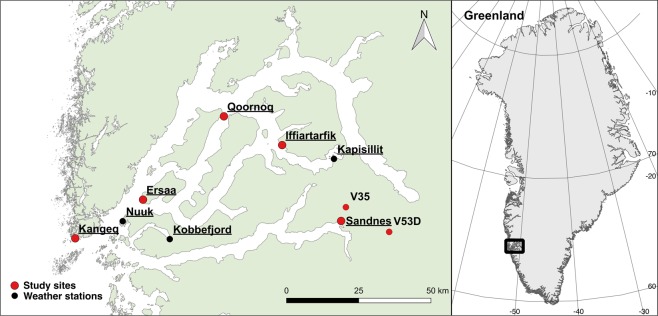
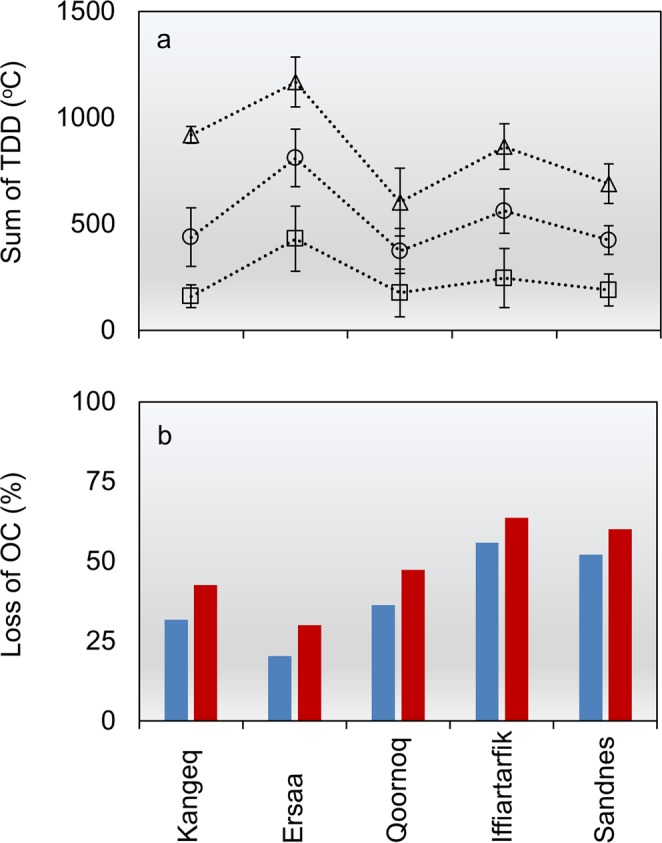
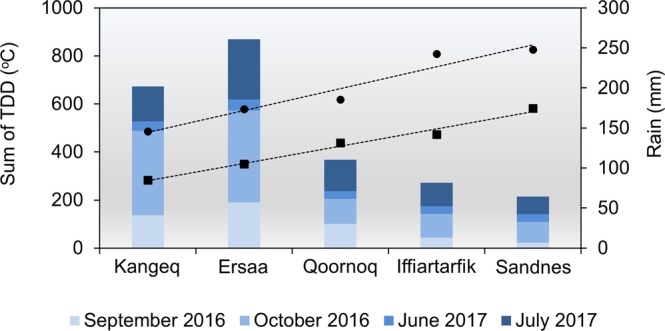
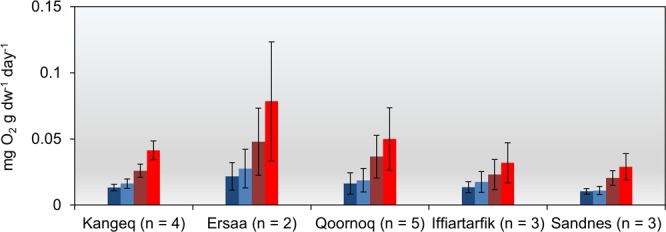
Across the Arctic, microbial degradation is actively destroying irreplaceable cultural and environmental records that have been preserved within archaeological deposits for millennia. Because it is not possible to survey the many sites in this remote part of the world, new methods are urgently needed to detect and assess the potential degradation. Here, we investigate organic deposits at seven archaeological sites located along the dominating west-east climatic gradient in West Greenland. We show that, regardless of age, depositional history and environmental conditions, all organic deposits are highly vulnerable to degradation. A state-of-the-art model that simulates the effect of future climate change on degradation indicates that 30-70% of the archaeological fraction of organic carbon (OC) could disappear within the next 80 years. This range reflects the variation within the climatic gradient and the future climate scenario applied (RCP 4.5 and RCP 8.5). All archaeological deposits are expected to experience a substantial loss, but the most rapid degradation seems to occur in the continental inland areas of the region, dominated by dry and warm summers. This suggests that organic remains from the Norse Viking Age settlers are especially under threat in the coming years.
在北极地区,微生物降解正在积极破坏那些在考古沉积物中保存了数千年的不可替代的文化和环境记录。由于不可能对世界上这个偏远地区的许多遗址进行调查,因此迫切需要新的方法来检测和评估潜在的退化。在这里,我们研究了位于格陵兰岛西部主导的东西气候梯度沿线的七个考古遗址的有机沉积物。我们表明,无论年龄、沉积历史和环境条件如何,所有有机沉积物都极易受到降解的影响。一个模拟未来气候变化对降解影响的最先进模型表明,在未来 80 年内,有机碳(OC)的 30-70%可能会从考古遗址中消失。这一范围反映了气候梯度内的变化以及所应用的未来气候情景(RCP4.5 和 RCP8.5)。预计所有考古遗址都将经历大量的损失,但在该地区以干燥和温暖的夏季为主的内陆地区,退化速度最快。这表明,在未来几年,来自挪威维京时代定居者的有机遗骸尤其受到威胁。