Jackson Rowan, Arneborg Jette, Dugmore Andrew, Madsen Christian, McGovern Tom, Smiarowski Konrad, Streeter Richard
1Geography, School of Geosciences, University of Edinburgh, Drummond Street, Edinburgh, Scotland EH8 9XP UK.
2Department of Archaeology, School of Culture and Society, University of Aarhus, Moesgård Allé 20, 8270 Aarhus, Denmark.
Hum Ecol Interdiscip J. 2018;46(5):665-684. doi: 10.1007/s10745-018-0020-0. Epub 2018 Sep 10.
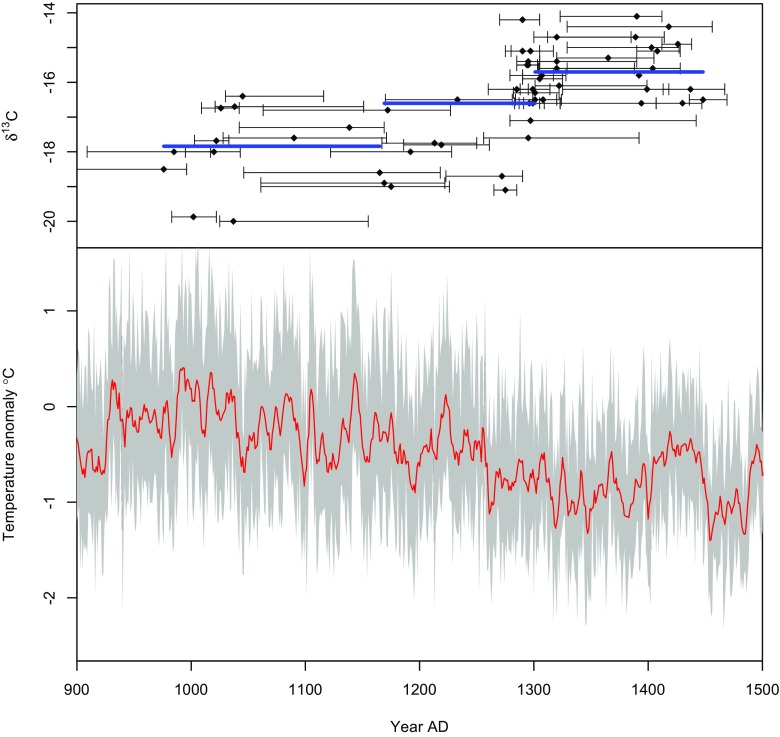
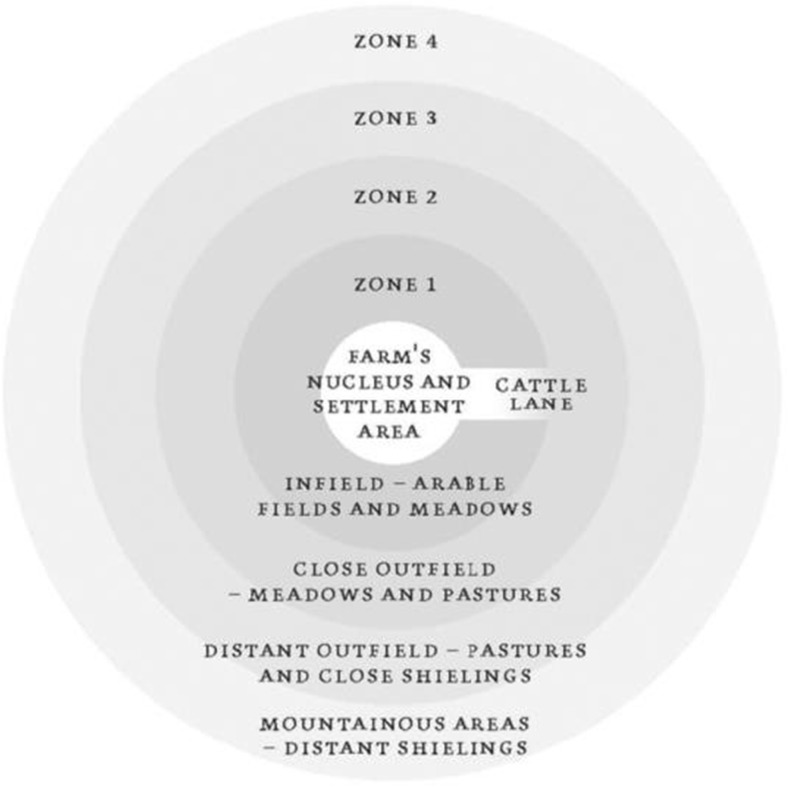
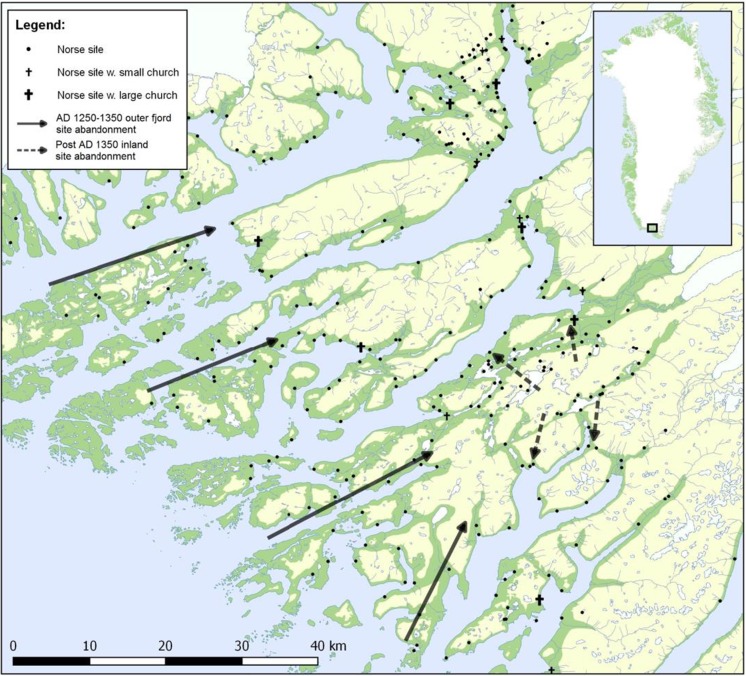
There is increasing evidence to suggest that arctic cultures and ecosystems have followed non-linear responses to climate change. Norse Scandinavian farmers introduced agriculture to sub-arctic Greenland in the late tenth century, creating synanthropic landscapes and utilising seasonally abundant marine and terrestrial resources. Using a niche-construction framework and data from recent survey work, studies of diet, and regional-scale climate proxies we examine the potential mismatch between this imported agricultural niche and the constraints of the environment from the tenth to the fifteenth centuries. We argue that landscape modification conformed the Norse to a Scandinavian style of agriculture throughout settlement, structuring and limiting the efficacy of seasonal hunting strategies. Recent climate data provide evidence of sustained cooling from the mid thirteenth century and climate variation from the early fifteenth century. Archaeological evidence suggests that the Norse made incremental adjustments to the changing sub-arctic environment, but were limited by cultural adaptations made in past environments.
越来越多的证据表明,北极地区的文化和生态系统对气候变化呈现出非线性反应。北欧斯堪的纳维亚农民于10世纪末将农业引入北极圈以南的格陵兰岛,创造了伴人景观,并利用季节性丰富的海洋和陆地资源。利用生态位构建框架以及近期调查工作、饮食研究和区域尺度气候代理数据,我们研究了从10世纪到15世纪这种引进的农业生态位与环境限制之间可能存在的不匹配。我们认为,在整个定居过程中,景观改造使北欧人采用了斯堪的纳维亚式农业,构建并限制了季节性狩猎策略的效力。近期气候数据证明,从13世纪中叶开始持续降温,15世纪初出现气候变化。考古证据表明,北欧人对不断变化的亚北极环境进行了渐进式调整,但受到过去环境中形成的文化适应的限制。