Climate Research Section, Bureau of Meteorology, Melbourne, Australia.
CSIRO, Melbourne, Australia.
Sci Rep. 2019 Jul 11;9(1):10073. doi: 10.1038/s41598-019-46362-x.
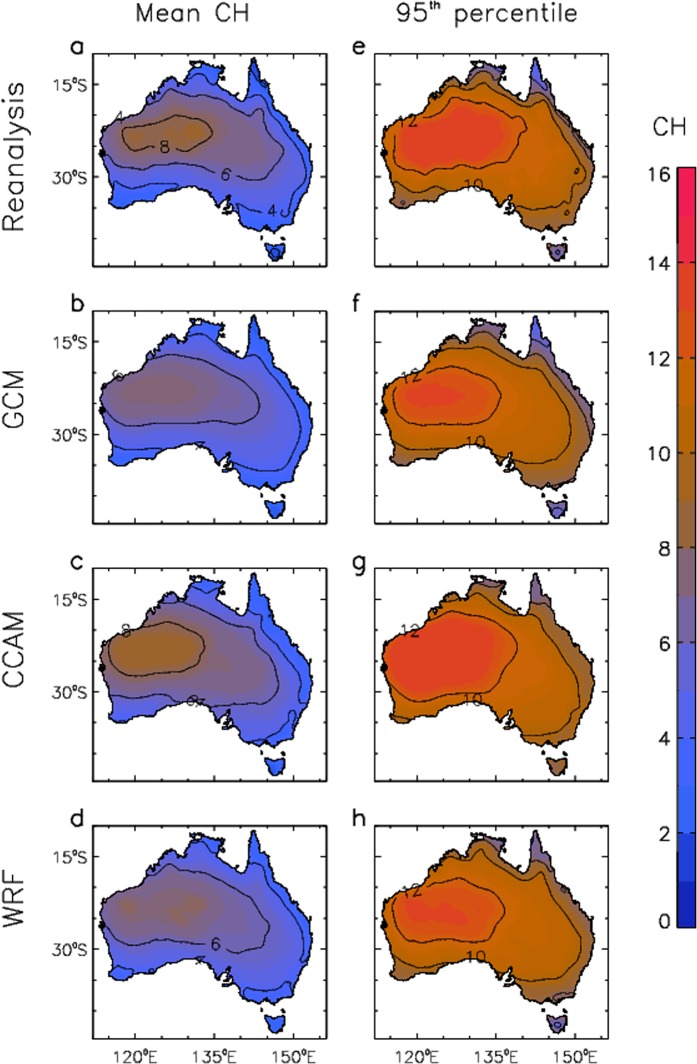
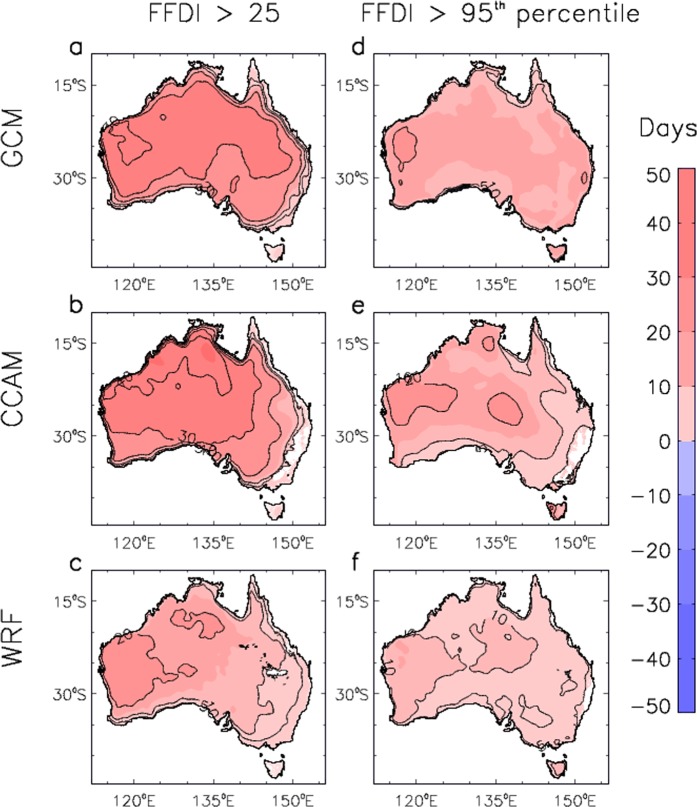
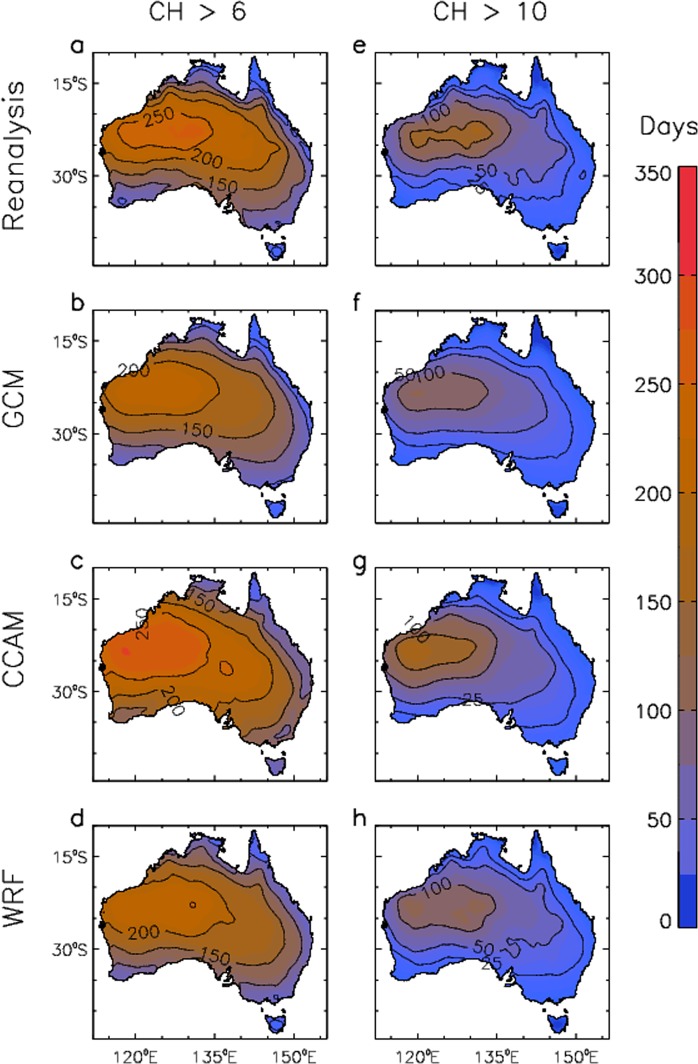
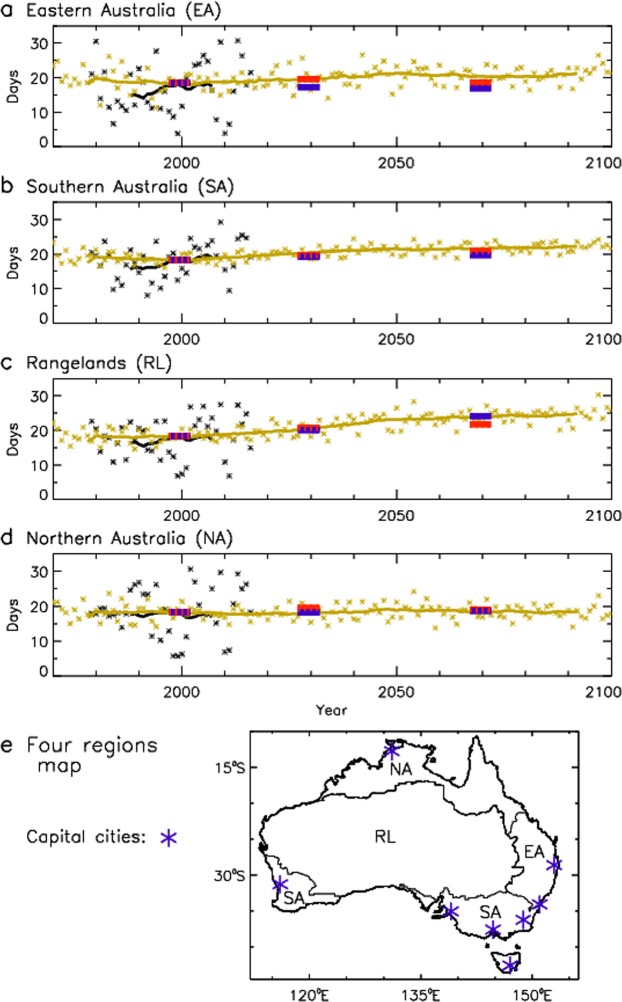
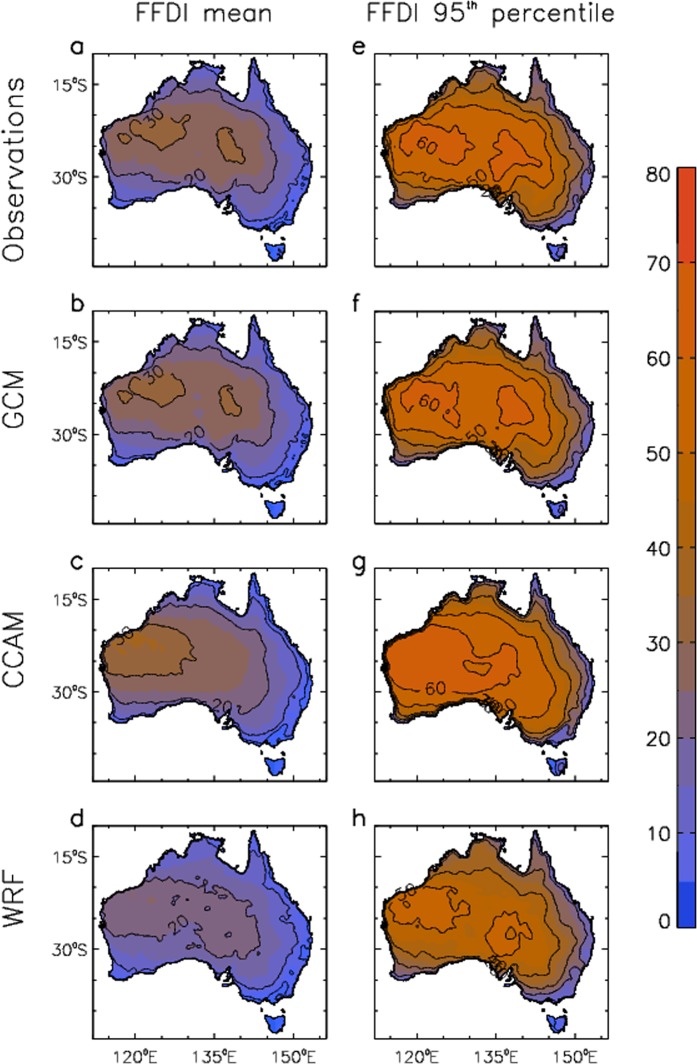
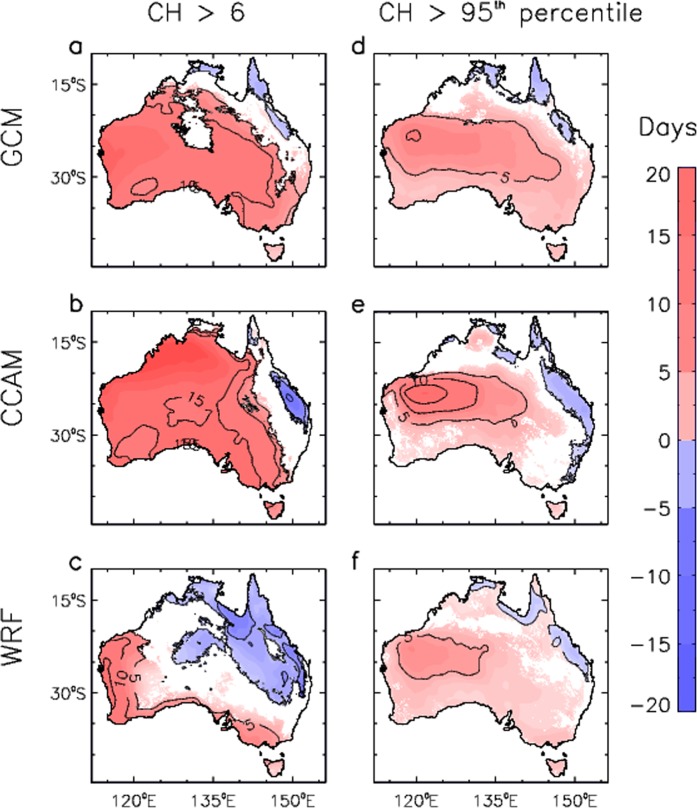
Extreme wildfires have recently caused disastrous impacts in Australia and other regions of the world, including events with strong convective processes in their plumes (i.e., strong pyroconvection). Dangerous wildfire events such as these could potentially be influenced by anthropogenic climate change, however, there are large knowledge gaps on how these events might change in the future. The McArthur Forest Fire Danger Index (FFDI) is used to represent near-surface weather conditions and the Continuous Haines index (CH) is used here to represent lower to mid-tropospheric vertical atmospheric stability and humidity measures relevant to dangerous wildfires and pyroconvective processes. Projected changes in extreme measures of CH and FFDI are examined using a multi-method approach, including an ensemble of global climate models together with two ensembles of regional climate models. The projections show a clear trend towards more dangerous near-surface fire weather conditions for Australia based on the FFDI, as well as increased pyroconvection risk factors for some regions of southern Australia based on the CH. These results have implications for fields such as disaster risk reduction, climate adaptation, ecology, policy and planning, noting that improved knowledge on how climate change can influence extreme wildfires can help reduce future impacts of these events.
最近,极端野火在澳大利亚和世界其他地区造成了灾难性的影响,包括羽流中强对流过程(即强烈的火积云对流)事件。这些危险的野火事件可能受到人为气候变化的影响,但对于这些事件未来可能如何变化,仍存在很大的知识空白。麦克阿瑟森林火灾危险指数(FFDI)用于表示近地表天气条件,连续海因斯指数(CH)用于表示与危险野火和火积云对流过程相关的中低层大气垂直稳定度和湿度测量值。使用多方法方法,包括一组全球气候模型和两组区域气候模型,研究了 CH 和 FFDI 的极端措施的变化情况。这些预测显示,基于 FFDI,澳大利亚的近地表火灾天气条件明显更加危险,而基于 CH,澳大利亚南部一些地区的火积云对流风险因素也有所增加。这些结果对减少灾害风险、气候适应、生态学、政策和规划等领域具有影响,需要注意的是,关于气候变化如何影响极端野火的知识的提高可以帮助减少这些事件的未来影响。