Zhong Yuan, Wu Xiaochao, Li Quanpeng, Ge Xianxiu, Wang Fei, Wu Peiyao, Deng Xueting, Miao Lin
Medical Center for Digestive Diseases, The Second Affiliated Hospital of Nanjing Medical University, Nanjing, 210011 China.
Cancer Cell Int. 2019 Jun 28;19:169. doi: 10.1186/s12935-019-0891-1. eCollection 2019.
Mounting evidence has shown that long noncoding RNAs (lncRNAs) can play a substantial role in gallbladder cancer (GBC) development as tumor promotors or suppressors, and their abnormal expression is relevant to GBC patient outcomes. We completed this systematic review and meta-analysis to explore the clinical significance and mechanisms of lncRNAs in GBC.
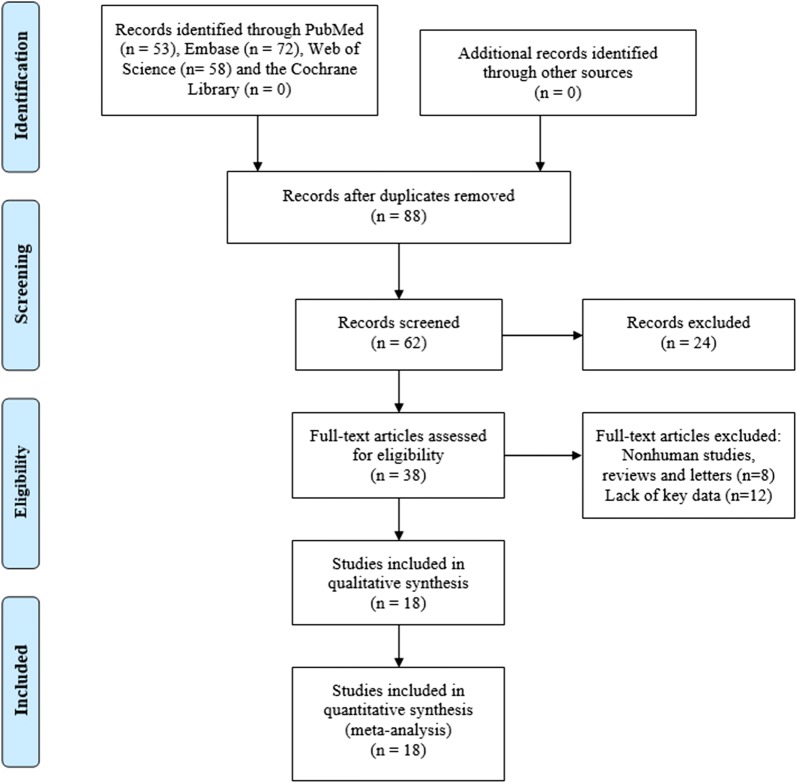
We conducted a comprehensive literature search and selected eligible records according to the inclusion and exclusion criteria. Hazard ratios (HRs) and odds ratios (ORs) were extracted or calculated to estimate the relationships of high lncRNA expression with GBC patient survival and clinical outcomes.
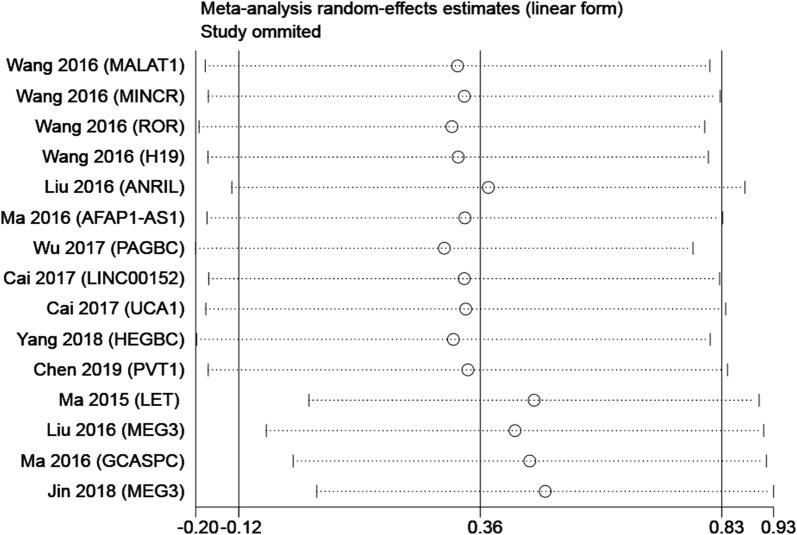
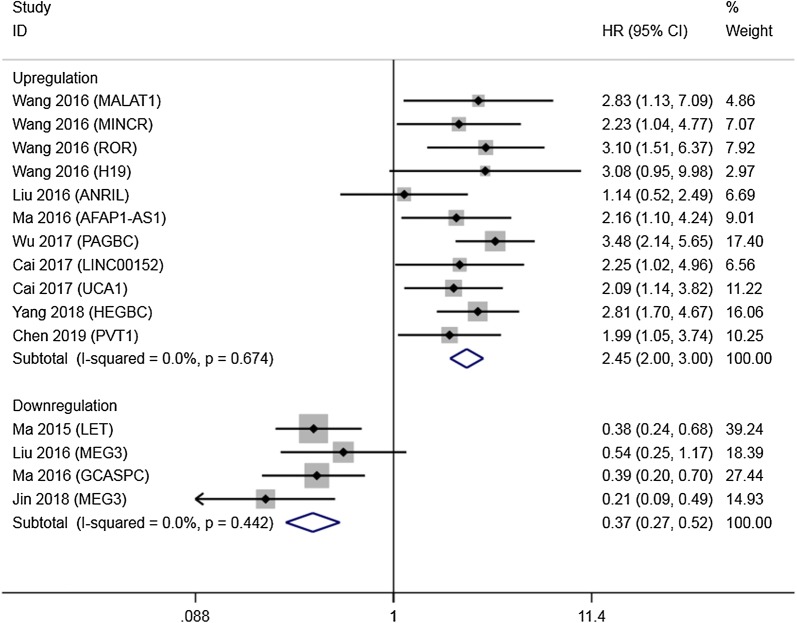
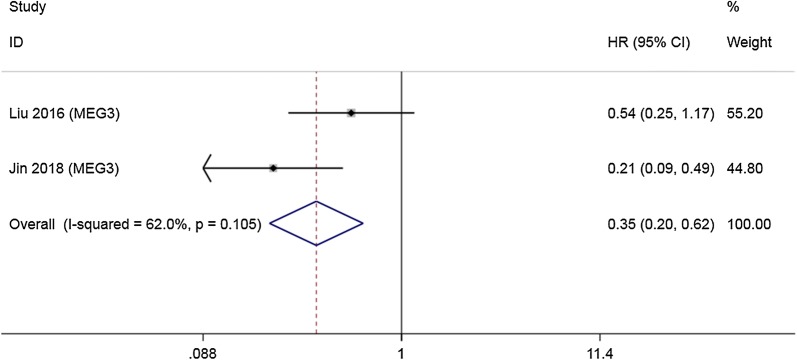
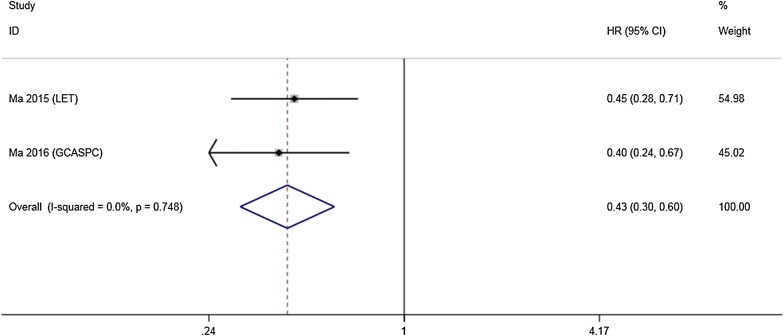
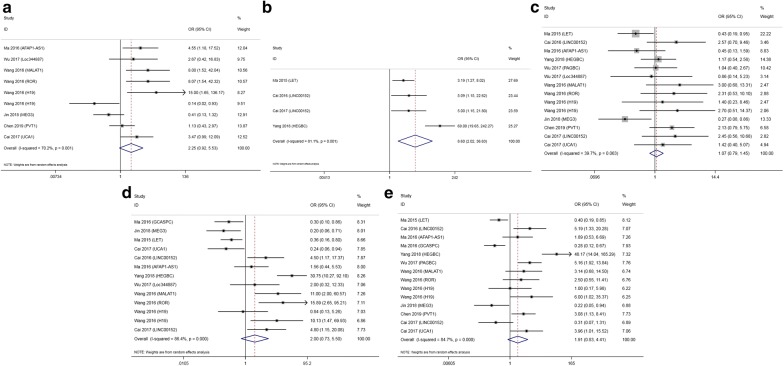
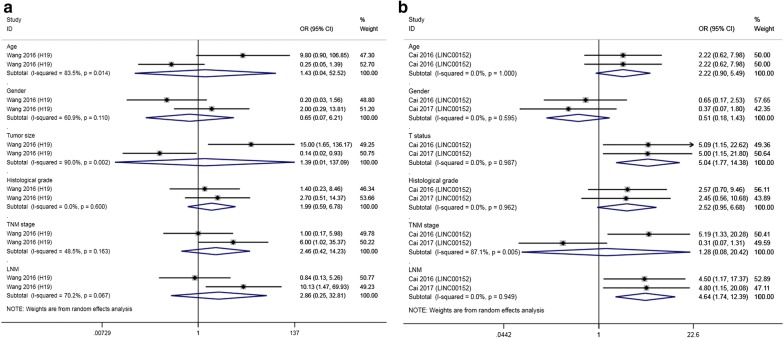
Eighteen studies were identified as eligible for this systematic review and meta-analysis. Heterogeneity among HRs of overall survival (OS) was notably high (I = 86.2%, p < 0.001). Subgroup analysis suggested that overexpression of lncRNAs in a group that is upregulated in GBC showed a significant association with poor OS (HR = 2.454, 95% CI 2.004-3.004, I = 0%). Conversely, overexpression of lncRNAs in a downregulated group was markedly related to good OS (HR = 0.371, 95% CI 0.267-0.517, I = 0%). High expression levels of lncRNA AFAP1-AS1, MALAT1 and ROR were positively correlated with tumor size. Expression of lncRNA LET, LINC00152 and HEGBC exhibited a positive correlation with high T status. LncRNA LINC00152, HEGBC, MALAT1 and ROR showed a marked correlation with positive lymph node metastasis (LNM), while lncRNA GCASPC, MEG3, LET and UCA1 had the opposite effect. High expression levels of lncRNA HEGBC, PAGBC, PVT1 and UCA1 predicted high tumor node metastasis (TNM) stages, while lncRNA LET, GCASPC and MEG3 indicated low TNM stages. We also summarized the mechanisms of lncRNAs in GBC.
Aberrant expression of several lncRNAs was indicative of the prognosis of GBC patients, and lncRNAs showed promise as biomarkers and therapeutic targets for GBC.
越来越多的证据表明,长链非编码RNA(lncRNAs)作为肿瘤促进因子或抑制因子,在胆囊癌(GBC)的发展中发挥着重要作用,其异常表达与GBC患者的预后相关。我们完成了这项系统评价和荟萃分析,以探讨lncRNAs在GBC中的临床意义和机制。
我们进行了全面的文献检索,并根据纳入和排除标准选择了符合条件的记录。提取或计算风险比(HRs)和比值比(ORs),以评估lncRNA高表达与GBC患者生存及临床结局之间的关系。
18项研究被确定符合本系统评价和荟萃分析的条件。总生存期(OS)的HRs之间的异质性非常高(I = 86.2%,p < 0.001)。亚组分析表明,在GBC中上调的一组lncRNAs过表达与较差的OS显著相关(HR = 2.454,95%CI 2.004 - 3.004,I = 0%)。相反,下调组中lncRNAs过表达与良好的OS显著相关(HR = 0.371,95%CI 0.267 - 0.517,I = 0%)。lncRNA AFAP1-AS1、MALAT1和ROR的高表达水平与肿瘤大小呈正相关。lncRNA LET、LINC00152和HEGBC的表达与高T分期呈正相关。lncRNA LINC00152、HEGBC、MALAT1和ROR与阳性淋巴结转移(LNM)显著相关,而lncRNA GCASPC、MEG3、LET和UCA1则有相反的作用。lncRNA HEGBC、PAGBC、PVT1和UCA1的高表达水平预示着高肿瘤淋巴结转移(TNM)分期,而lncRNA LET、GCASPC和MEG3则表明低TNM分期。我们还总结了lncRNAs在GBC中的机制。
几种lncRNAs的异常表达预示着GBC患者的预后,lncRNAs有望成为GBC的生物标志物和治疗靶点。