Pan Bo, Lewno Megan T, Wu Penglong, Wang Xuejun
Division of Basic Biomedical Sciences, Sanford School of Medicine of the University of South Dakota, Vermillion, SD, United States.
Department of Pathophysiology, College of Basic Medical Sciences, Guangzhou Medical University, Guangzhou, China.
Front Physiol. 2019 Jun 26;10:758. doi: 10.3389/fphys.2019.00758. eCollection 2019.
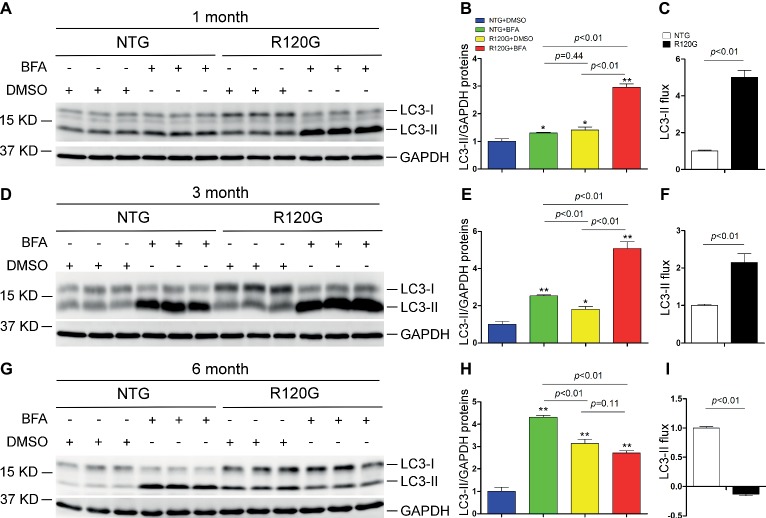
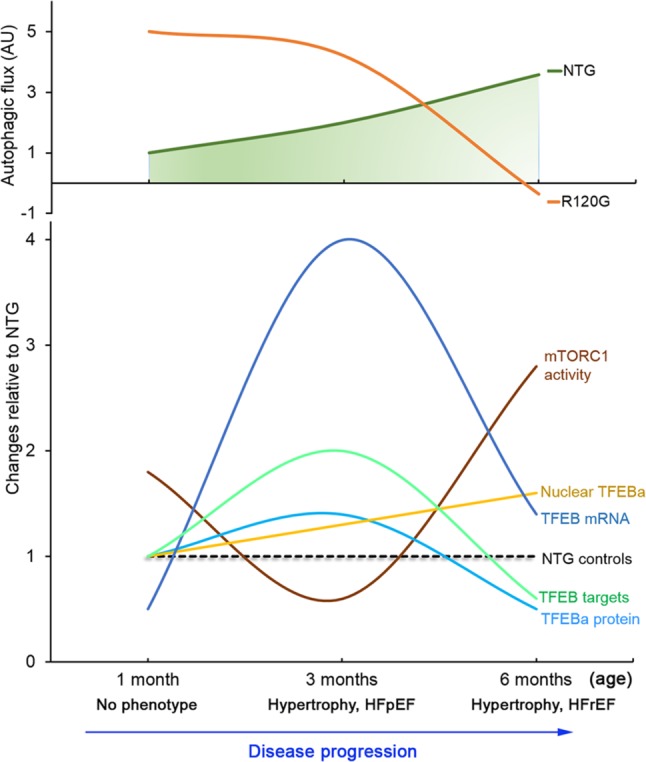
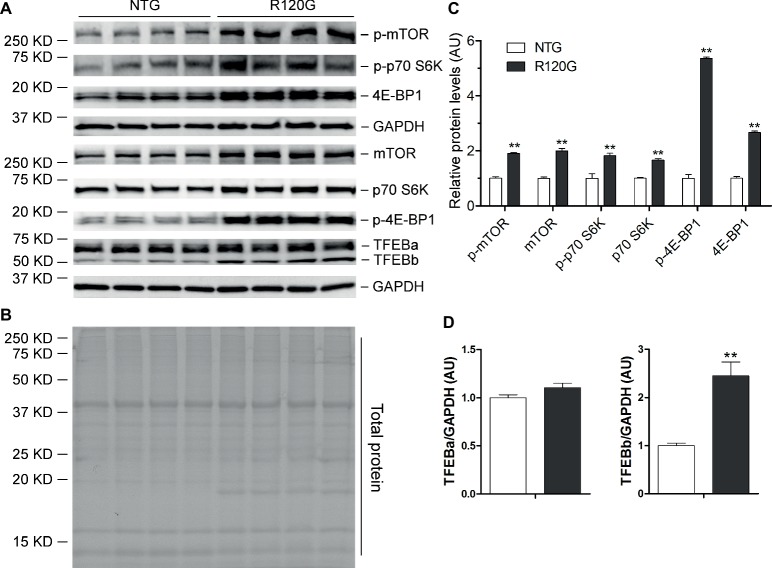
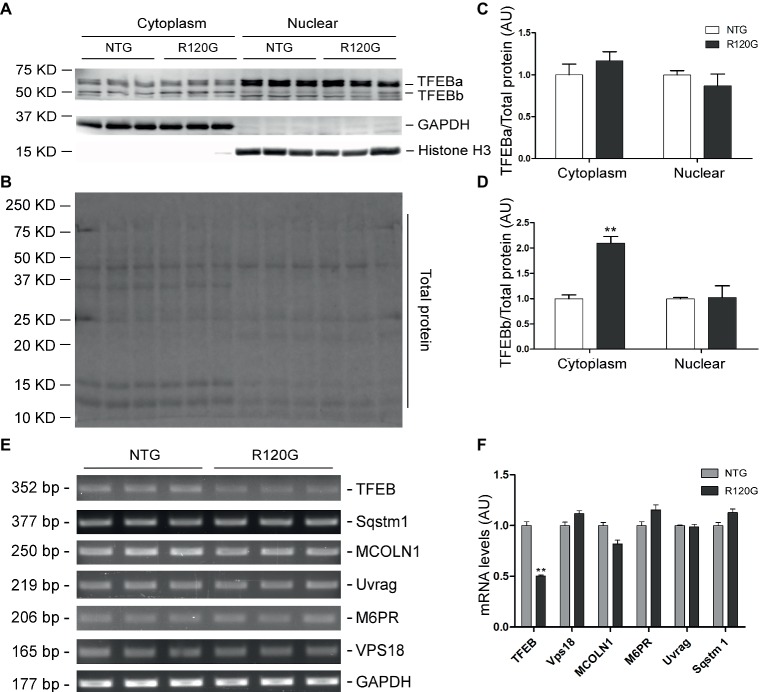
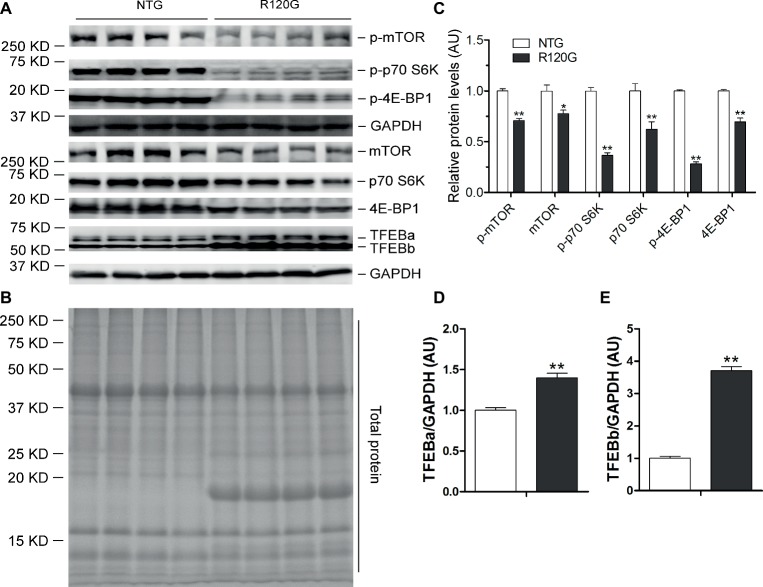
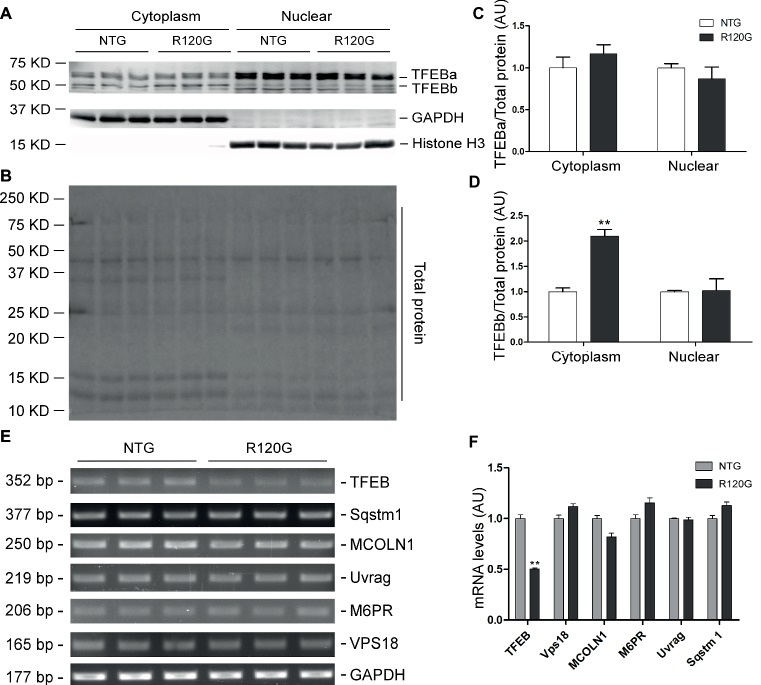
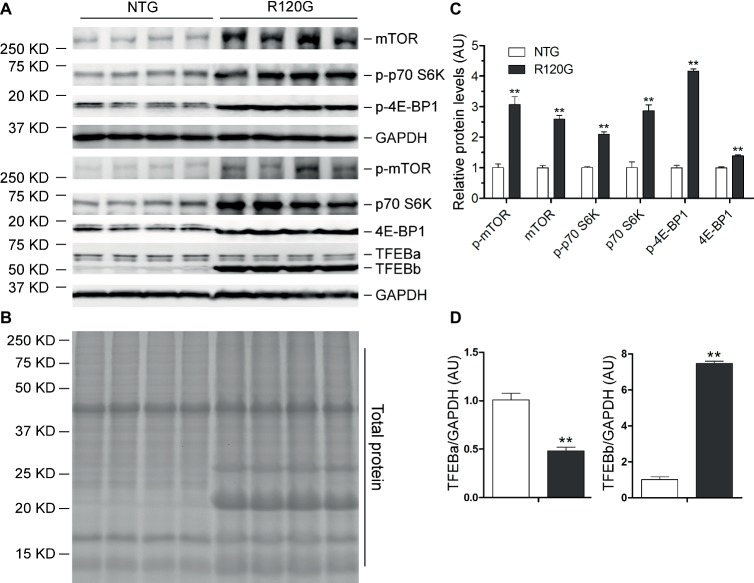
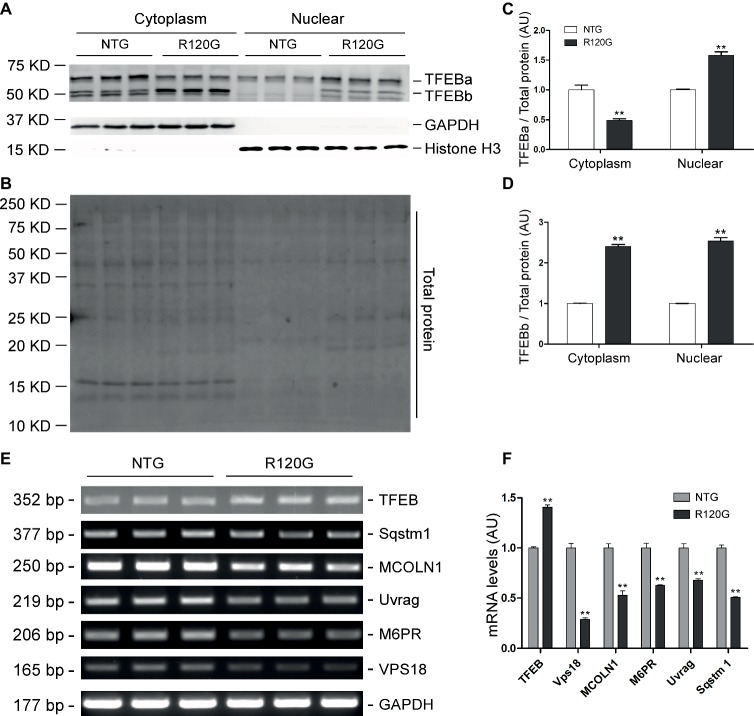
Macroautophagy (referred to as autophagy hereafter) plays an important role in the quality control of cellular proteins and organelles. Transcription Factor EB (TFEB) globally activates the expression of genes in the autophagic-lysosomal pathway (ALP) to replenish lysosomes and ALP machineries. We previously reported that myocardial TFEB signaling was impaired in advanced cardiac proteinopathy; however, myocardial ALP status and TFEB activity at earlier stages of cardiac proteinopathy remain uncharacterized. Here a stable line of CryAB transgenic (R120G) and non-transgenic (NTG) littermate mice with cardiomyocyte-restricted overexpression of CryAB were used at 1, 3, and 6 months of age. At 1 month when no cardiac phenotypes other than aberrant protein aggregation are discernible, R120G mice displayed a 5-fold increase in myocardial LC3-II flux. Interestingly, the LC3-II flux increase co-existed with increases in mTOR complex 1 (mTORC1) activities as well as cytoplasmic, but not nuclear, TFEB proteins. This increase in cytoplasmic TFEB proteins occurred without any discernible alteration in TFEB activity as reflected by unchanged mRNA levels of representative TFEB target genes (, and ). At 3 months of age when hypertrophy and diastolic malfunction start to develop, the LC3-II flux remained significantly increased but to a lesser degree (2-fold) than at 1 month. The LC3-II flux increase was associated with decreased mTORC1 activities and with increased nuclear TFEB proteins and TFEB activities. At 6 months of age when congestive heart failure is apparent in R120G mice, both LC3-II flux and TFEB activities were severely suppressed, while mTORC1 activity increased. We conclude that changes in both autophagy and TFEB signaling are highly dynamic during the progression of cardiac proteinopathy. Increases in autophagy occur before increases in TFEB activities but both increase in the compensatory stage of cardiac proteinopathy. Once congestive heart failure develops, both autophagy and TFEB signaling become impaired. Our results suggest that TFEB signaling is regulated by both mTORC1-dependent and -independent mechanisms in hearts subjected to increased proteotoxic stress. For therapeutic exploration, it will be important to test the effect of TFEB stimulation at the early, intermediate, and late stages of cardiac proteinopathy.
巨自噬(以下简称自噬)在细胞蛋白质和细胞器的质量控制中发挥着重要作用。转录因子EB(TFEB)全面激活自噬-溶酶体途径(ALP)中基因的表达,以补充溶酶体和ALP机制。我们之前报道过,在晚期心脏蛋白病中,心肌TFEB信号受损;然而,在心脏蛋白病早期阶段的心肌ALP状态和TFEB活性仍未得到表征。在此,使用了稳定品系的CryAB转基因(R120G)和非转基因(NTG)同窝小鼠,其心肌细胞中CryAB有特异性过表达,分别在1、3和6月龄时进行研究。在1月龄时,除了异常蛋白质聚集外没有其他心脏表型可辨,R120G小鼠心肌LC3-II通量增加了5倍。有趣的是,LC3-II通量增加与mTOR复合物1(mTORC1)活性增加以及细胞质而非细胞核中的TFEB蛋白增加同时存在。细胞质TFEB蛋白的这种增加在TFEB活性上没有任何可辨别的改变,这可通过代表性TFEB靶基因( 、 和 )的mRNA水平未变来反映。在3月龄时开始出现肥大和舒张功能障碍,LC3-II通量仍显著增加,但程度比1月龄时小(2倍)。LC3-II通量增加与mTORC1活性降低以及细胞核TFEB蛋白和TFEB活性增加有关。在6月龄时,R120G小鼠出现明显的充血性心力衰竭,LC3-II通量和TFEB活性均受到严重抑制,而mTORC1活性增加。我们得出结论,在心脏蛋白病进展过程中,自噬和TFEB信号的变化都是高度动态的。自噬增加发生在TFEB活性增加之前,但两者都在心脏蛋白病的代偿阶段增加。一旦出现充血性心力衰竭,自噬和TFEB信号都会受损。我们的结果表明,在受到增加的蛋白毒性应激的心脏中,TFEB信号受mTORC1依赖性和非依赖性机制的调节。对于治疗探索而言,测试在心脏蛋白病的早期、中期和晚期刺激TFEB的效果将很重要。