Yang Haibing, Zhang Ximing, Luo Hao, Liu Baoyuan, Shiga Tânia M, Li Xu, Kim Jeong Im, Rubinelli Peter, Overton Jonathan C, Subramanyam Varun, Cooper Bruce R, Mo Huaping, Abu-Omar Mahdi M, Chapple Clint, Donohoe Bryon S, Makowski Lee, Mosier Nathan S, McCann Maureen C, Carpita Nicholas C, Meilan Richard
1Department of Biological Sciences, Purdue University, West Lafayette, IN 47907 USA.
2Laboratory of Renewable Resource Engineering (LORRE), Department of Agricultural and Biological Engineering, Purdue University, West Lafayette, IN 47907 USA.
Biotechnol Biofuels. 2019 Jun 29;12:171. doi: 10.1186/s13068-019-1503-y. eCollection 2019.
Low-temperature swelling of cotton linter cellulose and subsequent gelatinization in trifluoroacetic acid (TFA) greatly enhance rates of enzymatic digestion or maleic acid-AlCl catalyzed conversion to hydroxymethylfurfural (HMF) and levulinic acid (LA). However, lignin inhibits low-temperature swelling of TFA-treated intact wood particles from hybrid poplar ( × ) and results in greatly reduced yields of glucose or catalytic conversion compared to lignin-free cellulose. Previous studies have established that wood particles from transgenic lines of hybrid poplar with high syringyl (S) lignin content give greater glucose yields following enzymatic digestion.
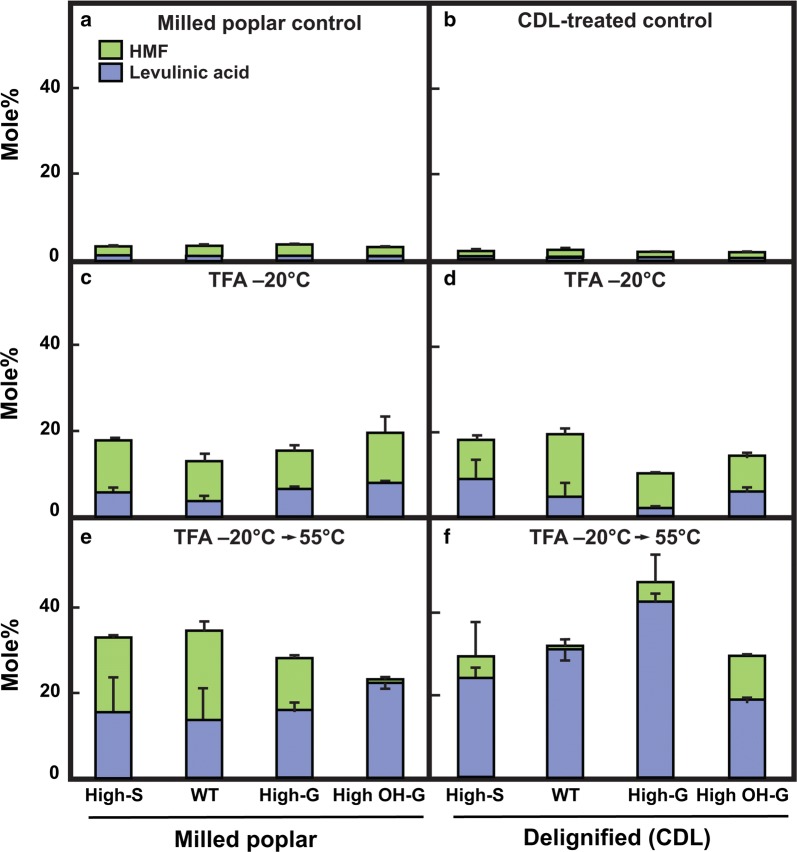
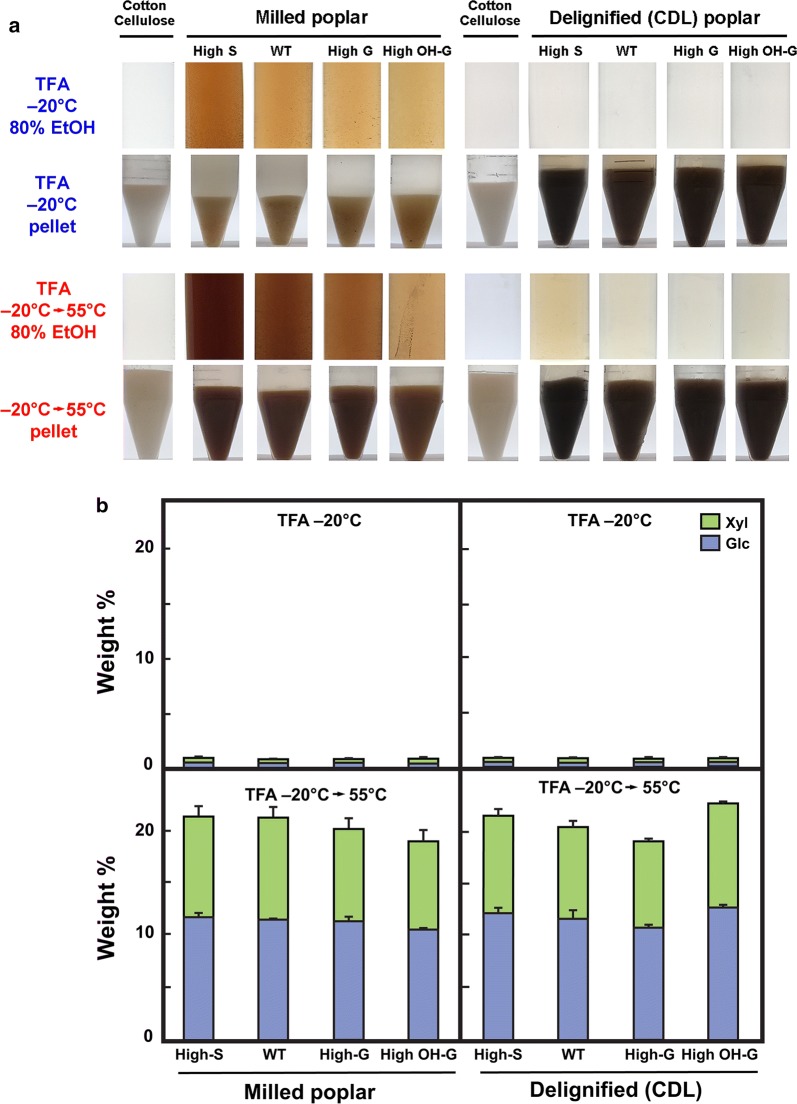
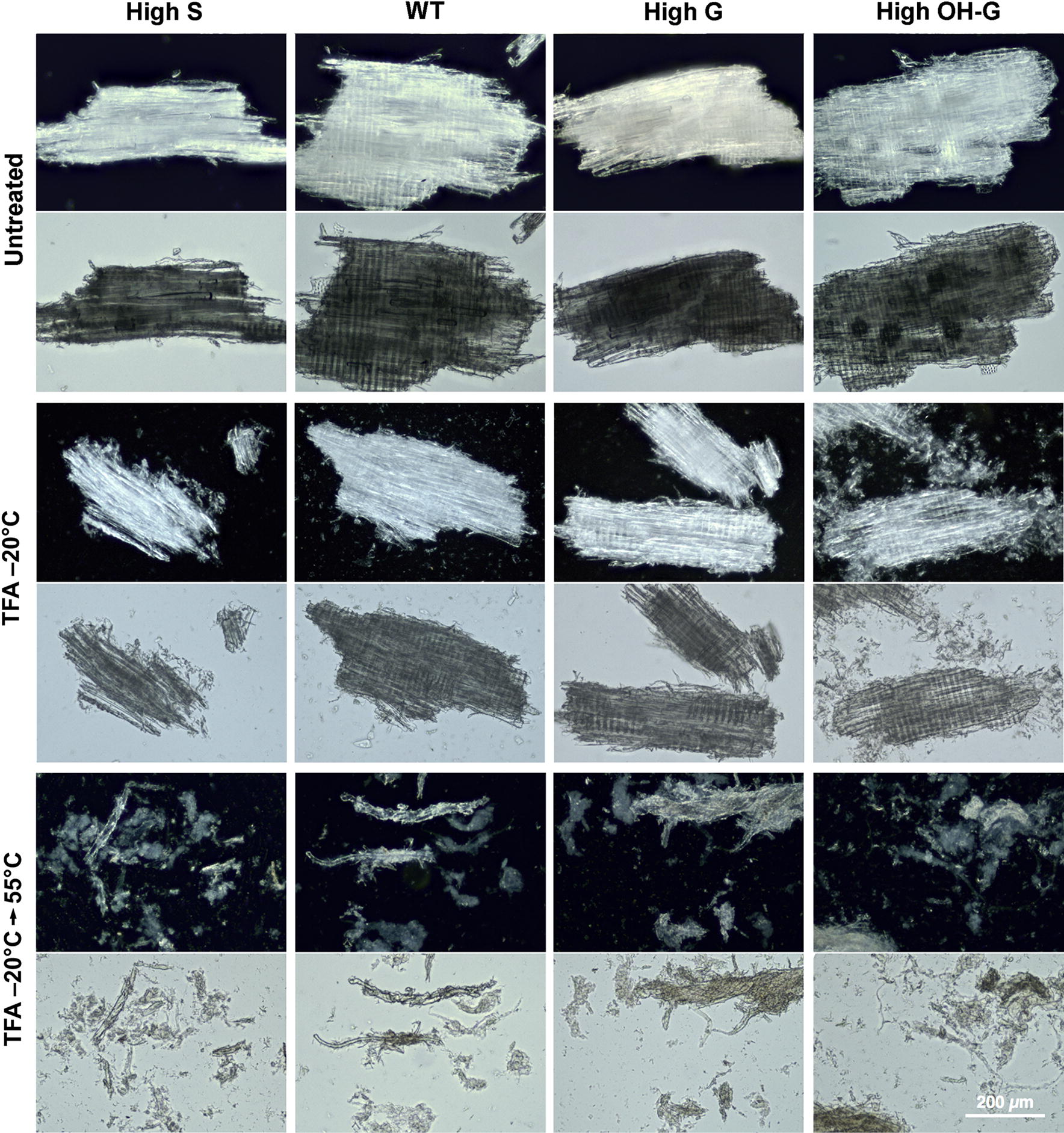
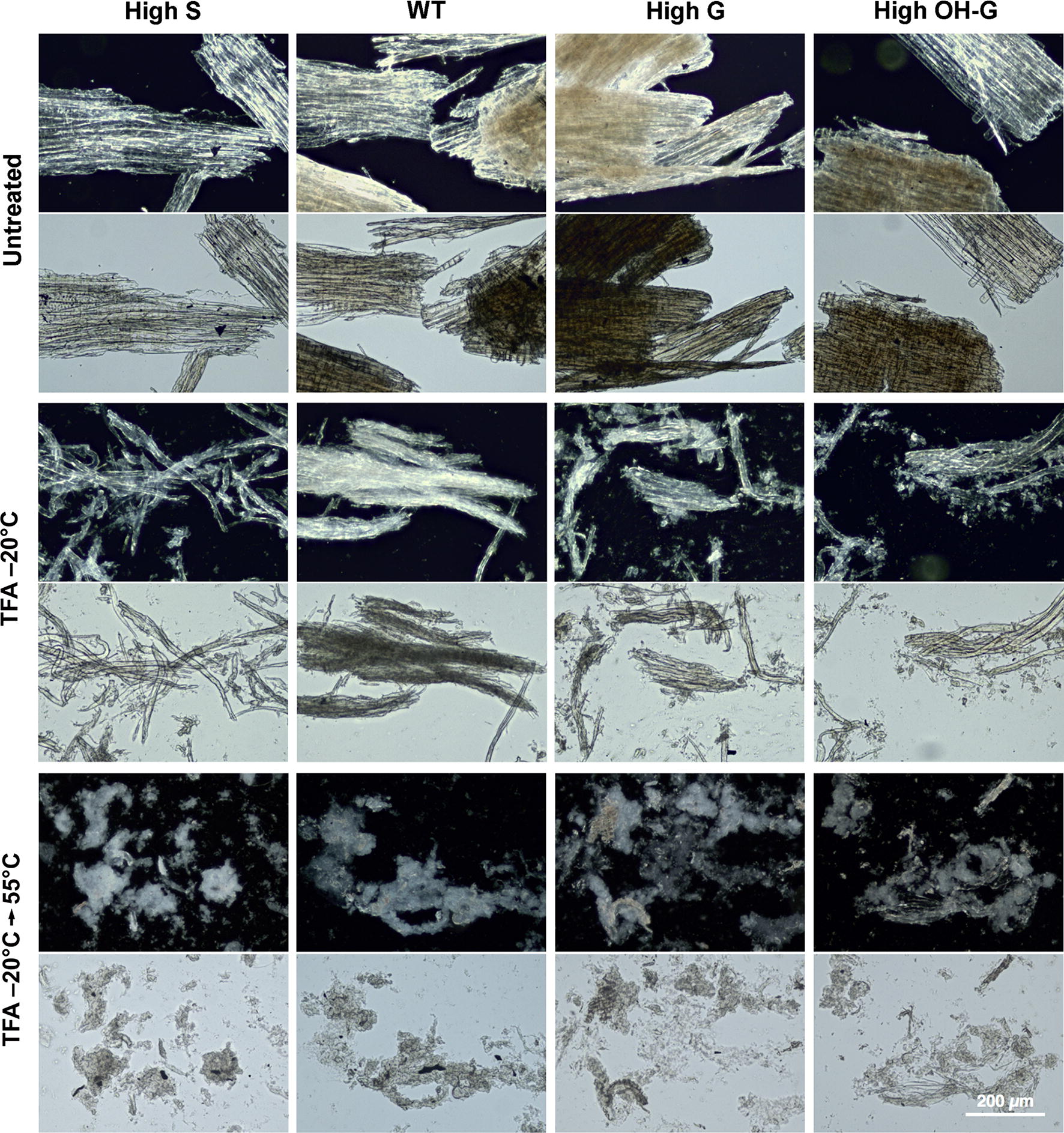
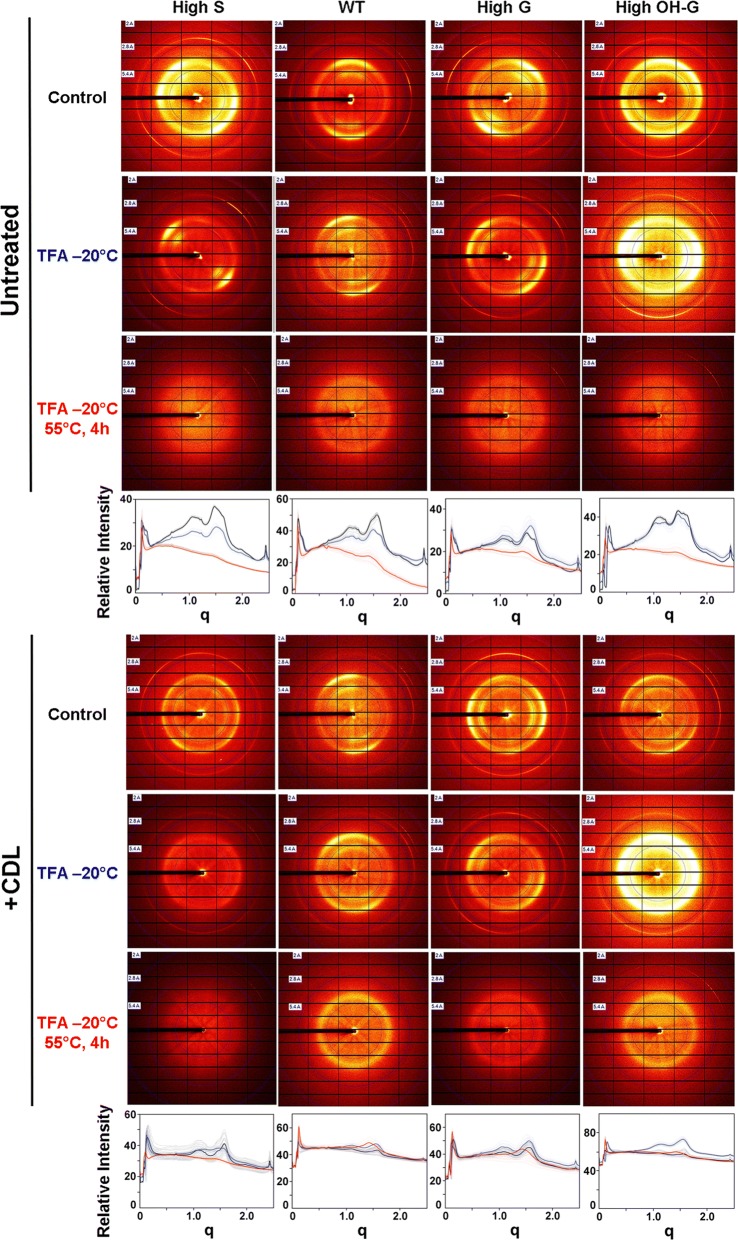
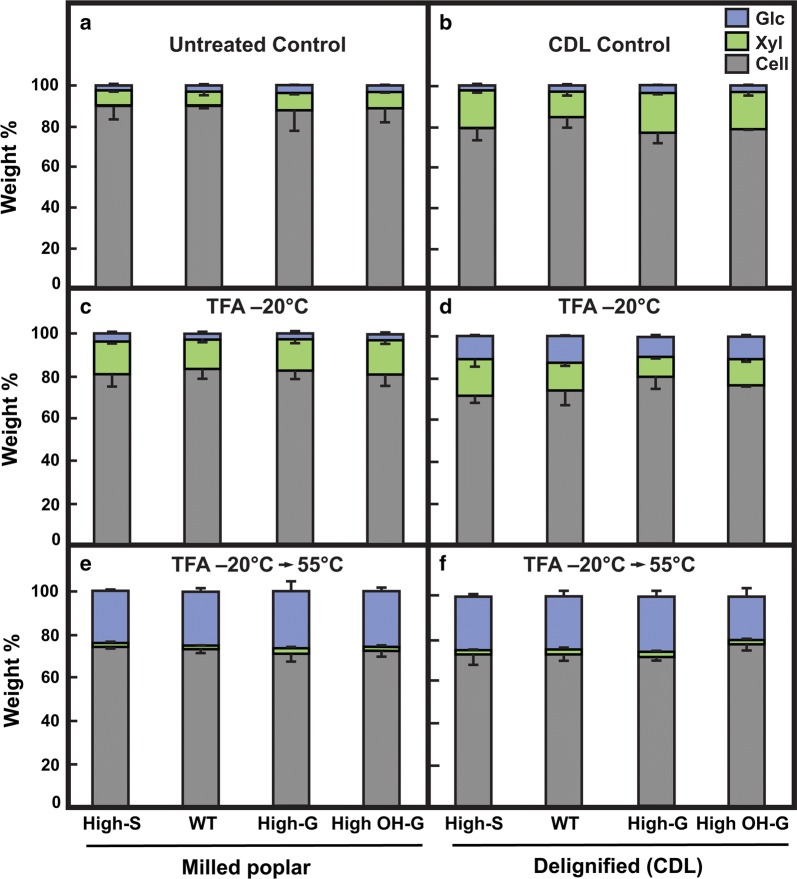
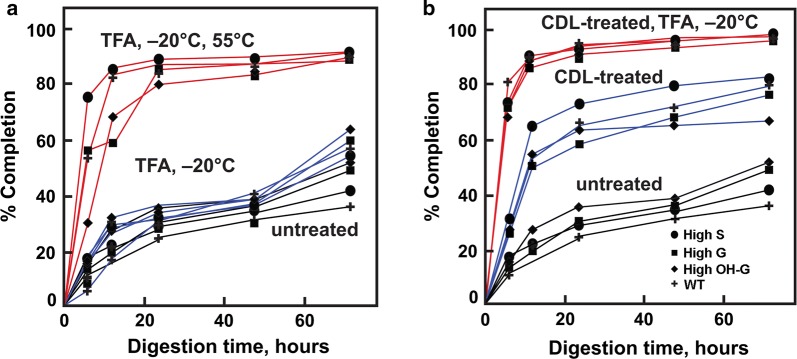
Low-temperature (- 20 °C) treatment of S-lignin-rich poplar wood particles in TFA slightly increased yields of glucose from enzymatic digestions and HMF and LA from maleic acid-AlCl catalysis. Subsequent gelatinization at 55 °C resulted in over 80% digestion of cellulose in only 3 to 6 h with high-S-lignin wood, compared to 20-60% digestion in the wild-type poplar hybrid and transgenic lines high in guaiacyl lignin or 5-hydroxy-G lignin. Disassembly of lignin in woody particles by Ni/C catalytic systems improved yields of glucose by enzymatic digestion or catalytic conversion to HMF and LA. Although lignin was completely removed by Ni/C-catalyzed delignification (CDL) treatment, recalcitrance to enzymatic digestion of cellulose from the high-S lines was reduced compared to other lignin variants. However, cellulose still exhibited considerable recalcitrance to complete enzymatic digestion or catalytic conversion after complete delignification. Low-temperature swelling of the CDL-treated wood particles in TFA resulted in nearly complete enzymatic hydrolysis, regardless of original lignin composition.
Genetic modification of lignin composition can enhance the portfolio of aromatic products obtained from lignocellulosic biomass while promoting disassembly into biofuel and bioproduct substrates. CDL enhances rates of enzymatic digestion and chemical conversion, but cellulose remains intrinsically recalcitrant. Cold TFA is sufficient to overcome this recalcitrance after CDL treatment. Our results inform a 'no carbon left behind' strategy to convert total woody biomass into lignin, cellulose, and hemicellulose value streams for the future biorefinery.
棉短绒纤维素的低温溶胀以及随后在三氟乙酸(TFA)中的胶凝作用极大地提高了酶促消化率,或马来酸 - 氯化铝催化转化为羟甲基糠醛(HMF)和乙酰丙酸(LA)的速率。然而,木质素会抑制经TFA处理的杂种杨(×)完整木片的低温溶胀,与不含木质素的纤维素相比,导致葡萄糖产量或催化转化率大幅降低。先前的研究表明,具有高紫丁香基(S)木质素含量的杂种杨转基因株系的木片在酶促消化后能产生更高的葡萄糖产量。
在TFA中对富含S - 木质素的杨木片进行低温(-20°C)处理,略微提高了酶促消化产生的葡萄糖产量以及马来酸 - 氯化铝催化产生的HMF和LA产量。随后在55°C下进行胶凝作用,高S - 木质素木材仅在3至6小时内就实现了超过80%的纤维素消化,相比之下,野生型杨树杂种以及富含愈创木基木质素或5 - 羟基 - G木质素的转基因株系的消化率为20 - 60%。通过Ni/C催化系统分解木质素颗粒中的木质素,提高了酶促消化产生葡萄糖的产量或催化转化为HMF和LA的产量。尽管通过Ni/C催化脱木质素(CDL)处理完全去除了木质素,但与其他木质素变体相比,高S株系的纤维素对酶促消化的抗性降低。然而,在完全脱木质素后,纤维素对完全酶促消化或催化转化仍表现出相当的抗性。经CDL处理的木片在TFA中的低温溶胀导致几乎完全的酶促水解,无论原始木质素组成如何。
木质素组成的基因改造可以增加从木质纤维素生物质中获得的芳香族产品种类,同时促进其分解为生物燃料和生物产品底物。CDL提高了酶促消化率和化学转化率,但纤维素仍然具有内在抗性。冷TFA足以在CDL处理后克服这种抗性。我们的结果为将整个木质生物质转化为木质素、纤维素和半纤维素价值流的“无碳遗留”策略提供了依据,以用于未来的生物精炼厂。