Tian Dong, Chandra Richard P, Lee Jin-Suk, Lu Canhui, Saddler Jack N
Forest Products Biotechnology/Bioenergy Group, Department of Wood Science, Faculty of Forestry, University of British Columbia, 2424 Main Mall, Vancouver, BC V6T 1Z4 Canada.
State Key Laboratory of Polymer Materials Engineering, Polymer Research Institute of Sichuan University, Chengdu, 610065 China.
Biotechnol Biofuels. 2017 Jun 19;10:157. doi: 10.1186/s13068-017-0846-5. eCollection 2017.
Current single-stage delignification-pretreatment technologies to overcome lignocellulosic biomass recalcitrance are usually achieved at the expense of compromising the recovery of the polysaccharide components, particularly the hemicellulose fraction. One way to enhance overall sugar recovery is to tailor an efficient two-stage pretreatment that can pre-extract the more labile hemicellulose component before subjecting the cellulose-rich residual material to a second-stage delignification process. Previous work had shown that a mild steam pretreatment could recover >65% of the hemicellulose from poplar while limiting the acid-catalysed condensation of lignin. This potentially allowed for subsequent lignin extraction using various lignin solvents to produce a more accessible cellulosic substrate.
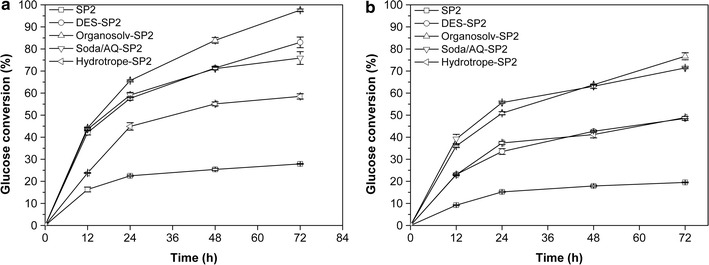
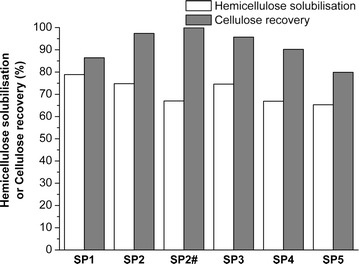
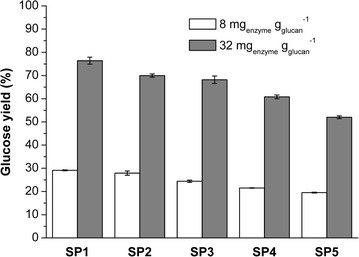
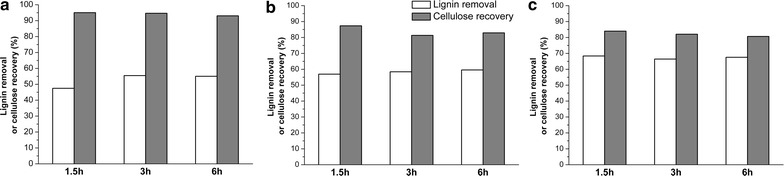
A two-stage approach using steam and/or solvent pretreatment was assessed for its ability to separate hemicellulose and lignin from poplar wood chips while providing a cellulose-rich fraction that could be readily hydrolysed by cellulase enzymes. An initial steam-pretreatment stage was performed over a range of temperatures (160-200 °C) using an equivalent severity factor of 3.6. A higher steam temperature of 190 °C applied over a shorter residence time of 10 min effectively solubilized and recovered 75% of the hemicellulose while enhancing the ability of various solvents [deep eutectic solvent (DES), ethanol organosolv, soda/anthraquinone (soda/AQ) or a hydrotrope] to extract lignin in a second stage. When the second-stage treatments were compared, the mild DES treatment (lactic acid and betaine) at 130 °C, removed comparable amounts of lignin with higher selectivity than did the soda/AQ and organosolv pretreatments at 170 °C. However, the cellulose-rich substrates obtained after the second-stage organosolv and soda/AQ pretreatments showed the highest cellulose accessibility, as measured by the Simon's staining technique. They were also the most susceptible to subsequent enzymatic hydrolysis.
The second-stage pretreatments varied in their ability to solubilize and extract the lignin component of steam-pretreated poplar while enhancing the enzymatic hydrolysis of the resulting cellulose-rich residual fractions. Although DES extraction was more selective in extracting lignin from the steam-pretreated substrates, the organosolv and soda/AQ post treatments disrupted the cellulose structure to a greater extent while enhancing the ease of enzymatic hydrolysis. Graphical abstractEffective hemicellulose removal via steam pretreatment followed by subsequent lignin extraction under acidic, alkaline or solvolytic conditions results in a highly accessible, more readily hydrolysed cellulose fraction.
当前用于克服木质纤维素生物质顽固性的单阶段脱木质素预处理技术通常是以牺牲多糖成分(尤其是半纤维素部分)的回收为代价来实现的。提高总糖回收率的一种方法是设计一种高效的两阶段预处理方法,该方法可以在使富含纤维素的残余物进行第二阶段脱木质素过程之前,先提取更不稳定的半纤维素成分。先前的研究表明,温和的蒸汽预处理可以从杨树中回收>65%的半纤维素,同时限制木质素的酸催化缩合。这可能允许随后使用各种木质素溶剂提取木质素,以产生更易接近的纤维素底物。
评估了一种使用蒸汽和/或溶剂预处理的两阶段方法,以从杨木片中分离半纤维素和木质素的能力,同时提供富含纤维素的部分,该部分可以很容易地被纤维素酶水解。在一系列温度(160 - 200°C)下,使用等效强度因子3.6进行初始蒸汽预处理阶段。在较短的10分钟停留时间内施加190°C的较高蒸汽温度有效地溶解并回收了75%的半纤维素,同时增强了各种溶剂[低共熔溶剂(DES)、乙醇有机溶剂、苏打/蒽醌(苏打/AQ)或助溶剂]在第二阶段提取木质素的能力。当比较第二阶段处理时,130°C下的温和DES处理(乳酸和甜菜碱)去除的木质素量相当,且选择性高于170°C下的苏打/AQ和有机溶剂预处理。然而,通过西蒙染色技术测量,第二阶段有机溶剂和苏打/AQ预处理后获得的富含纤维素的底物显示出最高的纤维素可及性。它们对随后的酶水解也最敏感。
第二阶段预处理在溶解和提取蒸汽预处理杨树的木质素成分的能力方面各不相同,同时增强了所得富含纤维素的残余部分的酶水解。尽管DES提取在从蒸汽预处理底物中提取木质素方面更具选择性,但有机溶剂和苏打/AQ后处理在更大程度上破坏了纤维素结构,同时提高了酶水解的容易程度。图形摘要通过蒸汽预处理有效去除半纤维素,随后在酸性、碱性或溶剂解条件下提取木质素,得到高度可及、更易水解的纤维素部分。