Department of Industrial and Physical Pharmacy, College of Pharmacy, Purdue University, 575 Stadium Mall Drive, West Lafayette, IN 47907, USA.
Future Industries Institute, University of South Australia, Mawson Lakes, SA 5095, Australia.
Int J Pharm. 2019 Sep 10;568:118504. doi: 10.1016/j.ijpharm.2019.118504. Epub 2019 Jul 9.
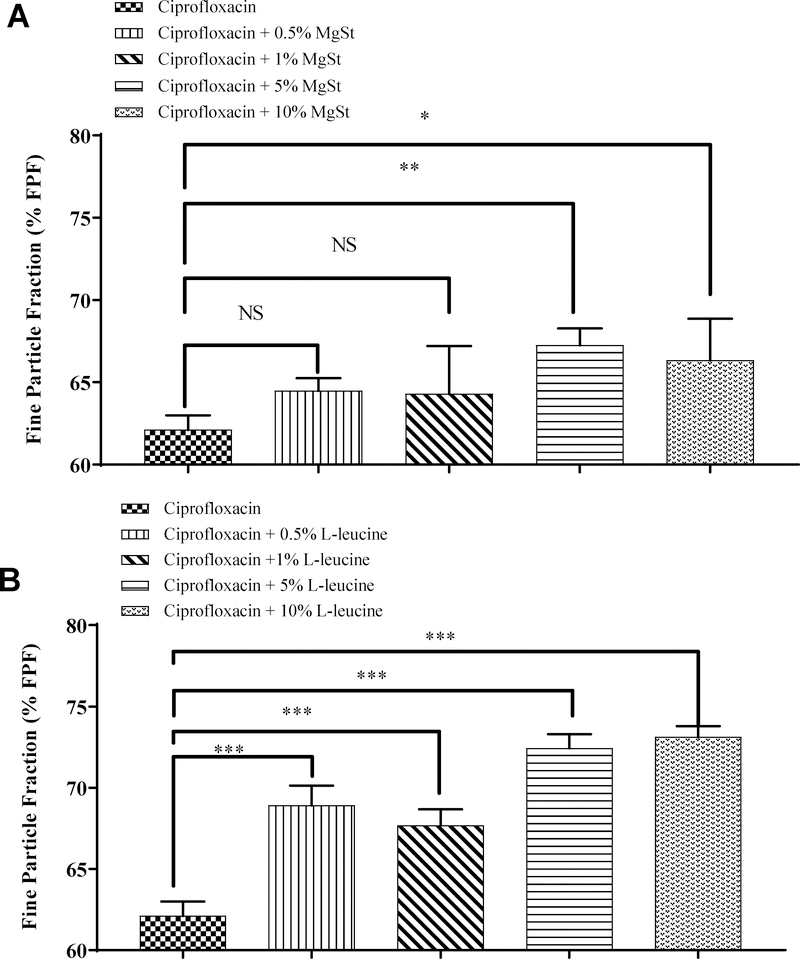
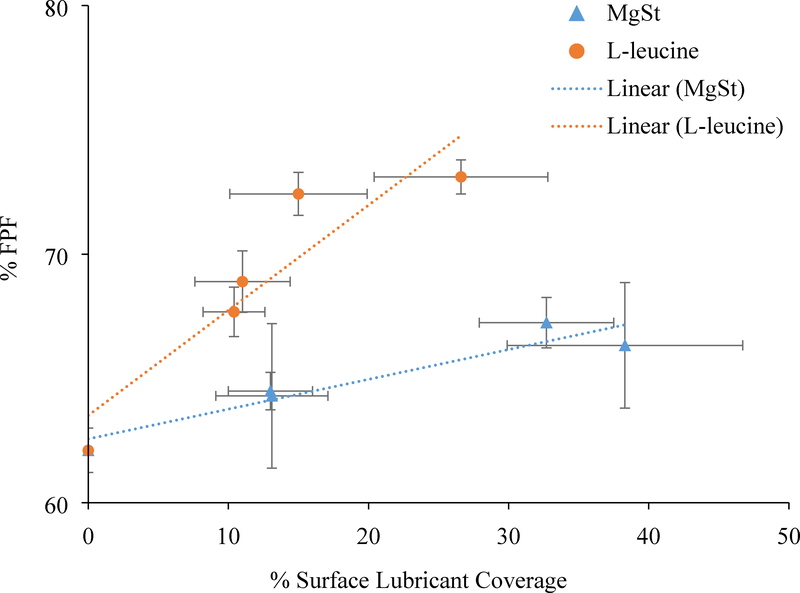
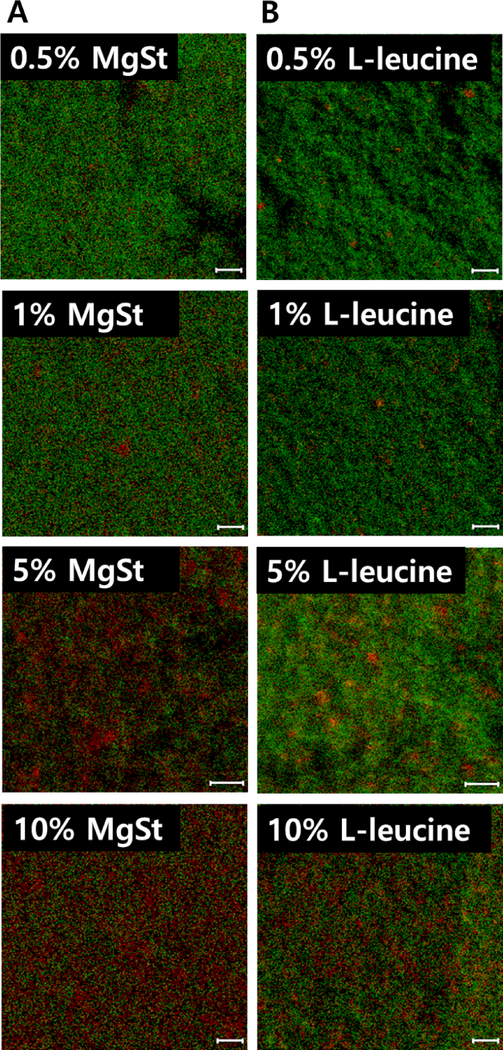
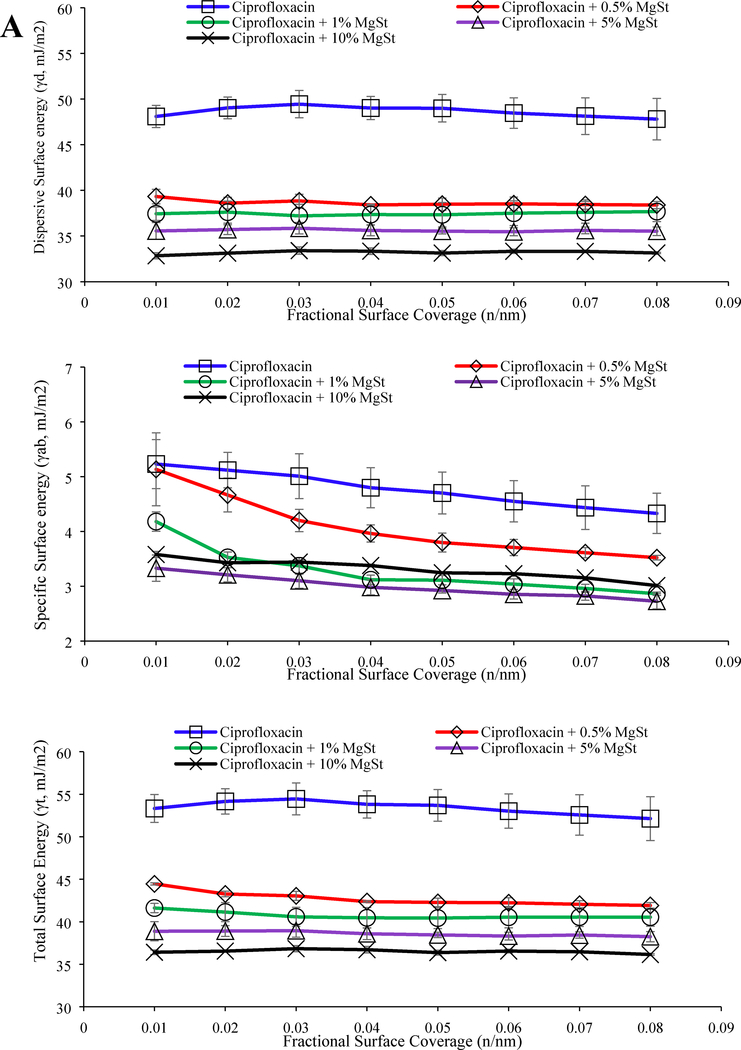
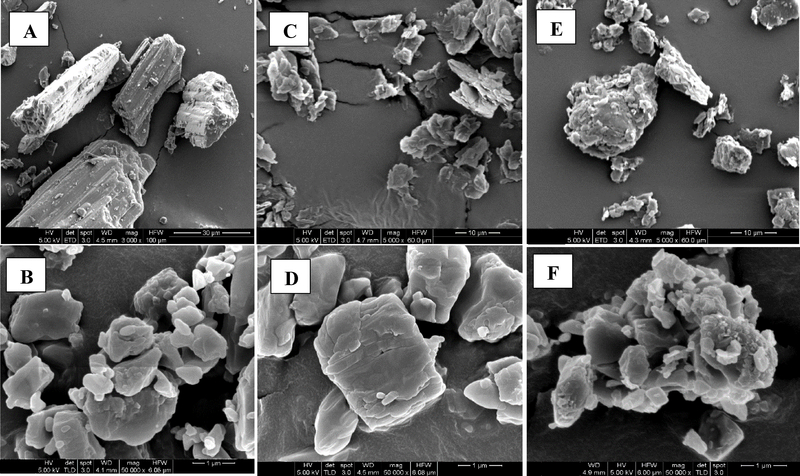
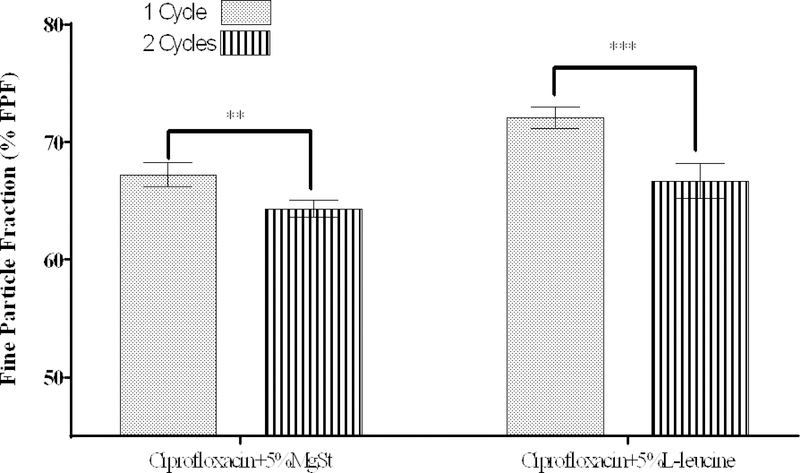
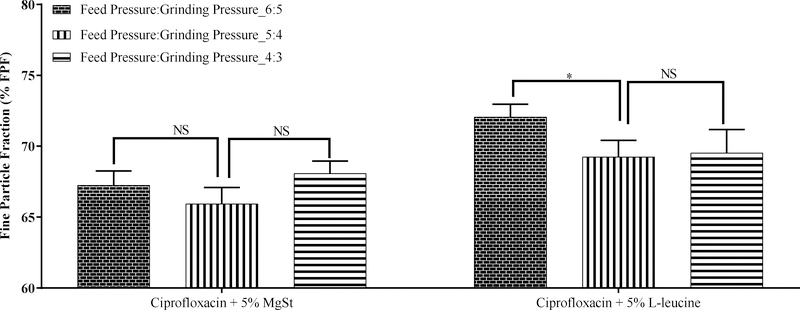
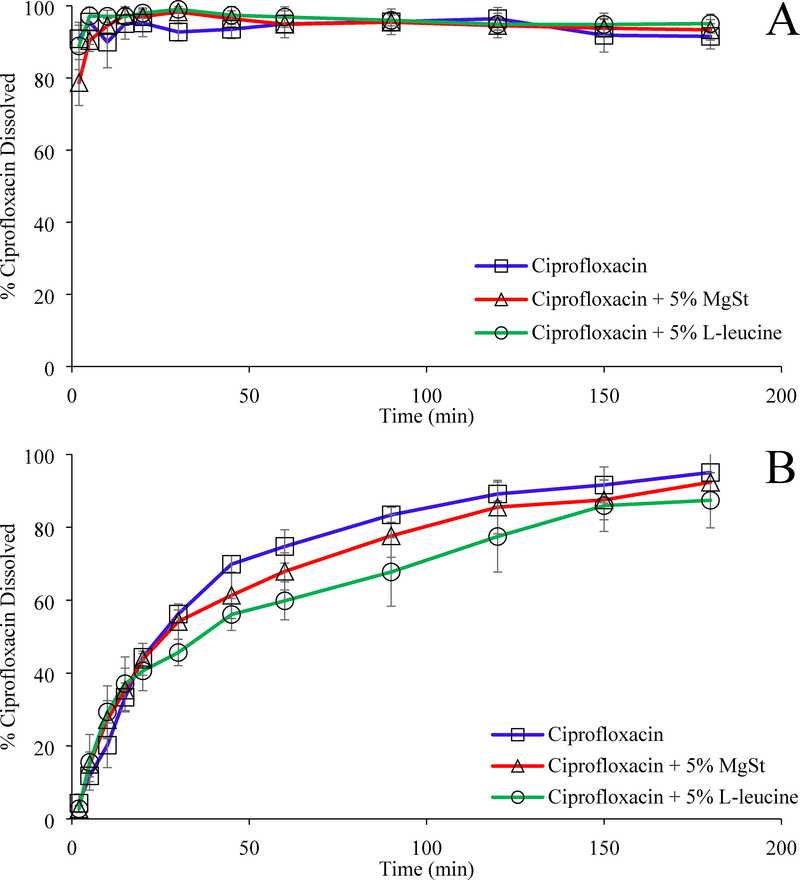
Co-jet-milling drugs and lubricants may enable simultaneous particle size reduction and surface coating to achieve satisfactory aerosolization performance. This study aims to establish the relationship between surface lubricant coverage and aerosolization behavior of a model drug (ciprofloxacin HCl) co-jet-milled with lubricants [magnesium stearate (MgSt) or l-leucine]. The co-jet-milled formulations were characterized for particle size, morphology, cohesion, Carr's index, and aerosolization performance. The surface lubricant coating was assessed by probing surface chemical composition using X-ray photoelectron spectroscopy (XPS) and time-of-flight secondary-ion mass spectrometry (ToF-SIMS). The effects of co-jet-milling on the surface energy and in vitro dissolution of ciprofloxacin were also evaluated. Our results indicated that, in general, the ciprofloxacin co-jet-milled with l-leucine at >0.5% w/w showed a significant higher fine particle fraction (FPF) compared with the ciprofloxacin jet-milled alone. The FPF values plateau at or above 5% w/w for both MgSt and l-leucine. We have established the quantitative correlations between surface lubricant coverage and aerosolization in the tested range for each of the lubricants. More importantly, our results suggest different mechanisms to improve aerosolization for MgSt-coating and l-leucine-coating, respectively: MgSt-coating reduces inter-particulate interactions through the formation of low surface energy coating films, while l-leucine-coating not only reduces the surface energy but also creates rough particle surfaces that reduce inter-particulate contact area. Furthermore, surface coatings with 5% w/w MgSt (which is hydrophobic) did not lead to substantial changes in in vitro dissolution. Our findings have shown that the coating structure/quality and their effects could be highly dependent on the process and the coating material. The findings from this mechanistic study provide fundamental understanding of the critical effects of MgSt and l-leucine surface coverages on aerosolization and powder flow properties of inhalation particles.
共研磨药物和润滑剂可以实现粒径减小和表面涂层的同步,从而达到令人满意的雾化性能。本研究旨在建立模型药物(盐酸环丙沙星)与润滑剂(硬脂酸镁(MgSt)或 L-亮氨酸)共研磨后,表面润滑剂覆盖率与雾化行为之间的关系。共研磨制剂的粒径、形态、内聚性、卡尔指数和雾化性能进行了特征描述。利用 X 射线光电子能谱(XPS)和飞行时间二次离子质谱(ToF-SIMS)探测表面化学成分来评估表面润滑剂涂层。还评估了共研磨对盐酸环丙沙星表面能和体外溶解的影响。结果表明,通常情况下,L-亮氨酸以>0.5%w/w共研磨的盐酸环丙沙星的细颗粒分数(FPF)明显高于单独研磨的盐酸环丙沙星。对于 MgSt 和 L-亮氨酸,FPF 值在 5%w/w 或更高时达到平台。我们已经在每种润滑剂的测试范围内建立了表面润滑剂覆盖率与雾化之间的定量关系。更重要的是,我们的结果表明,MgSt 涂层和 L-亮氨酸涂层分别改善雾化的机制不同:MgSt 涂层通过形成低表面能的涂层膜来减少颗粒间的相互作用,而 L-亮氨酸涂层不仅降低了表面能,而且还产生了粗糙的颗粒表面,从而减少了颗粒间的接触面积。此外,含有 5%w/w MgSt(疏水性)的表面涂层不会导致体外溶解发生实质性变化。我们的研究结果表明,涂层结构/质量及其影响可能高度依赖于工艺和涂层材料。这项机制研究的结果提供了对 MgSt 和 L-亮氨酸表面覆盖率对吸入颗粒雾化和粉末流动性能的关键影响的基本理解。