Bristol Dental School, University of Bristol, Lower Maudlin Street, BS1 2LY, Bristol, UK.
Leopold Muller Arthritis Research Centre, Medical School, RJAH Orthopaedic Hospital, ISTM, Keele University, Oswestry, UK.
Arthritis Res Ther. 2019 Jul 12;21(1):172. doi: 10.1186/s13075-019-1939-2.
Syndecans are heparan sulfate proteoglycans that occur in membrane-bound or soluble forms. Syndecan-3, the least well-characterised of the syndecan family, is highly expressed on synovial endothelial cells in rheumatoid arthritis patients. Here, it binds pro-inflammatory chemokines with evidence for a role in chemokine presentation and leukocyte trafficking into the joint, promoting the inflammatory response. In this study, we explored the role of soluble syndecan-3 as a binder of chemokines and as an anti-inflammatory and therapeutic molecule.
A human monocytic cell line and CD14+ PBMCs were utilised in both Boyden chamber and trans-endothelial migration assays. Soluble syndecan-3 was tested in antigen-induced and collagen-induced in vivo arthritis models in mice. ELISA and isothermal fluorescence titration assays assessed the binding affinities. Syndecan-3 expression was identified by flow cytometry and PCR, and levels of shedding by ELISA.
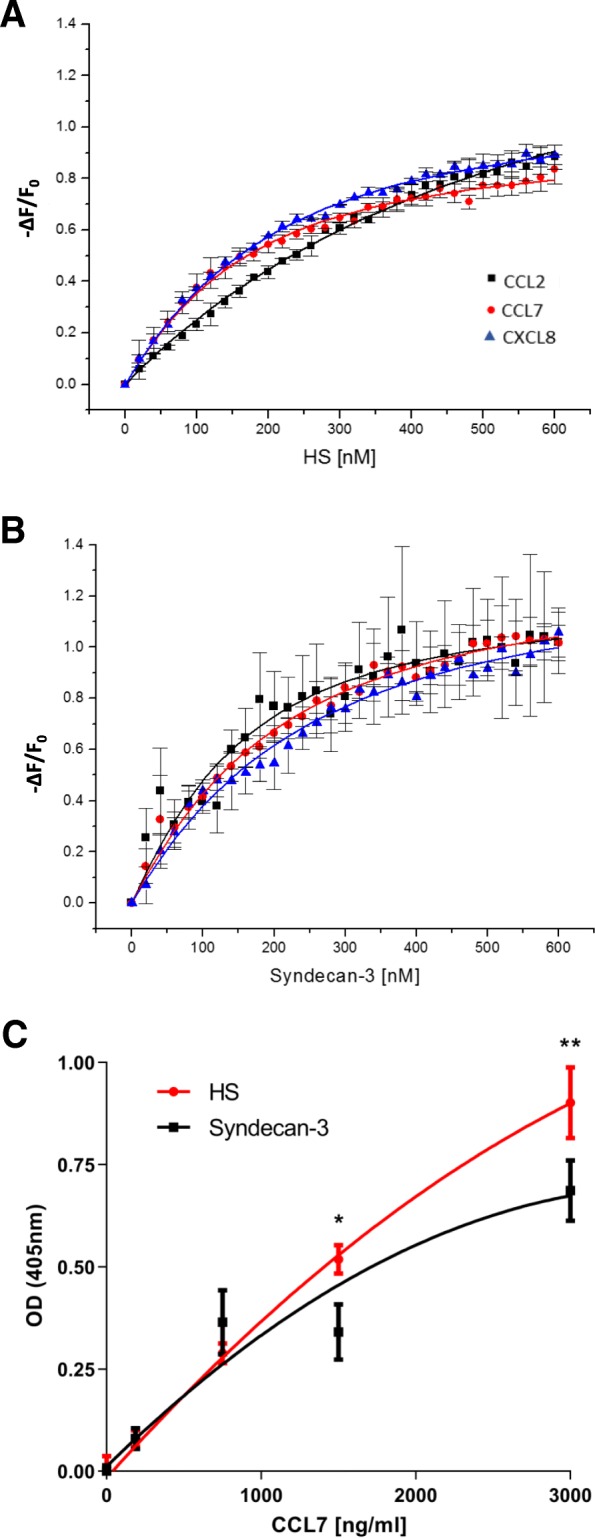
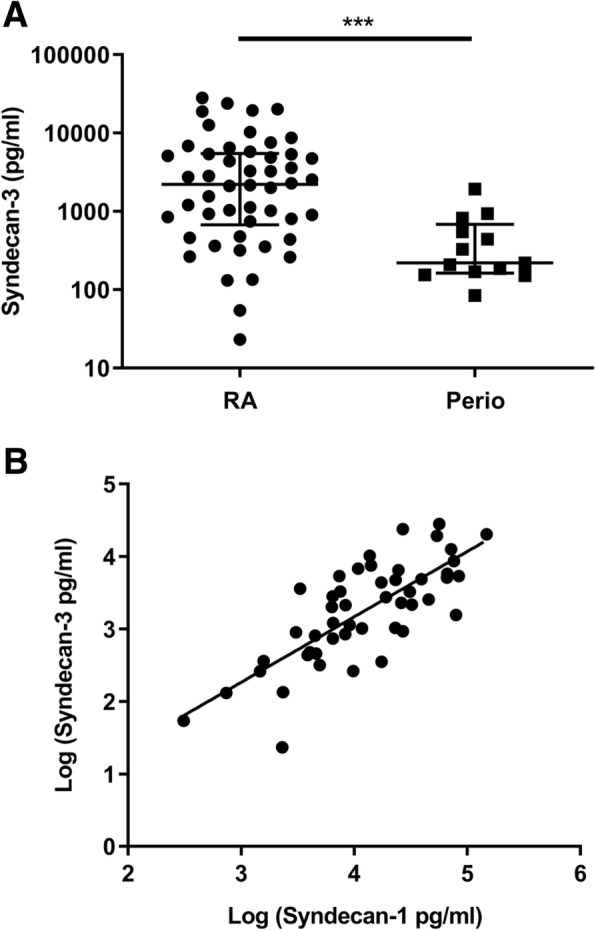
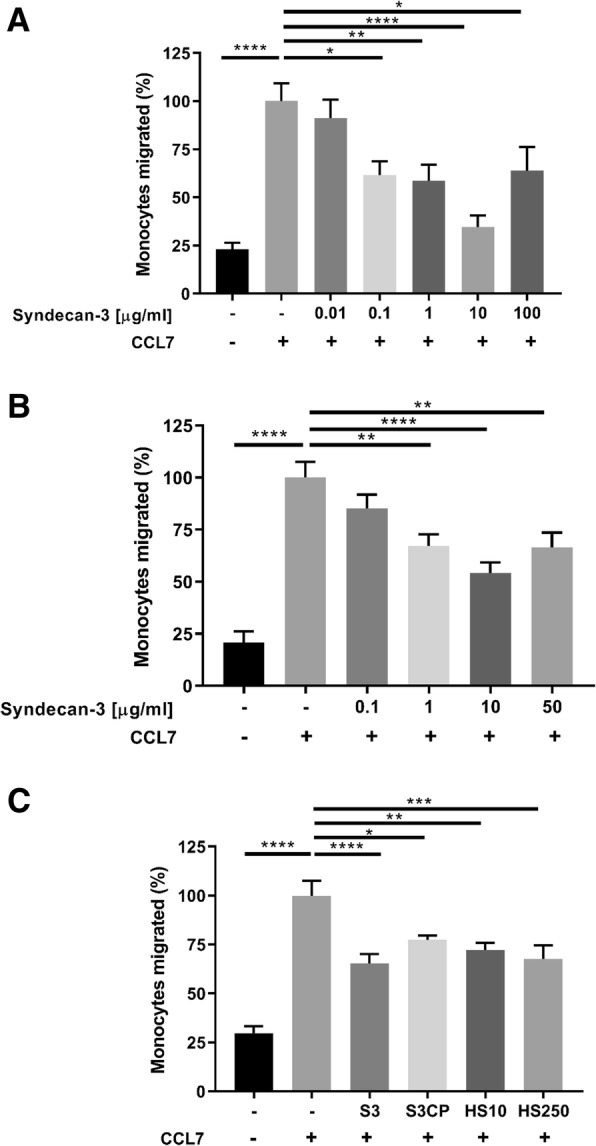
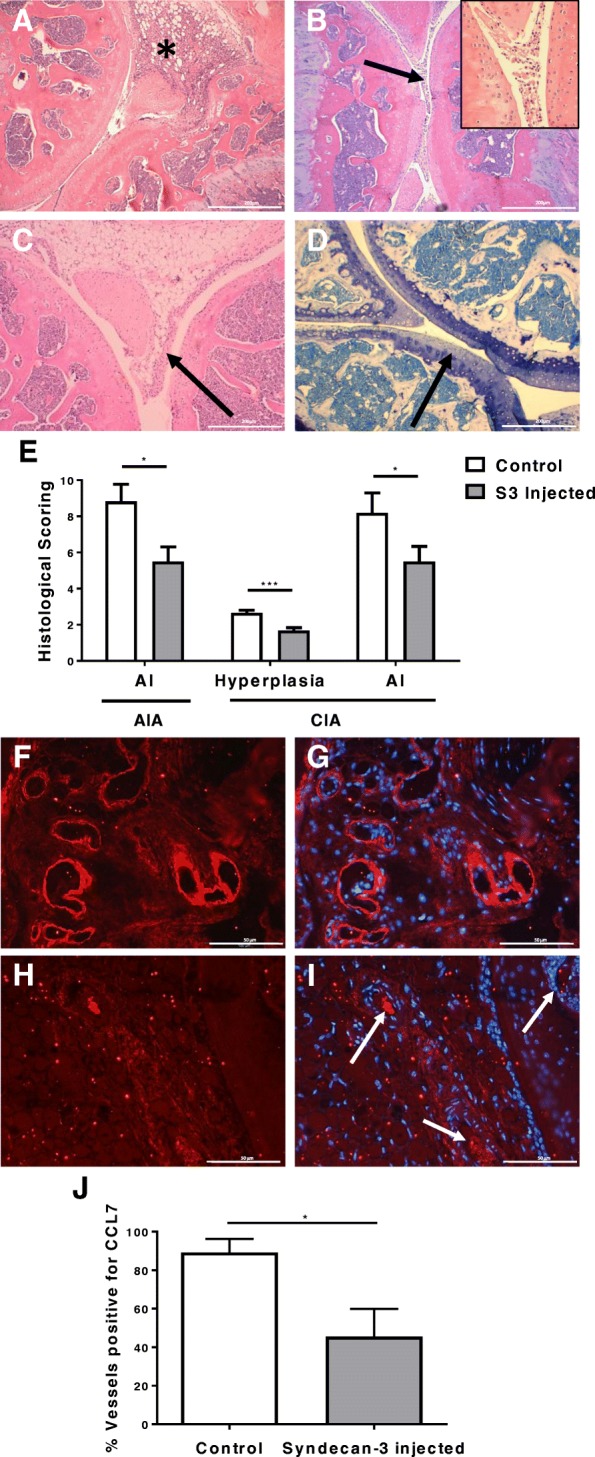
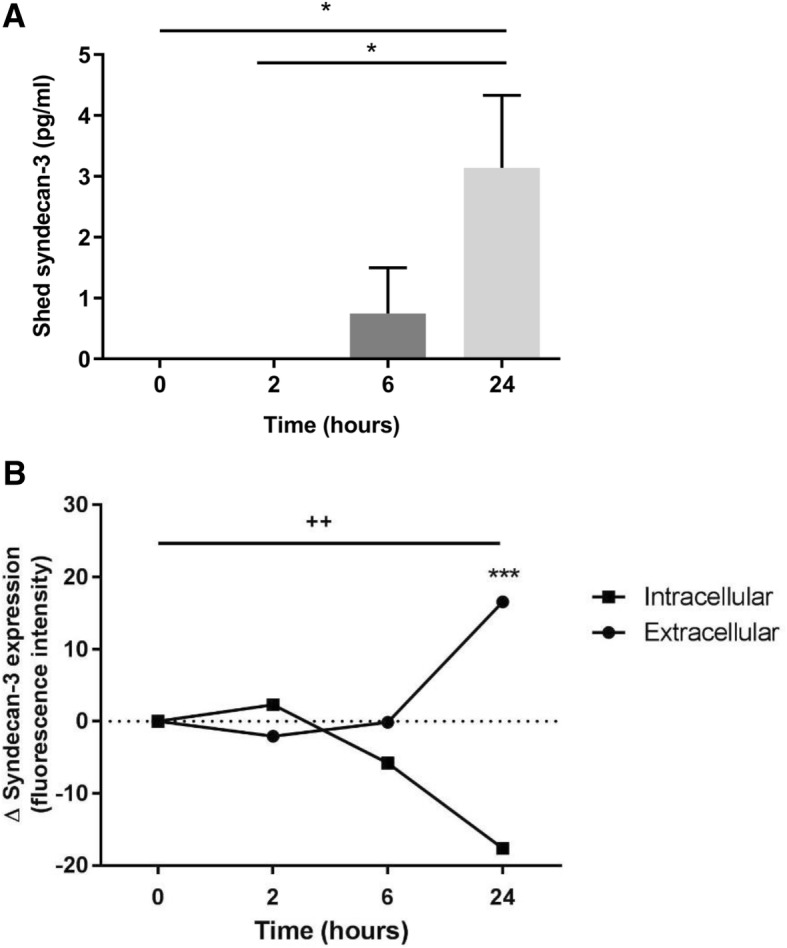
Using in vitro and in vivo models, soluble syndecan-3 inhibited leukocyte migration in vitro in response to CCL7 and its administration in murine models of rheumatoid arthritis reduced histological disease severity. Using isothermal fluorescence titration, the binding affinity of soluble syndecan-3 to inflammatory chemokines CCL2, CCL7 and CXCL8 was determined, revealing little difference, with Ks in the low nM range. TNFα increased cell surface expression and shedding of syndecan-3 from cultured human endothelial cells. Furthermore, soluble syndecan-3 occurred naturally in the sera of patients with rheumatoid arthritis and periodontitis, and its levels correlated with syndecan-1.
This study shows that the addition of soluble syndecan-3 may represent an alternative therapeutic approach in inflammatory disease.
黏附素是硫酸乙酰肝素蛋白聚糖,以膜结合或可溶性形式存在。黏附素-3 是黏附素家族中研究最少的成员,在类风湿关节炎患者的滑膜内皮细胞中高度表达。在那里,它与促炎趋化因子结合,证据表明其在趋化因子呈递和白细胞向关节内迁移中起作用,从而促进炎症反应。在这项研究中,我们探讨了可溶性黏附素-3 作为趋化因子结合物以及抗炎和治疗分子的作用。
我们使用人单核细胞系和 CD14+ PBMC 在 Boyden 室和跨内皮迁移测定中进行研究。在小鼠的抗原诱导和胶原诱导的体内关节炎模型中测试可溶性黏附素-3。ELISA 和等温荧光滴定测定评估结合亲和力。通过流式细胞术和 PCR 鉴定黏附素-3 的表达,并通过 ELISA 鉴定脱落水平。
使用体外和体内模型,可溶性黏附素-3 抑制了体外白细胞对 CCL7 的迁移反应,并且在类风湿关节炎的小鼠模型中给予其可降低组织学疾病严重程度。通过等温荧光滴定,确定了可溶性黏附素-3 与炎症趋化因子 CCL2、CCL7 和 CXCL8 的结合亲和力,发现结合亲和力差异不大,Ks 值在低 nM 范围内。TNFα 增加了培养的人内皮细胞表面表达和脱落的黏附素-3。此外,可溶性黏附素-3 自然存在于类风湿关节炎和牙周炎患者的血清中,其水平与黏附素-1 相关。
本研究表明,添加可溶性黏附素-3 可能代表炎症性疾病的另一种治疗方法。