Department of Pathology and Biomedical Science, University of Otago Christchurch, P.O. Box 4345, Christchurch, New Zealand.
Department of Surgery, University of Otago Christchurch, P.O. Box 4345, Christchurch, New Zealand.
Sci Rep. 2019 Jul 12;9(1):10128. doi: 10.1038/s41598-019-46146-3.
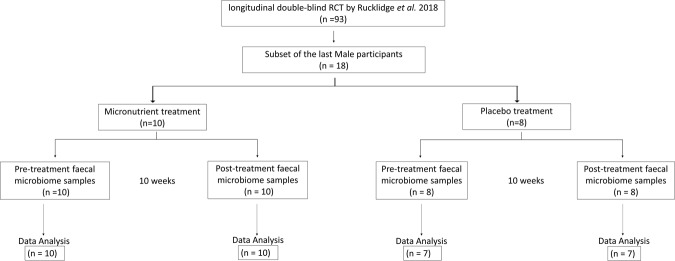
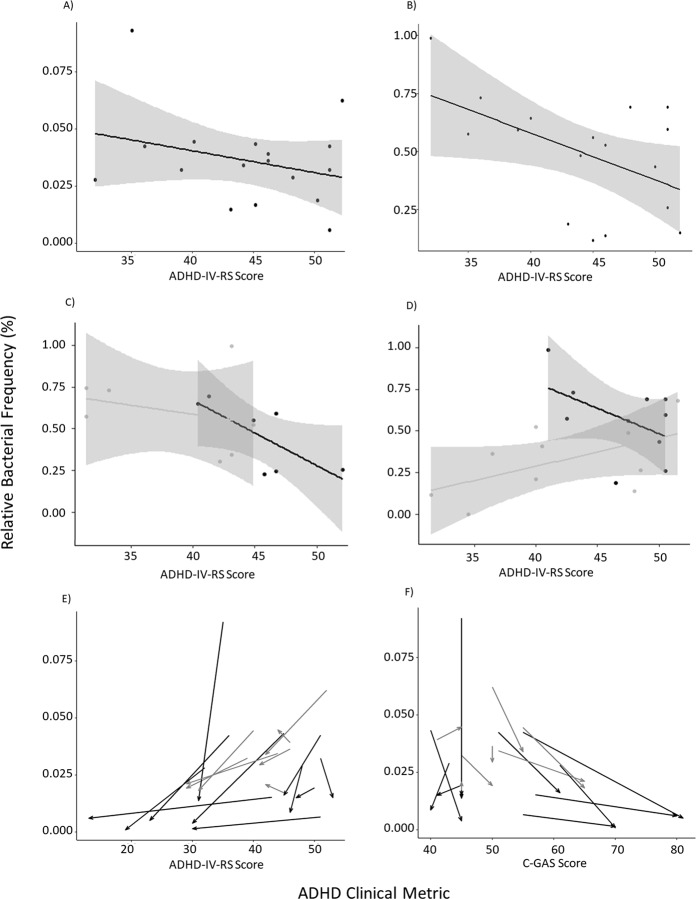
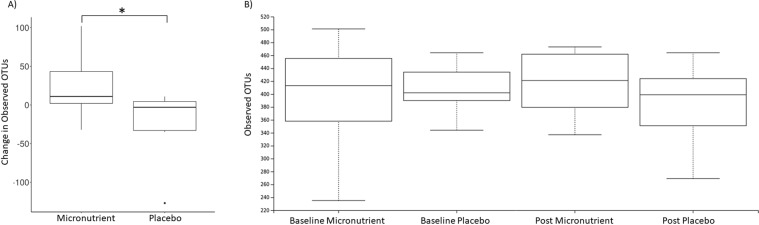
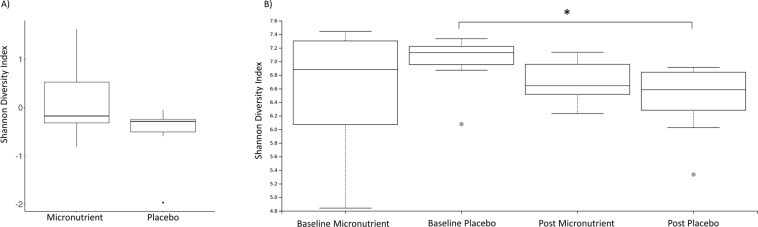
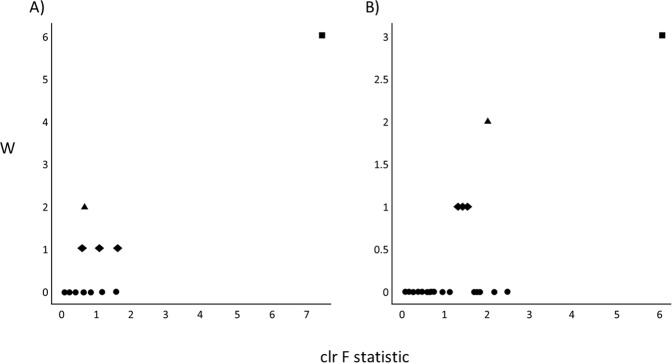
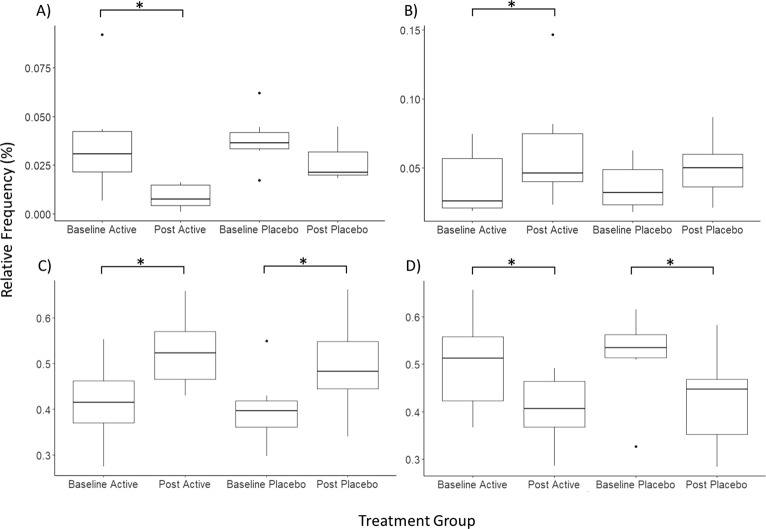
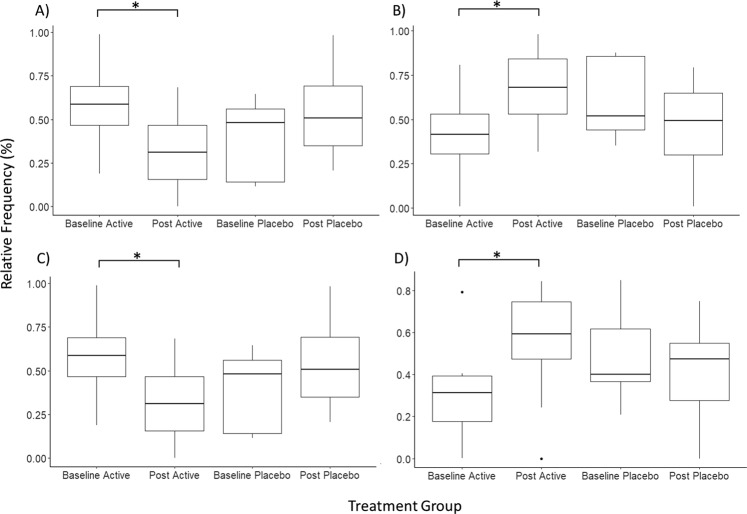
It has been widely hypothesized that both diet and the microbiome play a role in the regulation of attention-deficit/hyperactivity disorder (ADHD) behaviour. However, there has been very limited scientific investigation into the potential biological connection. We performed a 10-week pilot study investigating the effects of a broad spectrum micronutrient administration on faecal microbiome content, using 16S rRNA gene sequencing. The study consisted of 17 children (seven in the placebo and ten in the treatment group) between the ages of seven and 12 years, who were diagnosed with ADHD. We found that micronutrient treatment did not drive large-scale changes in composition or structure of the microbiome. However, observed OTUs significantly increased in the treatment group, and showed no mean change in the placebo group. The differential abundance and relative frequency of Actinobacteria significantly decreased post- micronutrient treatment, and this was largely attributed to species from the genus Bifidobacterium. This was compensated by an increase in the relative frequency of species from the genus Collinsella. Further research is required to establish the role that Bifidobacterium contribute towards neuropsychiatric disorders; however, these findings suggest that micronutrient administration could be used as a safe, therapeutic method to modulate Bifidobacterium abundance, which could have potential implications for modulating and regulating ADHD behaviour. Our pilot study provides an initial observation into this area of research, and highlights an interesting avenue for further investigation in a larger cohort. Furthermore, these novel results provide a basis for future research on the biological connection between ADHD, diet and the microbiome.
人们普遍假设,饮食和微生物组都在调节注意缺陷多动障碍(ADHD)行为方面发挥作用。然而,对于潜在的生物学联系,科学界的研究非常有限。我们进行了一项为期 10 周的试点研究,使用 16S rRNA 基因测序调查了广谱微量营养素给药对粪便微生物组内容的影响。该研究包括 17 名年龄在 7 至 12 岁之间被诊断为 ADHD 的儿童(安慰剂组 7 名,治疗组 10 名)。我们发现,微量营养素治疗并没有引起微生物组组成或结构的大规模变化。然而,观察到的 OTUs 在治疗组中显著增加,而在安慰剂组中没有平均变化。治疗后厚壁菌门的差异丰度和相对频率显著降低,这主要归因于双歧杆菌属的物种。这被柯林斯氏菌属物种的相对频率增加所补偿。需要进一步的研究来确定双歧杆菌在神经精神疾病中的作用;然而,这些发现表明,微量营养素给药可以作为一种安全、治疗性的方法来调节双歧杆菌的丰度,这可能对调节和调节 ADHD 行为具有潜在意义。我们的试点研究为这一研究领域提供了初步观察,并强调了在更大队列中进一步研究的有趣途径。此外,这些新的结果为 ADHD、饮食和微生物组之间的生物学联系的未来研究提供了基础。