Jones Robin R, Hooper David C, Zhang Liwu, Wolverson Daniel, Valev Ventsislav K
Turbomachinery Research Centre, University of Bath, Bath, BA2 7AY, UK.
Centre for Photonics and Photonic Materials, University of Bath, Bath, BA2 7AY, UK.
Nanoscale Res Lett. 2019 Jul 12;14(1):231. doi: 10.1186/s11671-019-3039-2.
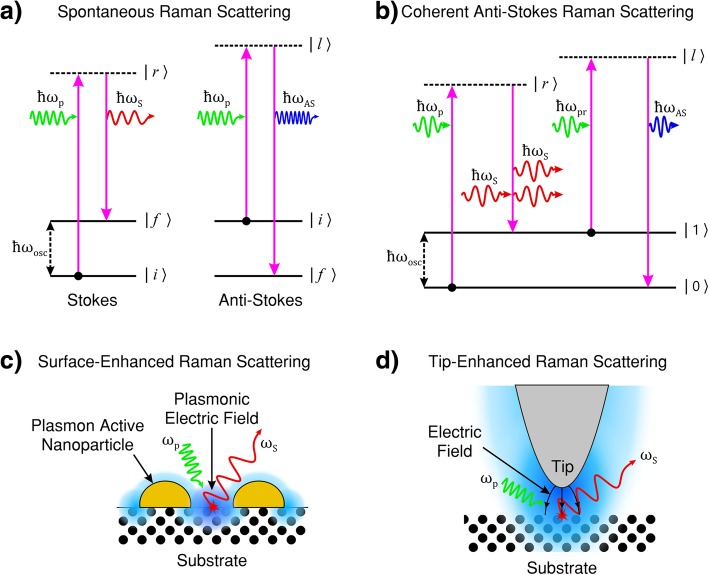
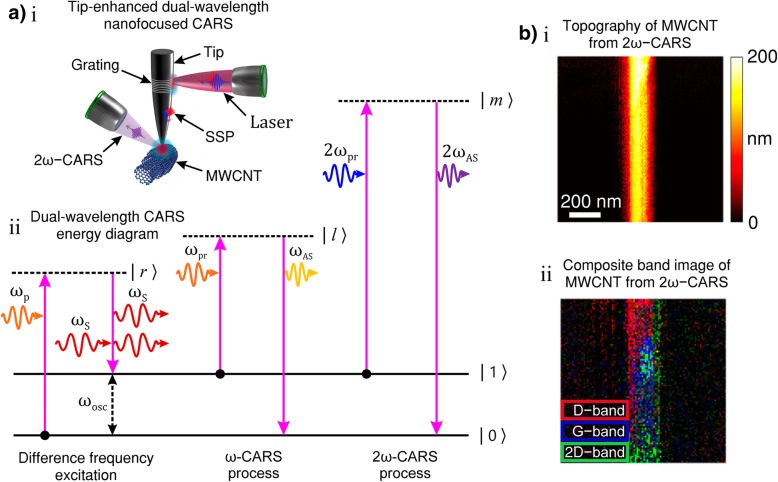
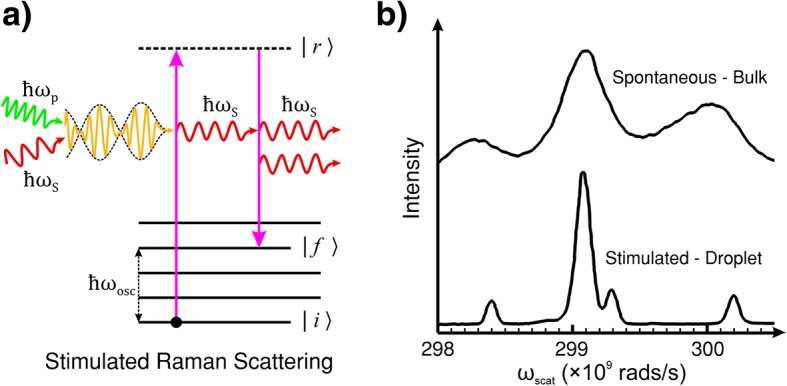
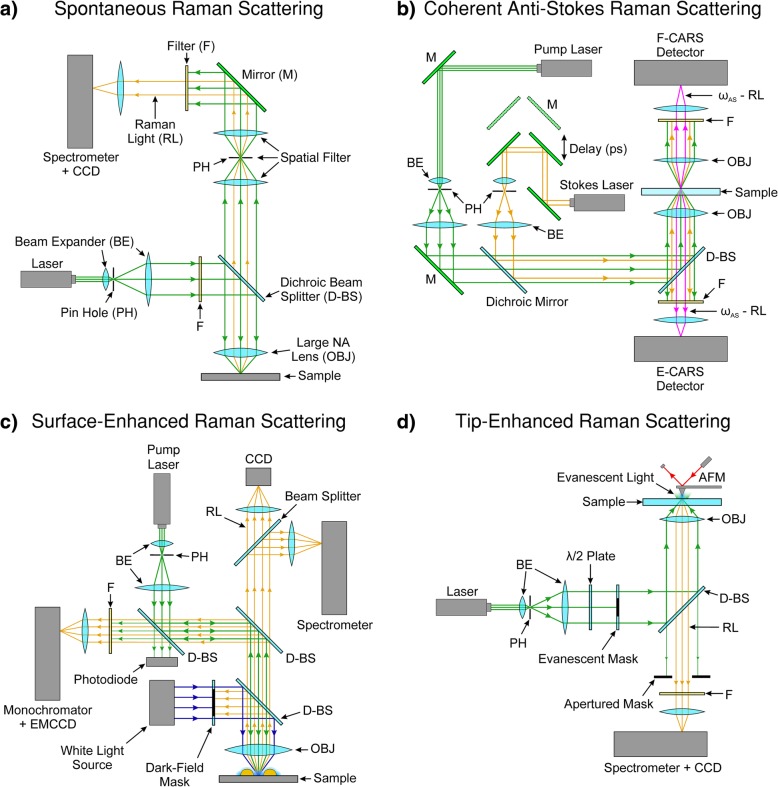
Driven by applications in chemical sensing, biological imaging and material characterisation, Raman spectroscopies are attracting growing interest from a variety of scientific disciplines. The Raman effect originates from the inelastic scattering of light, and it can directly probe vibration/rotational-vibration states in molecules and materials. Despite numerous advantages over infrared spectroscopy, spontaneous Raman scattering is very weak, and consequently, a variety of enhanced Raman spectroscopic techniques have emerged. These techniques include stimulated Raman scattering and coherent anti-Stokes Raman scattering, as well as surface- and tip-enhanced Raman scattering spectroscopies. The present review provides the reader with an understanding of the fundamental physics that govern the Raman effect and its advantages, limitations and applications. The review also highlights the key experimental considerations for implementing the main experimental Raman spectroscopic techniques. The relevant data analysis methods and some of the most recent advances related to the Raman effect are finally presented. This review constitutes a practical introduction to the science of Raman spectroscopy; it also highlights recent and promising directions of future research developments.
受化学传感、生物成像和材料表征等应用的推动,拉曼光谱正吸引着来自各种科学学科日益增长的关注。拉曼效应源于光的非弹性散射,它可以直接探测分子和材料中的振动/转动-振动状态。尽管相对于红外光谱有许多优点,但自发拉曼散射非常微弱,因此,出现了各种增强拉曼光谱技术。这些技术包括受激拉曼散射和相干反斯托克斯拉曼散射,以及表面增强拉曼散射光谱和针尖增强拉曼散射光谱。本综述旨在让读者了解支配拉曼效应的基本物理原理及其优点、局限性和应用。该综述还强调了实施主要拉曼光谱实验技术的关键实验注意事项。最后介绍了相关的数据分析方法以及与拉曼效应相关的一些最新进展。本综述构成了对拉曼光谱科学的实用介绍;它还突出了未来研究发展的最新且有前景的方向。