Key Laboratory of Animal Genetics, Breeding and Reproduction, Ministry of Agriculture & National Engineering Laboratory for Animal Breeding, College of Animal Science and Technology, China Agricultural University, Beijing, P.R. China.
College of Animal Science and Technology, Institute of Tropical Agriculture and Forestry, Hainan University, Haikou, P.R. China.
PLoS One. 2019 Jul 16;14(7):e0219868. doi: 10.1371/journal.pone.0219868. eCollection 2019.
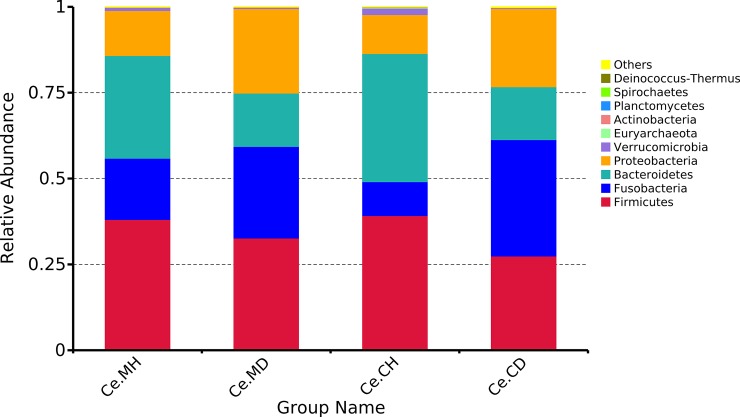
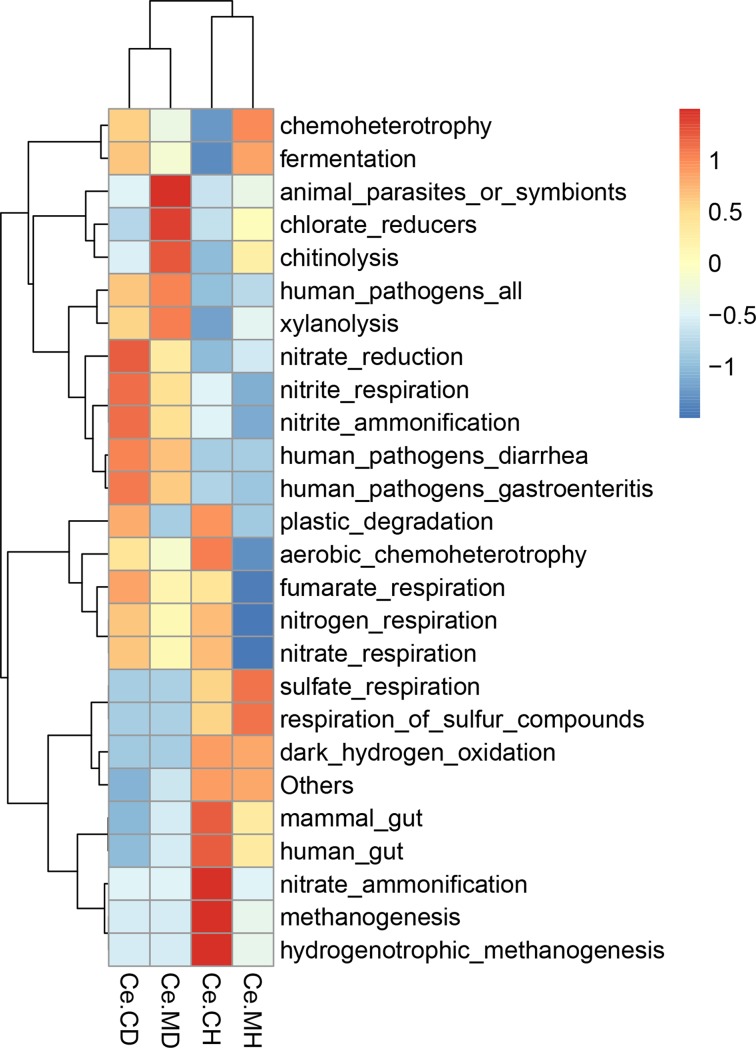
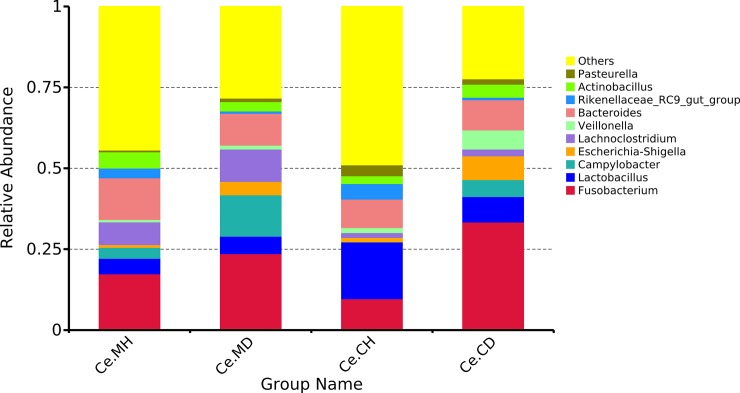
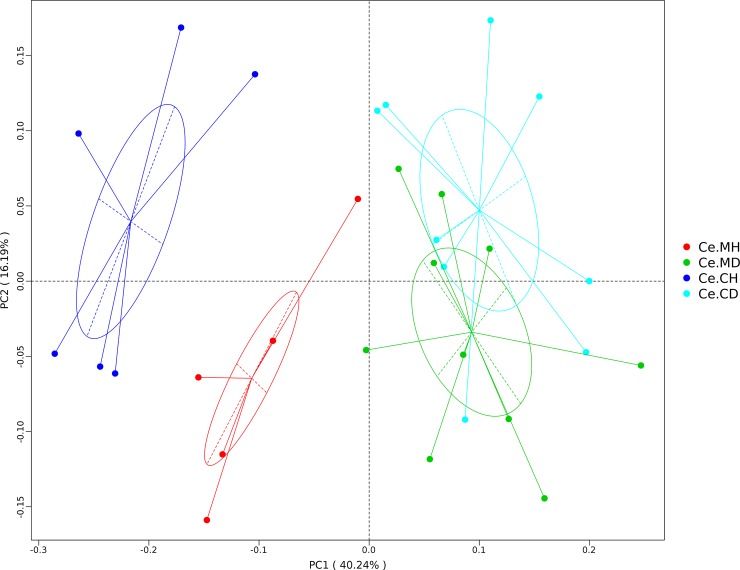
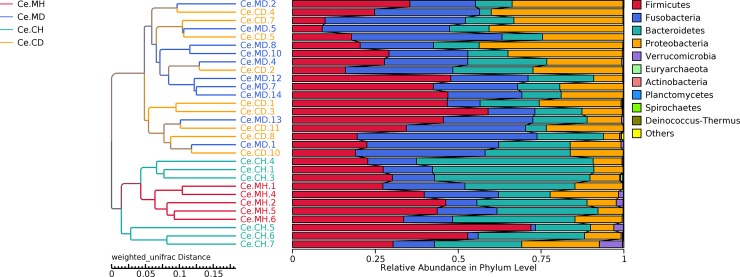
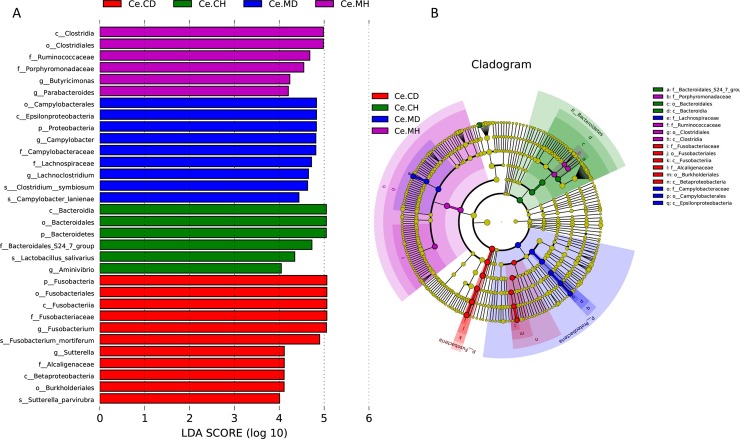
Diarrhea, caused by porcine epidemic diarrhea virus (PEDV), is a catastrophic gastrointestinal disease among suckling piglets, with high infectivity, morbidity, and mortality, causing huge economic losses to the pig industry. In the present study, we investigated the different microbiota from the cecal mucosa and cecal contents between healthy and PEDV-infected piglets. High-throughput 16S rRNA gene sequencing was performed to explore differences. The results revealed that microbial dysbiosis by PEDV infection occurred in the cecal mucosa and contents of suckling piglets at each microbial taxonomic level. The abundance of pathogenic bacteria associated with diseases, including diarrhea, was increased. The abundance of Fusobacterium was 26.71% and 33.91% in cecal mucosa and contents of PEDV-infected group, respectively, whereas that in the healthy groups was 17.85% and 9.88%. The proportion of Proteobacteria in the infected groups was relatively high (24.67% and 22.79%, respectively), whereas that in the healthy group was 13.13% and 11.34% in the cecal mucosa and contents, respectively. Additionally, the proportion of Bacteroidetes in the healthy group (29.89%, 37.32%) was approximately twice that of the PEDV-infected group (15.50%, 15.39%). "Nitrate reduction", "Human pathogens diarrhea", "Human pathogens gastroenteritis", "Nitrite respiration", and "Nitrite ammonification" were the enriched functional annotation terms in the PEDV-infected groups. Porcine epidemic diarrhea virus infection increased the proportion of harmful bacteria and decreased the proportion of beneficial bacteria in the cecal mucosa and contents of suckling piglets. Our findings suggest that determining the intestinal microbiota might provide a promising method to prevent PEDV and open a new avenue for future research.
腹泻由猪流行性腹泻病毒(PEDV)引起,是一种严重的仔猪胃肠道疾病,具有高传染性、高发病率和高死亡率,给养猪业造成巨大的经济损失。本研究旨在调查健康和 PEDV 感染仔猪盲肠黏膜和内容物之间的不同微生物群。通过高通量 16S rRNA 基因测序进行差异分析。结果表明,PEDV 感染导致仔猪盲肠黏膜和内容物的微生物失调发生在各个微生物分类水平。与疾病相关的致病菌丰度增加,包括腹泻。梭杆菌在 PEDV 感染组盲肠黏膜和内容物中的丰度分别为 26.71%和 33.91%,而健康组分别为 17.85%和 9.88%。感染组变形菌的比例相对较高(分别为 24.67%和 22.79%),而健康组分别为 13.13%和 11.34%。此外,健康组拟杆菌的比例(29.89%,37.32%)约为 PEDV 感染组的两倍(15.50%,15.39%)。“硝酸盐还原”、“人类病原体腹泻”、“人类病原体胃肠炎”、“亚硝酸盐呼吸”和“亚硝酸盐氨化”是 PEDV 感染组中富集的功能注释术语。猪流行性腹泻病毒感染增加了仔猪盲肠黏膜和内容物中有害细菌的比例,降低了有益细菌的比例。我们的研究结果表明,确定肠道微生物群可能为预防 PEDV 提供一种有前途的方法,并为未来的研究开辟了新的途径。