Earth Systems Research Center, Institute for the Study of Earth, Oceans, and Space, University of New Hampshire, 8 College Road, Durham, New Hampshire, 03824, USA.
Department of Geography, University of Winnipeg, 515 Portage Avenue, Winnipeg, Manitoba, R3B 2E9, Canada.
Ecol Appl. 2019 Oct;29(7):e01974. doi: 10.1002/eap.1974. Epub 2019 Aug 7.
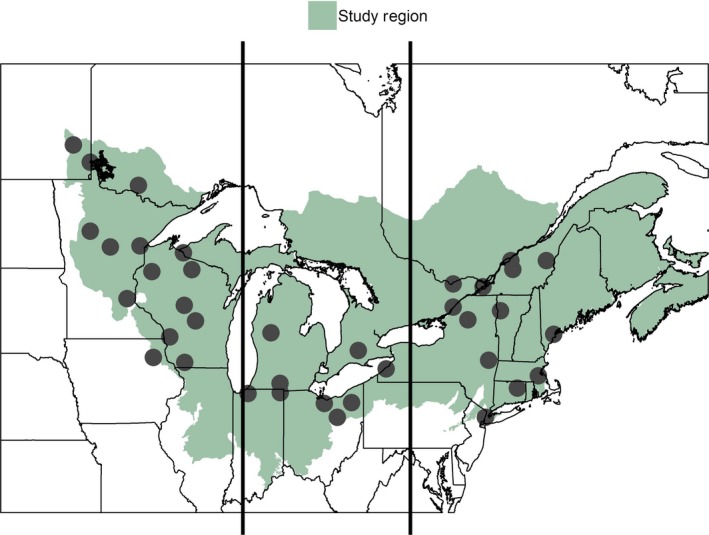
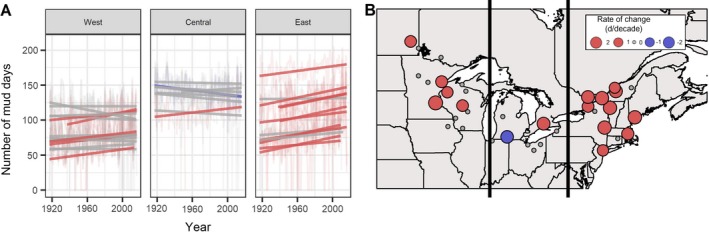
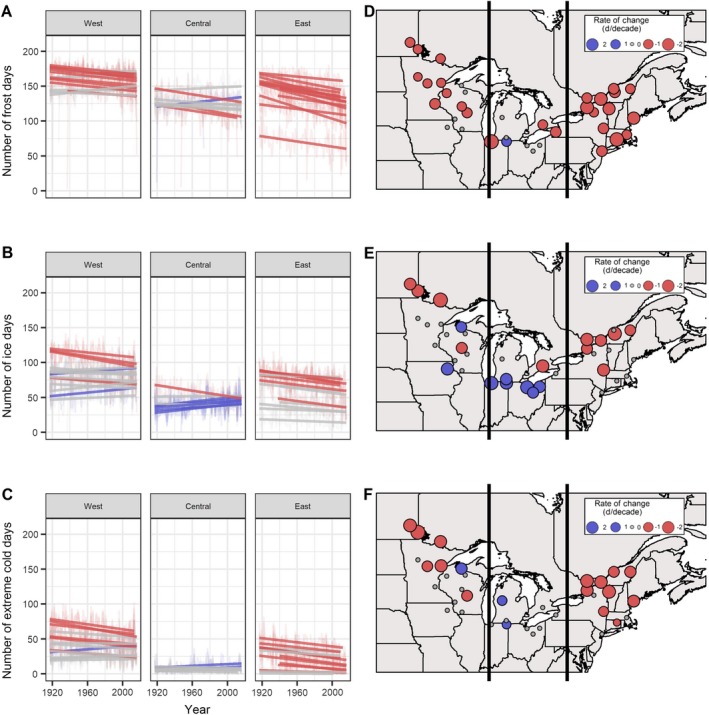
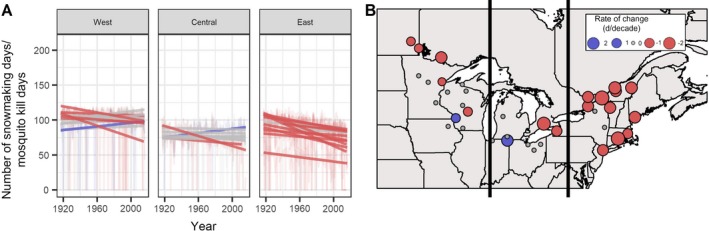
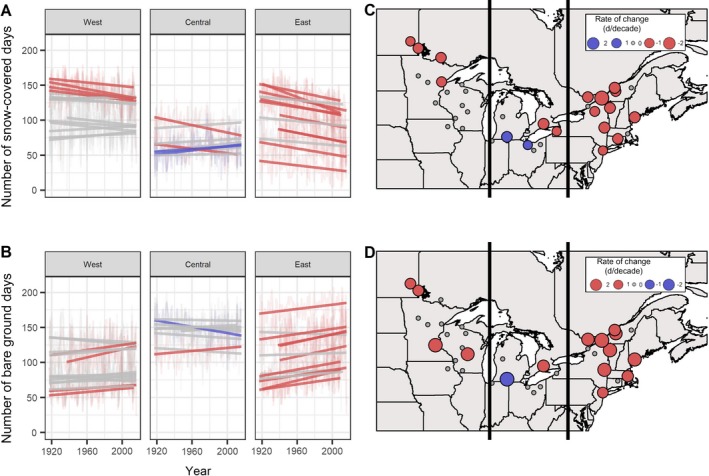
Winter is an understudied but key period for the socioecological systems of northeastern North American forests. A growing awareness of the importance of the winter season to forest ecosystems and surrounding communities has inspired several decades of research, both across the northern forest and at other mid- and high-latitude ecosystems around the globe. Despite these efforts, we lack a synthetic understanding of how winter climate change may impact hydrological and biogeochemical processes and the social and economic activities they support. Here, we take advantage of 100 years of meteorological observations across the northern forest region of the northeastern United States and eastern Canada to develop a suite of indicators that enable a cross-cutting understanding of (1) how winter temperatures and snow cover have been changing and (2) how these shifts may impact both ecosystems and surrounding human communities. We show that cold and snow covered conditions have generally decreased over the past 100 years. These trends suggest positive outcomes for tree health as related to reduced fine root mortality and nutrient loss associated with winter frost but negative outcomes as related to the northward advancement and proliferation of forest insect pests. In addition to effects on vegetation, reductions in cold temperatures and snow cover are likely to have negative impacts on the ecology of the northern forest through impacts on water, soils, and wildlife. The overall loss of coldness and snow cover may also have negative consequences for logging and forest products, vector-borne diseases, and human health, recreation, and tourism, and cultural practices, which together represent important social and economic dimensions for the northern forest region. These findings advance our understanding of how our changing winters may transform the socioecological system of a region that has been defined by the contrasting rhythm of the seasons. Our research also identifies a trajectory of change that informs our expectations for the future as the climate continues to warm.
冬季是北美东北部森林的社会生态系统中一个研究较少但至关重要的时期。人们越来越意识到冬季对森林生态系统和周围社区的重要性,这激发了几十年来的研究,不仅在美国北部森林,而且在全球其他中高纬度的生态系统中都进行了研究。尽管做出了这些努力,但我们仍然缺乏对冬季气候变化如何影响水文和生物地球化学过程以及它们所支持的社会和经济活动的综合认识。在这里,我们利用美国东北部和加拿大东部北部森林地区 100 年来的气象观测数据,开发了一系列指标,使我们能够全面了解(1)冬季温度和积雪覆盖是如何变化的,以及(2)这些变化可能如何影响生态系统和周围的人类社区。我们发现,在过去的 100 年里,寒冷和积雪覆盖的条件普遍减少了。这些趋势表明,与冬季霜害相关的细根死亡率和养分损失减少,对树木健康有积极影响,但与森林虫害向北推进和扩散相关,则有负面影响。除了对植被的影响外,低温和积雪覆盖的减少可能通过对水、土壤和野生动物的影响,对北方森林的生态产生负面影响。寒冷和积雪覆盖的整体减少也可能对北方森林地区的林业和森林产品、媒介传播疾病和人类健康、娱乐和旅游业以及文化习俗产生负面影响,这些共同构成了北方森林地区重要的社会和经济层面。这些发现增进了我们对不断变化的冬季如何改变一个以季节对比为特征的地区的社会生态系统的理解。我们的研究还确定了一种变化轨迹,为我们在气候持续变暖的情况下对未来的期望提供了信息。