Johnston Iain G, Hoffmann Till, Greenbury Sam F, Cominetti Ornella, Jallow Muminatou, Kwiatkowski Dominic, Barahona Mauricio, Jones Nick S, Casals-Pascual Climent
1Faculty of Mathematics and Natural Sciences, University of Bergen, Bergen, Norway.
2EPSRC Centre for the Mathematics of Precision Healthcare, Imperial College London, London, UK.
NPJ Digit Med. 2019 Jul 10;2:63. doi: 10.1038/s41746-019-0140-y. eCollection 2019.
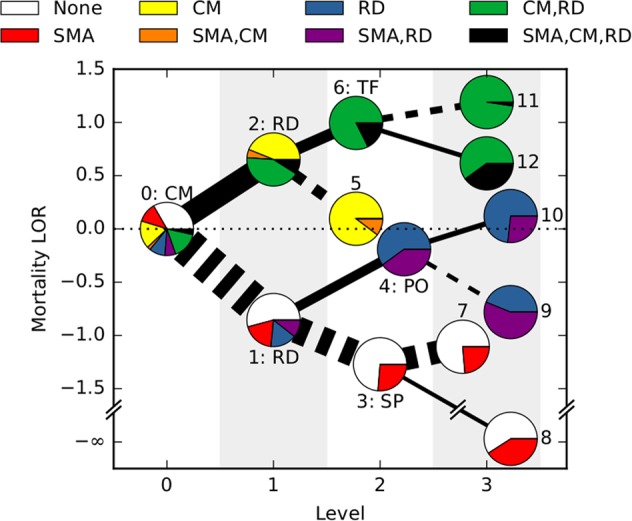
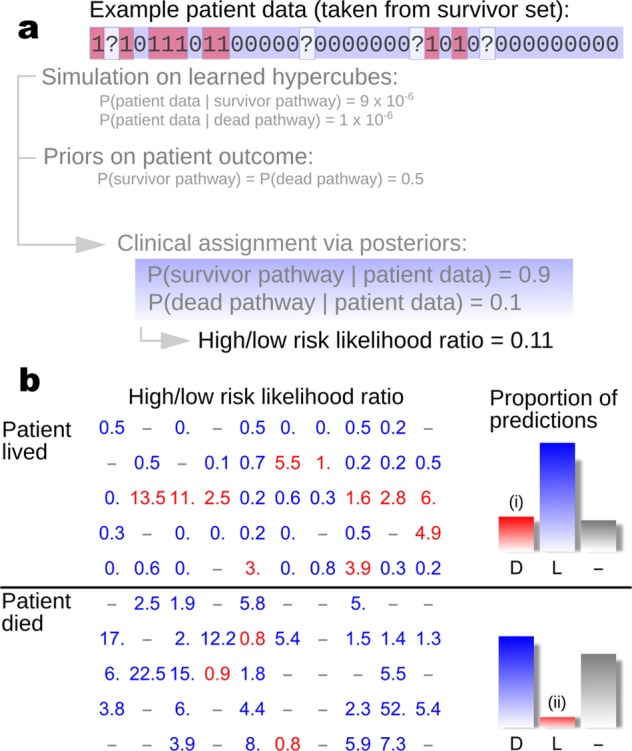
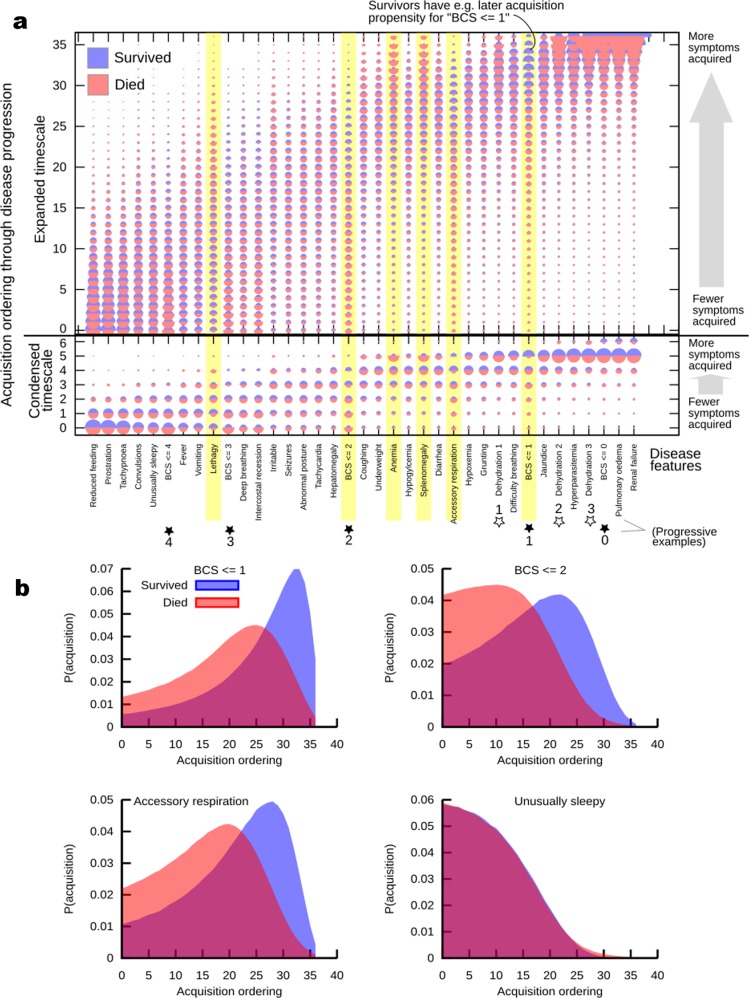
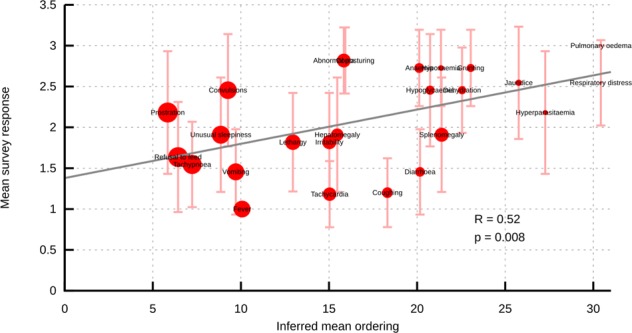
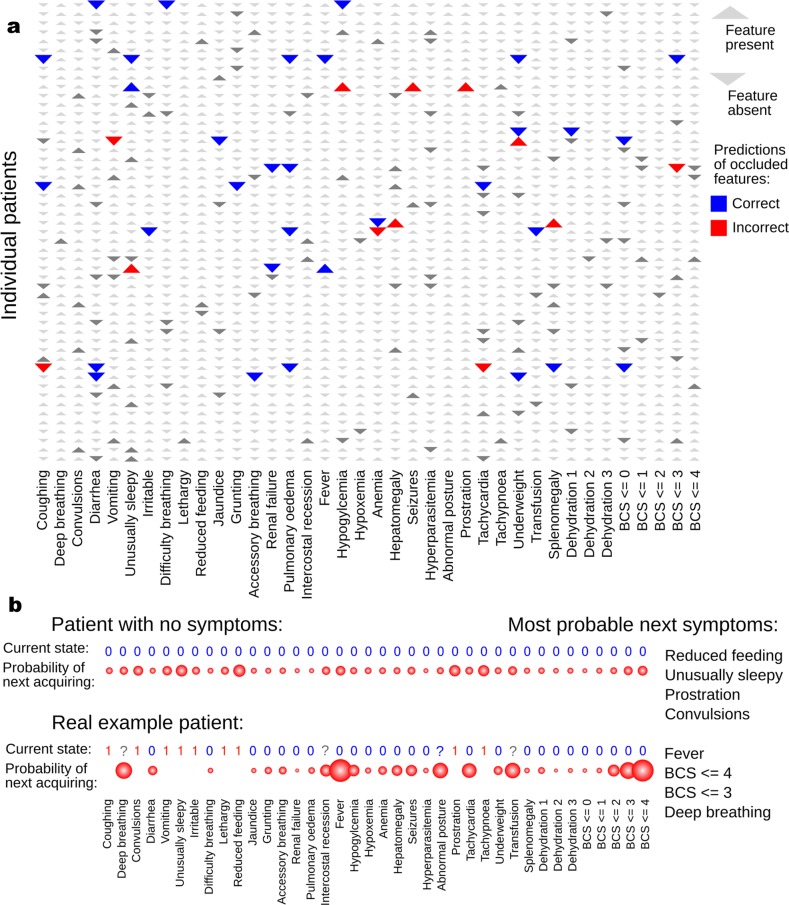
More than 400,000 deaths from severe malaria (SM) are reported every year, mainly in African children. The diversity of clinical presentations associated with SM indicates important differences in disease pathogenesis that require specific treatment, and this clinical heterogeneity of SM remains poorly understood. Here, we apply tools from machine learning and model-based inference to harness large-scale data and dissect the heterogeneity in patterns of clinical features associated with SM in 2904 Gambian children admitted to hospital with malaria. This quantitative analysis reveals features predicting the severity of individual patient outcomes, and the dynamic pathways of SM progression, notably inferred without requiring longitudinal observations. Bayesian inference of these pathways allows us assign quantitative mortality risks to individual patients. By independently surveying expert practitioners, we show that this data-driven approach agrees with and expands the current state of knowledge on malaria progression, while simultaneously providing a data-supported framework for predicting clinical risk.
据报道,每年有超过40万例死于重症疟疾(SM),主要发生在非洲儿童中。与SM相关的临床表现的多样性表明疾病发病机制存在重要差异,需要特定治疗,但对SM的这种临床异质性仍知之甚少。在这里,我们应用机器学习和基于模型的推理工具来利用大规模数据,并剖析2904名因疟疾住院的冈比亚儿童中与SM相关的临床特征模式的异质性。这种定量分析揭示了预测个体患者预后严重程度的特征以及SM进展的动态途径,特别是在无需纵向观察的情况下推断得出。这些途径的贝叶斯推理使我们能够为个体患者分配定量的死亡风险。通过独立调查专家从业者,我们表明这种数据驱动的方法与当前关于疟疾进展的知识状态相符并加以扩展,同时为预测临床风险提供了一个数据支持的框架。