Humeres Claudio, Frangogiannis Nikolaos G
The Wilf Family Cardiovascular Research Institute, Department of Medicine (Cardiology), Albert Einstein College of Medicine, Bronx, New York.
JACC Basic Transl Sci. 2019 Jun 24;4(3):449-467. doi: 10.1016/j.jacbts.2019.02.006. eCollection 2019 Jun.
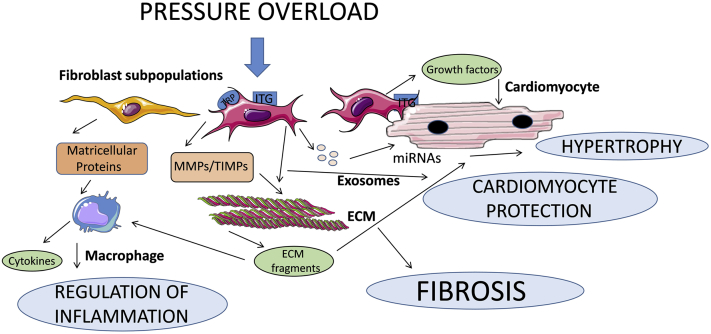
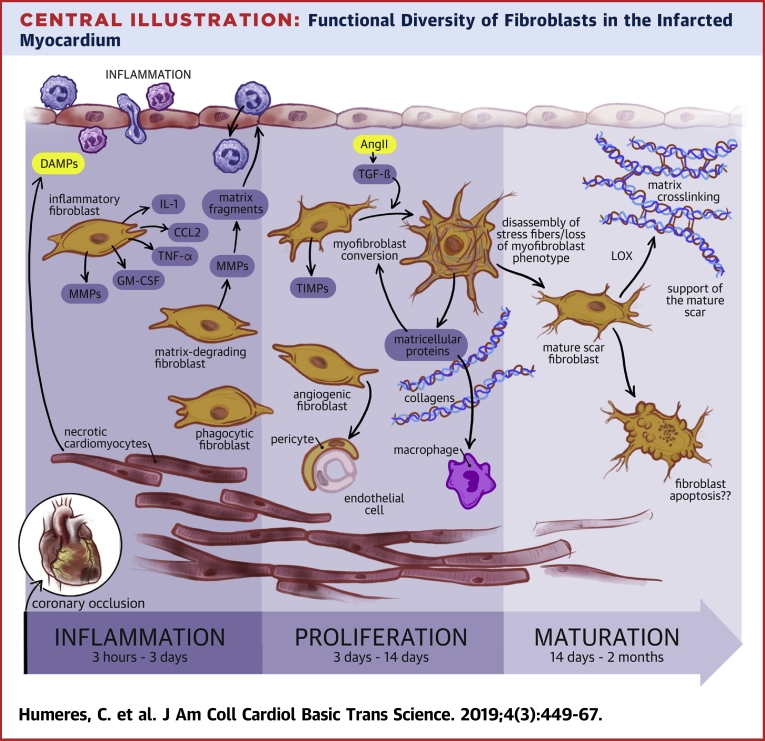
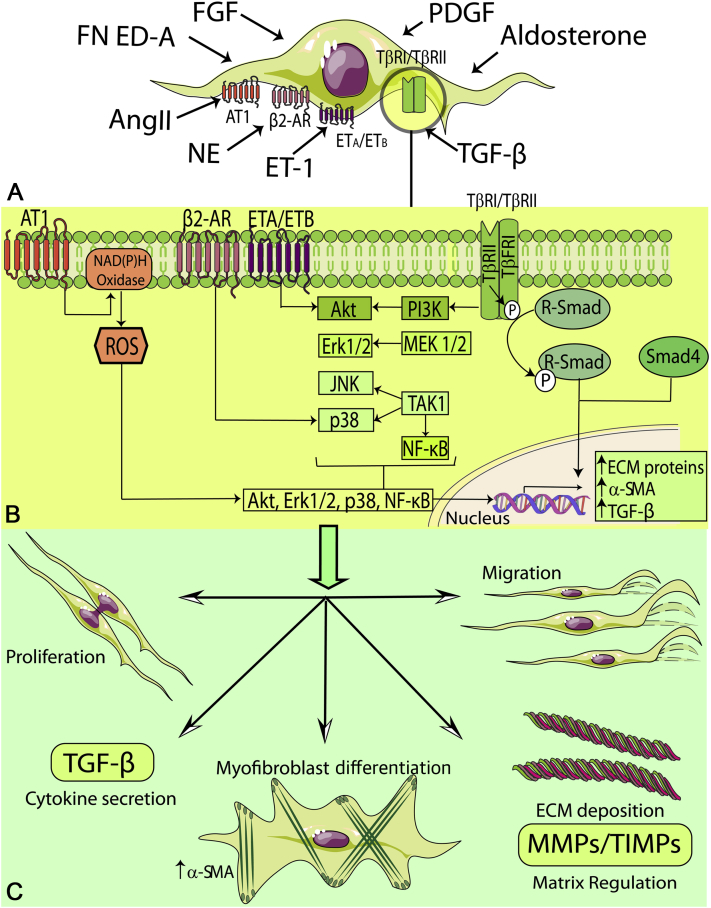
Expansion and activation of fibroblasts following cardiac injury is important for repair but may also contribute to fibrosis, remodeling, and dysfunction. The authors discuss the dynamic alterations of fibroblasts in failing and remodeling myocardium. Emerging concepts suggest that fibroblasts are not unidimensional cells that act exclusively by secreting extracellular matrix proteins, thus promoting fibrosis and diastolic dysfunction. In addition to their involvement in extracellular matrix expansion, activated fibroblasts may also exert protective actions, preserving the cardiac extracellular matrix, transducing survival signals to cardiomyocytes, and regulating inflammation and angiogenesis. The functional diversity of cardiac fibroblasts may reflect their phenotypic heterogeneity.
心脏损伤后成纤维细胞的增殖和激活对修复很重要,但也可能导致纤维化、重塑和功能障碍。作者讨论了衰竭和重塑心肌中成纤维细胞的动态变化。新出现的概念表明,成纤维细胞并非单一维度的细胞,仅通过分泌细胞外基质蛋白发挥作用,从而促进纤维化和舒张功能障碍。除了参与细胞外基质扩张外,激活的成纤维细胞还可能发挥保护作用,维持心脏细胞外基质,向心肌细胞传导存活信号,并调节炎症和血管生成。心脏成纤维细胞的功能多样性可能反映了它们的表型异质性。