Julius-Bernstein-Institute of Physiology, Martin Luther University Halle-Wittenberg, Magdeburger Str. 6, 06110, Halle/Saale, Germany.
Institute of Molecular Medicine, Martin-Luther-University Halle-Wittenberg, Heinrich-Damerow-Str. 1, 06120, Halle/Saale, Germany.
Cell Mol Life Sci. 2020 Mar;77(5):903-918. doi: 10.1007/s00018-019-03217-y. Epub 2019 Jul 16.
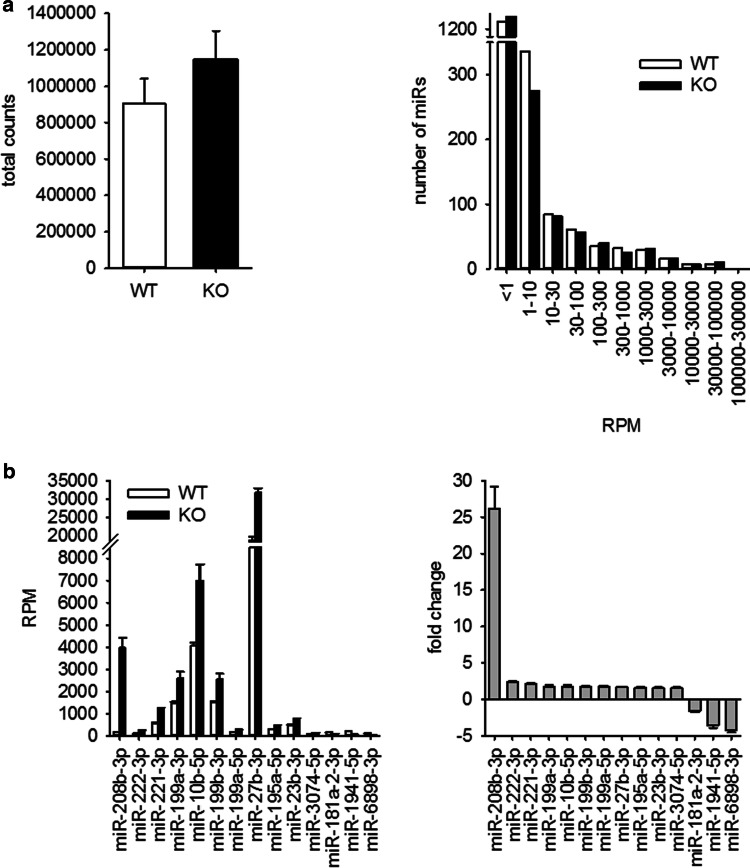
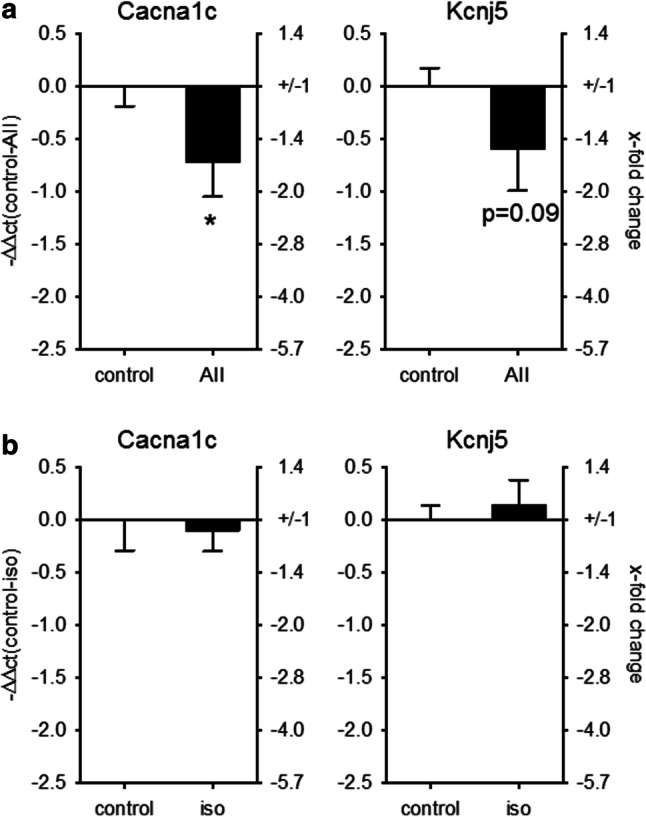
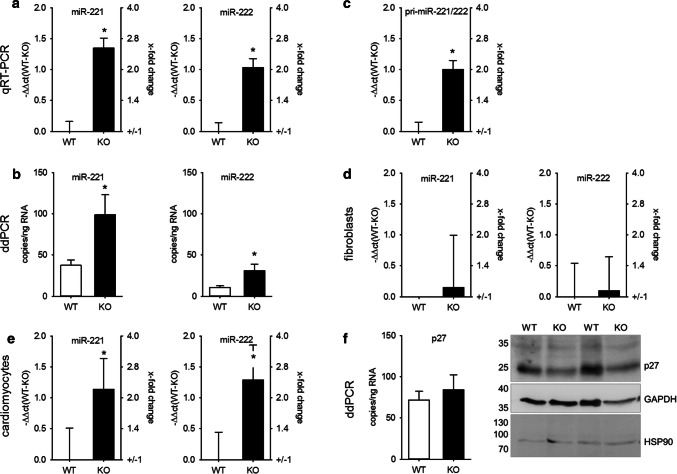
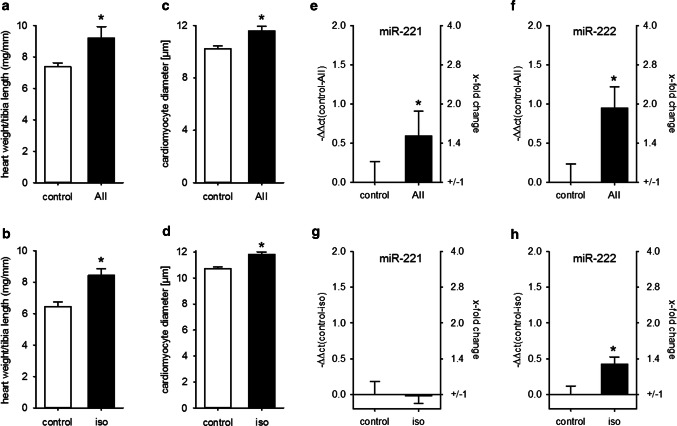
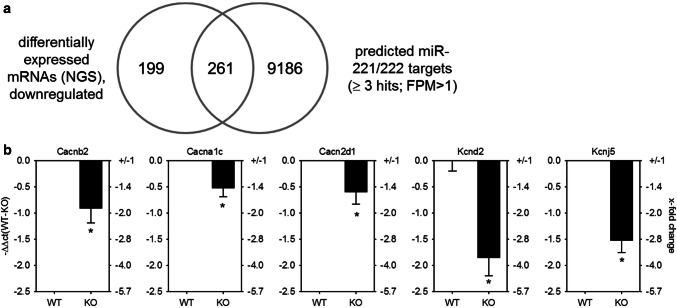
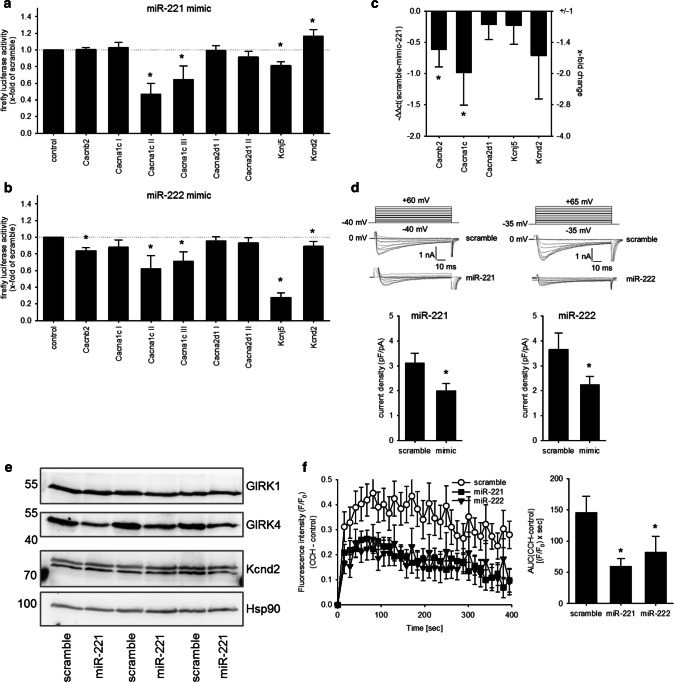
MicroRNAs (miRs) contribute to different aspects of cardiovascular pathology, among others cardiac hypertrophy and atrial fibrillation. The aim of our study was to evaluate the impact of miR-221/222 on cardiac electrical remodeling. Cardiac miR expression was analyzed in a mouse model with altered electrocardiography parameters and severe heart hypertrophy. Next generation sequencing revealed 14 differentially expressed miRs in hypertrophic hearts, with miR-221 and -222 being the strongest regulated miR-cluster. This increase was restricted to cardiomyocytes and not observed in cardiac fibroblasts. Additionally, we evaluated the change of miR-221/222 in vivo in two models of pharmacologically induced heart hypertrophy (angiotensin II, isoprenaline), thereby demonstrating a stimulus-induced increase in miR-221/222 in vivo by angiotensin II but not by isoprenaline. Whole transcriptome analysis by RNA-seq and qRT-PCR validation revealed an enriched number of downregulated mRNAs coding for proteins located in the T-tubule, which are also predicted targets for miR-221/222. Among those, mRNAs were the L-type Ca channel subunits as well as potassium channel subunits. We confirmed that both miRs target the 3'-untranslated regions of Cacna1c and Kcnj5. Furthermore, enhanced expression of these miRs reduced L-type Ca channel and Kcnj5 channel abundance and function, which was analyzed by whole-cell patch clamp recordings or Western blot and flux measurements, respectively. miR-221 and -222 contribute to the regulation of L-type Ca channels as well as Kcnj5 channels and, therefore, potentially contribute to disturbed cardiac excitation generation and propagation. Future studies will have to evaluate the pathophysiological and clinical relevance of aberrant miR-221/222 expression for electrical remodeling.
微小 RNA(miRs)在心血管病理学的多个方面发挥作用,包括心肌肥厚和心房颤动。我们的研究旨在评估 miR-221/222 对心脏电重构的影响。在心电图参数改变和严重心脏肥厚的小鼠模型中分析心脏 miR 表达。下一代测序显示,肥厚心脏中有 14 个差异表达的 miR,miR-221 和 -222 是最强调节的 miR 簇。这种增加仅限于心肌细胞,在心肌成纤维细胞中观察不到。此外,我们在两种药物诱导的心脏肥厚模型(血管紧张素 II、异丙肾上腺素)中评估了体内 miR-221/222 的变化,从而证明血管紧张素 II 诱导体内 miR-221/222 增加,但异丙肾上腺素则没有。通过 RNA-seq 和 qRT-PCR 验证的全转录组分析显示,编码位于 T 小管中的蛋白质的下调 mRNAs 的数量丰富,这些蛋白质也是 miR-221/222 的预测靶标。其中,mRNA 是 L 型钙通道亚基以及钾通道亚基。我们证实这两种 miR 都靶向 Cacna1c 和 Kcnj5 的 3'-非翻译区。此外,通过全细胞膜片钳记录或 Western blot 和通量测量分别分析,增强这些 miR 的表达会减少 L 型钙通道和 Kcnj5 通道的丰度和功能。miR-221 和 -222 有助于调节 L 型钙通道和 Kcnj5 通道,因此可能有助于扰乱心脏兴奋的产生和传播。未来的研究将不得不评估异常 miR-221/222 表达对电重构的病理生理和临床相关性。