Department of Biochemistry and Molecular Genetics, Israel Institute for Biological Research, Ness Ziona 74100, Israel.
Division of Medical Chemistry, Israel Institute for Biological Research, Ness Ziona 74100, Israel.
Int J Mol Sci. 2021 Nov 16;22(22):12345. doi: 10.3390/ijms222212345.
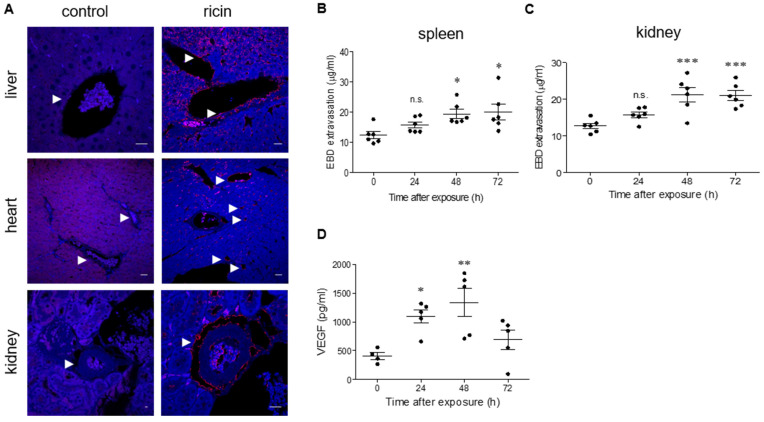
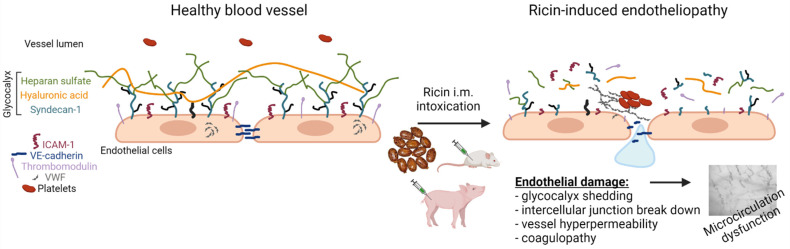
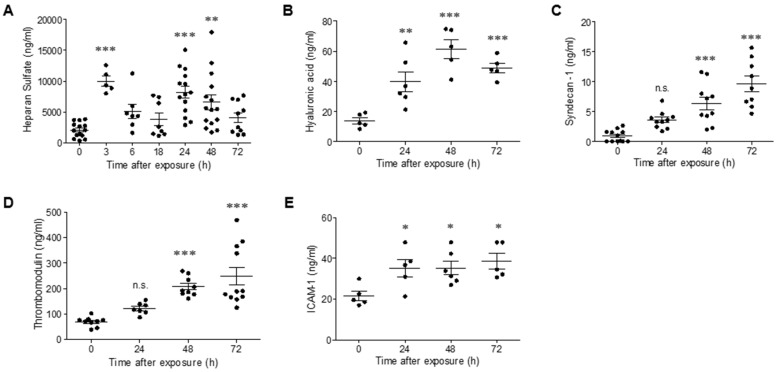
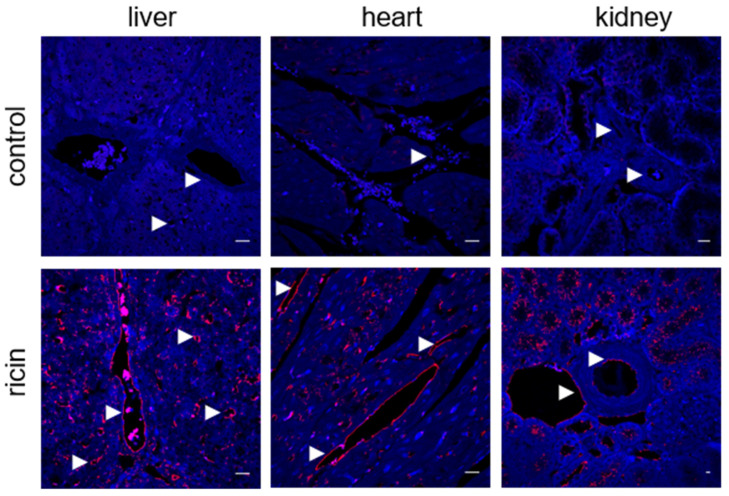
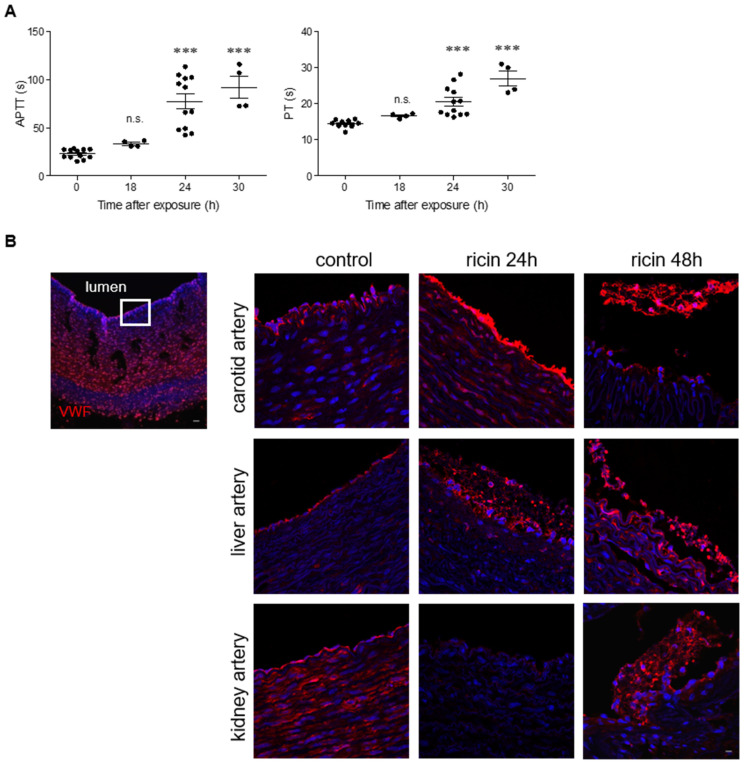
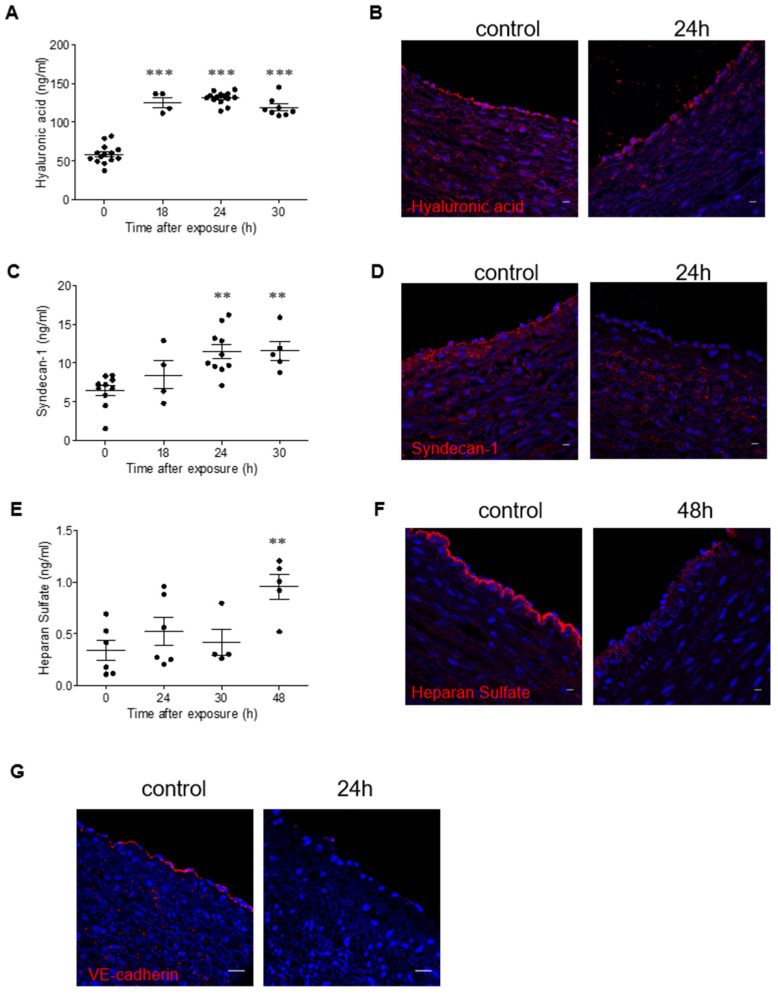
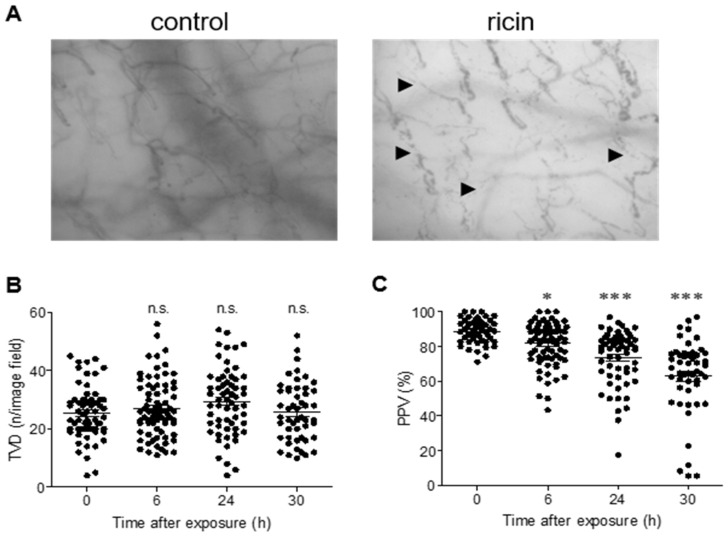
Ricin toxin isolated from the castor bean () is one of the most potent and lethal molecules known. While the pathophysiology and clinical consequences of ricin poisoning by the parenteral route, i.e., intramuscular penetration, have been described recently in various animal models, the preceding mechanism underlying the clinical manifestations of systemic ricin poisoning has not been completely defined. Here, we show that following intramuscular administration, ricin bound preferentially to the vasculature in both mice and swine, leading to coagulopathy and widespread hemorrhages. Increased levels of circulating VEGF and decreased expression of vascular VE-cadherin caused blood vessel impairment, thereby promoting hyperpermeability in various organs. Elevated levels of soluble heparan sulfate, hyaluronic acid and syndecan-1 were measured in blood samples following ricin intoxication, indicating that the vascular glycocalyx of both mice and swine underwent extensive damage. Finally, by using side-stream dark field intravital microscopy imaging, we determined that ricin poisoning leads to microvasculature malfunctioning, as manifested by aberrant blood flow and a significant decrease in the number of diffused microvessels. These findings, which suggest that glycocalyx shedding and microcirculation dysfunction play a major role in the pathology of systemic ricin poisoning, may serve for the formulation of specifically tailored therapies for treating parenteral ricin intoxication.
蓖麻毒素从蓖麻子中分离出来,是已知的最有效和致命的分子之一。虽然最近在各种动物模型中描述了通过肌肉途径(即肌肉内穿透)注射蓖麻毒素引起的中毒的病理生理学和临床后果,但全身性蓖麻中毒临床表现背后的先前机制尚未完全定义。在这里,我们表明,在肌肉内给药后,蓖麻毒素优先与小鼠和猪的血管结合,导致凝血功能障碍和广泛出血。循环 VEGF 水平升高和血管 VE-钙粘蛋白表达降低导致血管损伤,从而促进各种器官的高通透性。在蓖麻毒素中毒后,在血液样本中测量到循环的硫酸乙酰肝素、透明质酸和 syndecan-1 的水平升高,表明小鼠和猪的血管糖萼均受到广泛损伤。最后,通过使用边流暗场活体显微镜成像,我们确定蓖麻毒素中毒导致微血管功能障碍,表现为血流异常和扩散微血管数量显著减少。这些发现表明,糖萼脱落和微循环功能障碍在全身性蓖麻中毒的病理生理学中起主要作用,可能为制定专门针对治疗肌肉内注射蓖麻毒素中毒的治疗方法提供依据。