1 Department of Psychology, Northeastern University.
2 Department of Psychiatry, Massachusetts General Hospital, Boston, Massachusetts.
Psychol Sci Public Interest. 2019 Jul;20(1):1-68. doi: 10.1177/1529100619832930.
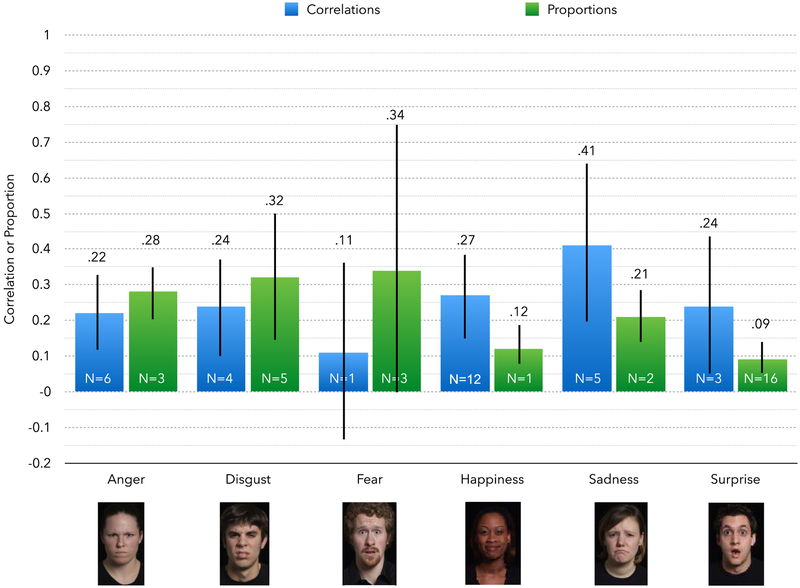
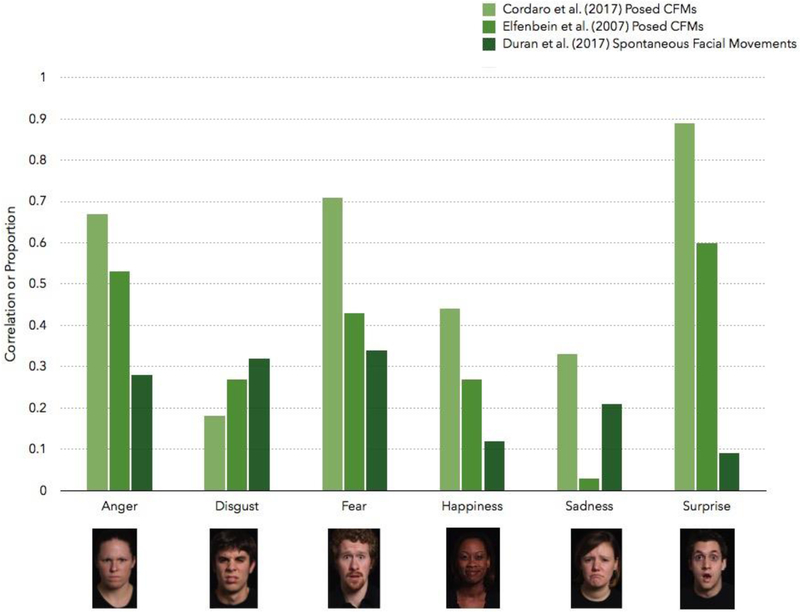
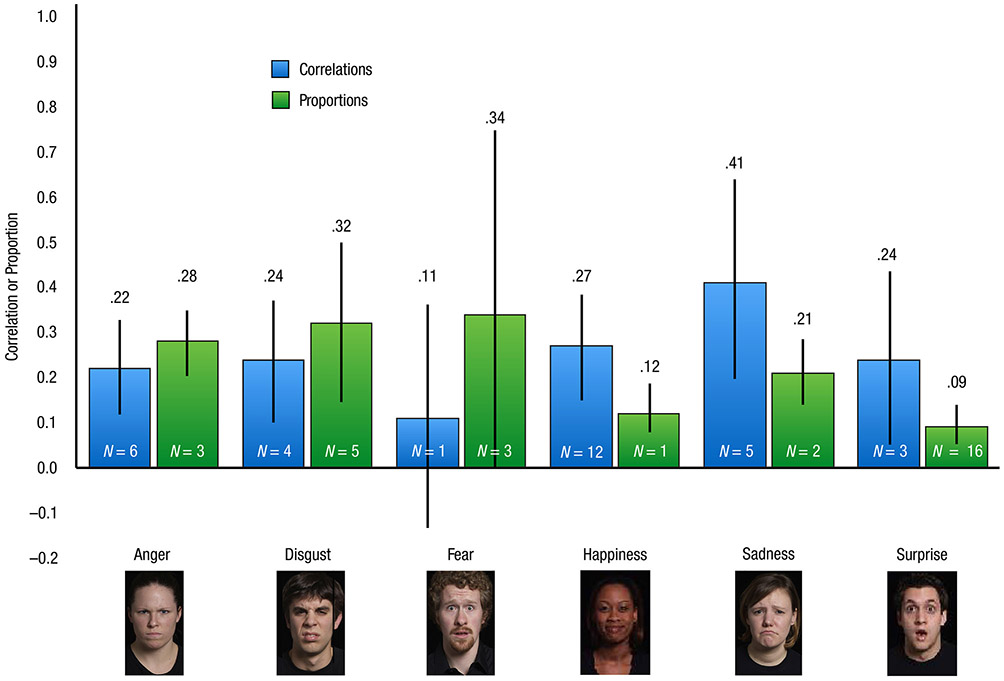
It is commonly assumed that a person's emotional state can be readily inferred from his or her facial movements, typically called or . This assumption influences legal judgments, policy decisions, national security protocols, and educational practices; guides the diagnosis and treatment of psychiatric illness, as well as the development of commercial applications; and pervades everyday social interactions as well as research in other scientific fields such as artificial intelligence, neuroscience, and computer vision. In this article, we survey examples of this widespread assumption, which we refer to as the , and we then examine the scientific evidence that tests this view, focusing on the six most popular emotion categories used by consumers of emotion research: anger, disgust, fear, happiness, sadness, and surprise. The available scientific evidence suggests that people do sometimes smile when happy, frown when sad, scowl when angry, and so on, as proposed by the common view, more than what would be expected by chance. Yet how people communicate anger, disgust, fear, happiness, sadness, and surprise varies substantially across cultures, situations, and even across people within a single situation. Furthermore, similar configurations of facial movements variably express instances of more than one emotion category. In fact, a given configuration of facial movements, such as a scowl, often communicates something other than an emotional state. Scientists agree that facial movements convey a range of information and are important for social communication, emotional or otherwise. But our review suggests an urgent need for research that examines how people move their faces to express emotions and other social information in the variety of contexts that make up everyday life, as well as careful study of the mechanisms by which people perceive instances of emotion in one another. We make specific research recommendations that will yield a more valid picture of how people move their faces to express emotions and how they infer emotional meaning from facial movements in situations of everyday life. This research is crucial to provide consumers of emotion research with the translational information they require.
人们通常认为,一个人的情绪状态可以从他或她的面部动作中轻易推断出来,这些面部动作通常被称为表情或面部表情。这种假设影响了法律判断、政策决策、国家安全协议和教育实践;指导精神疾病的诊断和治疗,以及商业应用的开发;并渗透到日常社交互动以及人工智能、神经科学和计算机视觉等其他科学领域的研究中。在本文中,我们调查了这种广泛存在的假设的例子,我们称之为表情识别假设,然后我们检查了检验这一观点的科学证据,重点关注情感研究消费者使用的六个最流行的情感类别:愤怒、厌恶、恐惧、幸福、悲伤和惊讶。现有的科学证据表明,人们在高兴时确实会微笑,在悲伤时会皱眉,在生气时会皱眉,等等,正如普遍观点所提出的那样,这比偶然情况下出现的可能性要大。然而,人们如何在不同的文化、情境,甚至在同一情境下的不同人群中交流愤怒、厌恶、恐惧、幸福、悲伤和惊讶,存在着很大的差异。此外,相似的面部运动配置也会表达出不止一种情绪类别。事实上,一种特定的面部运动配置,比如皱眉,通常传达的不是一种情绪状态。科学家们一致认为,面部运动传达了一系列信息,对于情感或其他社会交流都很重要。但我们的综述表明,迫切需要研究人们在构成日常生活的各种情境中如何通过面部运动来表达情绪和其他社会信息,以及仔细研究人们如何在彼此身上感知情绪的机制。我们提出了具体的研究建议,这些建议将更有效地描述人们如何通过面部运动来表达情绪,以及他们如何在日常生活情境中从面部运动中推断出情绪意义。这项研究对于为情感研究的消费者提供他们所需的转化信息至关重要。