Liao Hongkai, Li Yaying, Yao Huaiying
Key Laboratory of Urban Environment and Health, Institute of Urban Environment, Chinese Academy of Sciences, Xiamen, China.
Key Laboratory of Urban Environmental Processes and Pollution Control, Ningbo Urban Environment Observation and Research Station-NUEORS, Chinese Academy of Sciences, Ningbo, China.
Front Microbiol. 2019 Jun 18;10:1361. doi: 10.3389/fmicb.2019.01361. eCollection 2019.
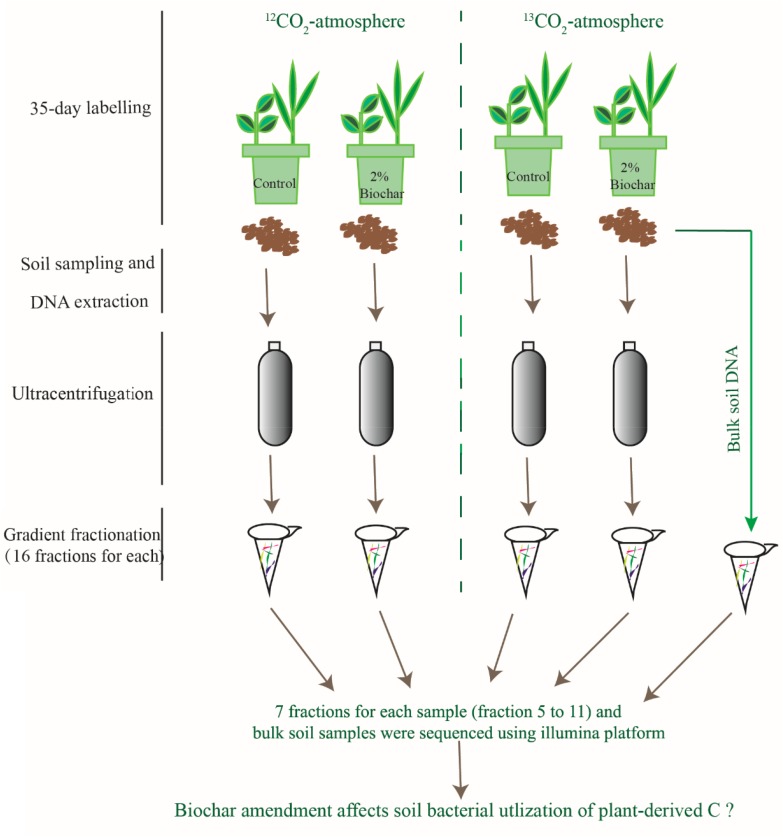
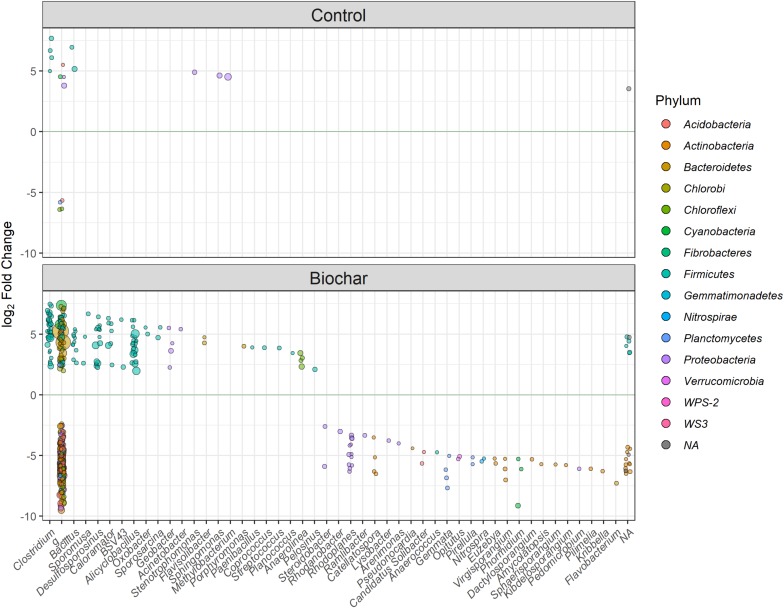
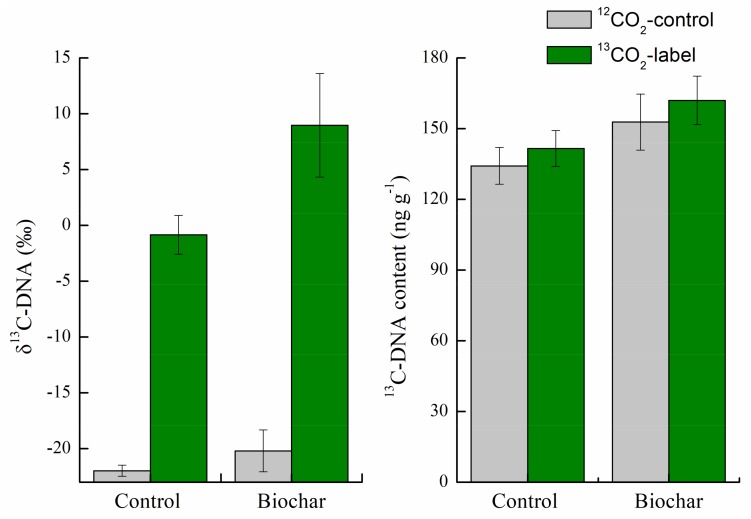
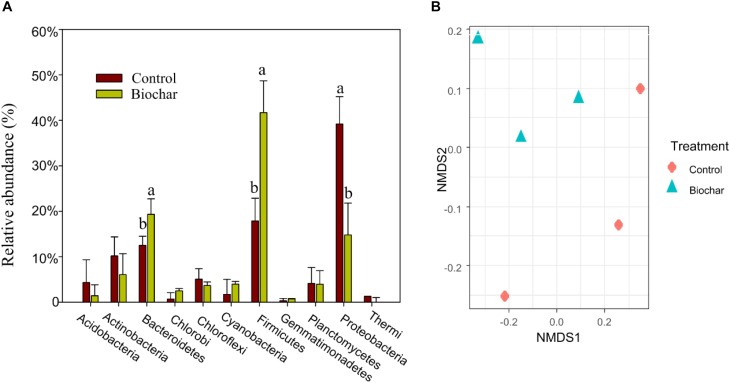
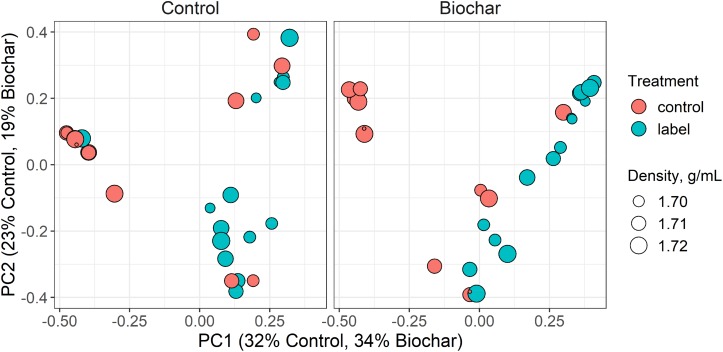
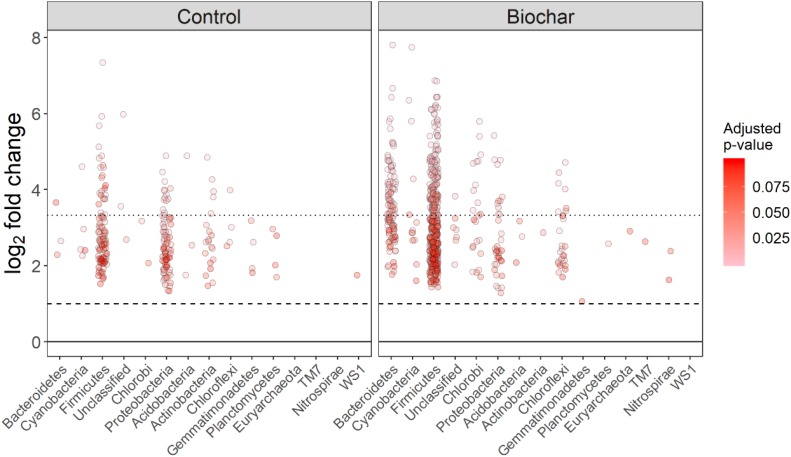
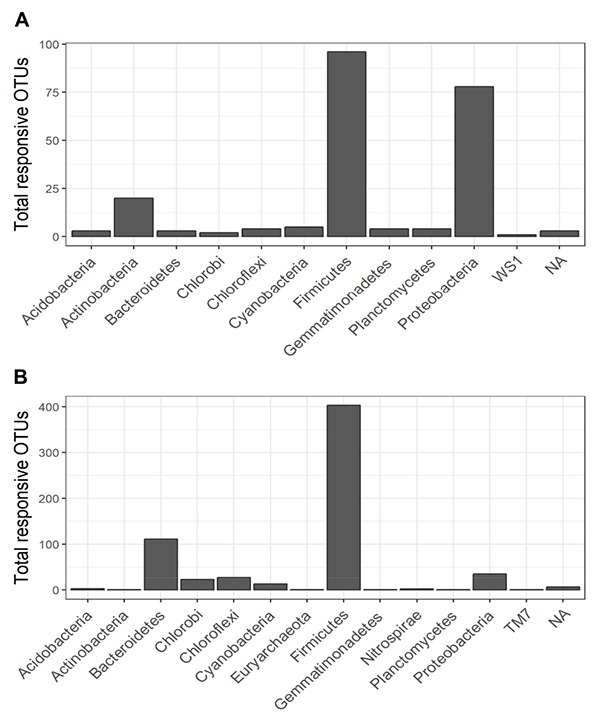
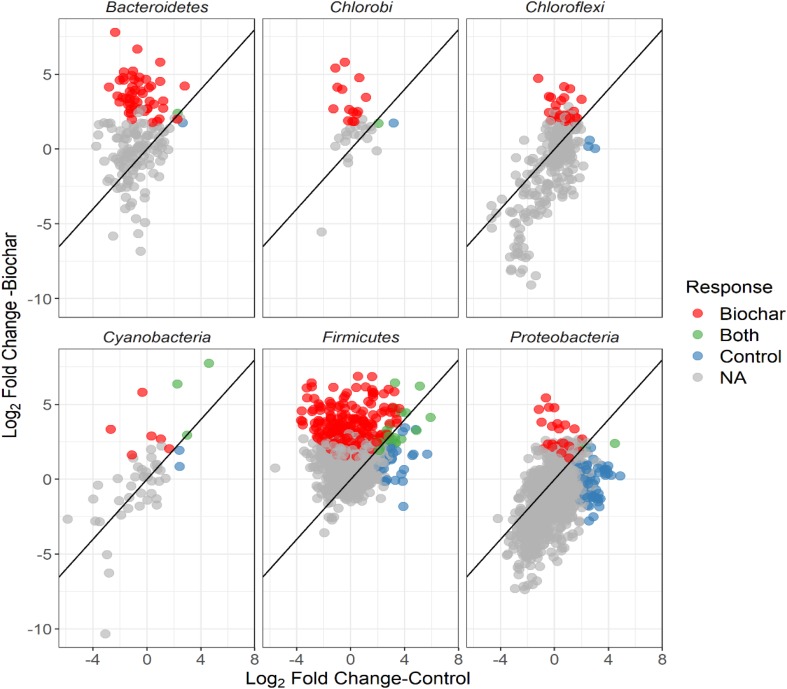
Plant-derived carbon (C) is considered fundamental to understand the interaction between rhizosphere microbes and plants in terrestrial ecosystems. Biochar soil amendment may enhance plant performance via changing soil properties or microbial diversity in the rhizosphere. However, our knowledge of how plant-microbiome associations respond to biochar amendment remains rather limited. Herein, CO steady-state labeling combined with DNA stable-isotope probing was used to characterize soil bacterial communities in the rhizosphere contributing to the utilization of plant-derived C. The diversity of bacteria active in the utilization of root exudates was determined after biochar amendment in a legume-based intercropping system ( L., with L.). The results showed the biochar application not only changed the bacterial community structure and diversity in the rhizosphere, but also altered bacterial members actively assimilating plant-derived C. There were more labeled species in the biochar-amended soils than the control soils. Compared with the control, the biochar amendment increased the relative abundances of Firmicutes and Bacteroidetes members (i.e., , , , , and ) while decreasing the abundances of Proteobacteria members (e.g., and ) utilizing plant-derived C. In contrast, slow-growing species of the phyla Acidobacteria, Planctomycetes, and Gemmatimonadetes were barely labeled. The bacteria found stimulated by the biochar amendment are known for their ability to fix nitrogen, solubilize phosphorus, or reduce iron and sulfur, which may potentially contribute to the "biochar effect" in the rhizosphere. This study is the first to provide empirical evidence that biochar amendment can alter the soil bacterial community assimilating plant-derived C; this may have consequences for nutrient cycling and improving plant performance in intercropping systems.
植物源碳(C)被认为是理解陆地生态系统中根际微生物与植物之间相互作用的基础。生物炭改良土壤可能通过改变土壤性质或根际微生物多样性来提高植物性能。然而,我们对植物 - 微生物群落关联如何响应生物炭改良的了解仍然相当有限。在此,采用CO稳态标记结合DNA稳定同位素探针来表征根际土壤细菌群落对植物源碳利用的贡献。在基于豆科植物的间作系统(L.与L.)中进行生物炭改良后,测定了参与根系分泌物利用的活跃细菌的多样性。结果表明,生物炭的施用不仅改变了根际细菌群落结构和多样性,还改变了积极同化植物源碳的细菌成员。生物炭改良土壤中的标记物种比对照土壤更多。与对照相比,生物炭改良增加了厚壁菌门和拟杆菌门成员(即,,,,和)利用植物源碳的相对丰度,同时降低了变形菌门成员(例如和)的丰度。相反,酸杆菌门、浮霉菌门和芽单胞菌门的生长缓慢的物种几乎没有被标记。发现受生物炭改良刺激的细菌以其固氮、溶解磷或还原铁和硫的能力而闻名,这可能潜在地促成了根际的“生物炭效应”。本研究首次提供了实证证据,表明生物炭改良可以改变同化植物源碳的土壤细菌群落;这可能对间作系统中的养分循环和改善植物性能产生影响。