Baisiwala Shivani, Auffinger Brenda, Caragher Seamus P, Shireman Jack M, Ahsan Riasat, Lee Gina, Hasan Tanwir, Park Cheol, Saathoff Miranda R, Christensen Anne C, Ahmed Atique U
Department of Neurological Surgery, Feinberg School of Medicine, Northwestern University, Chicago, IL, USA.
Winona State University, Winona, MN, USA.
Stem Cells Int. 2019 Jun 18;2019:6107456. doi: 10.1155/2019/6107456. eCollection 2019.
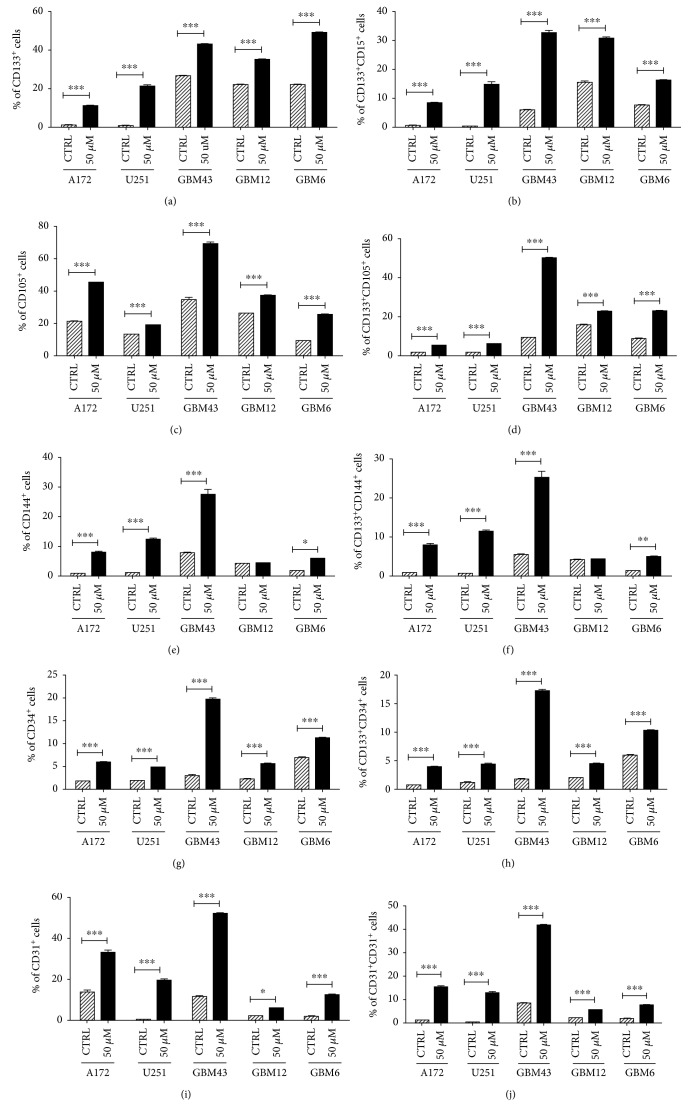
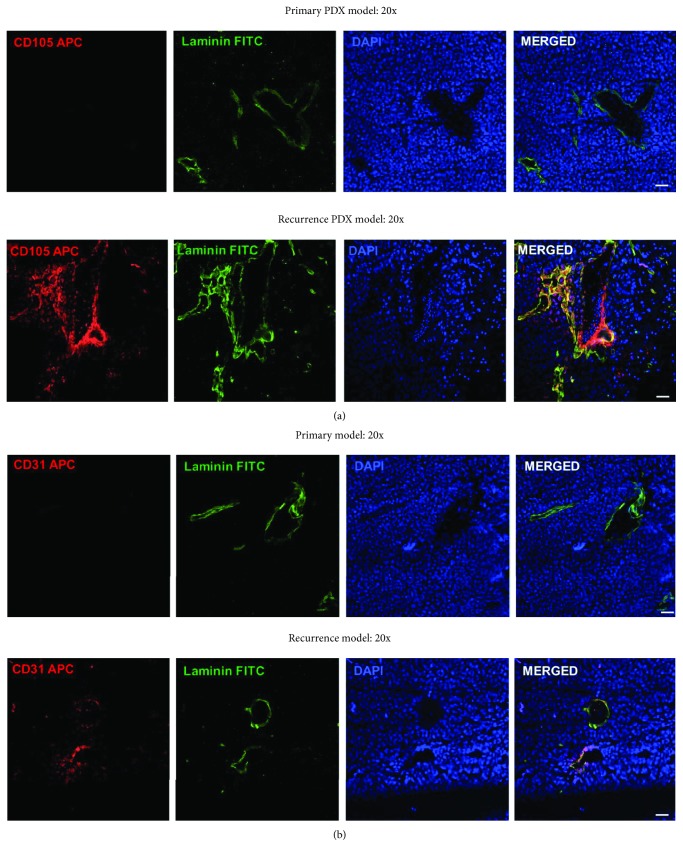
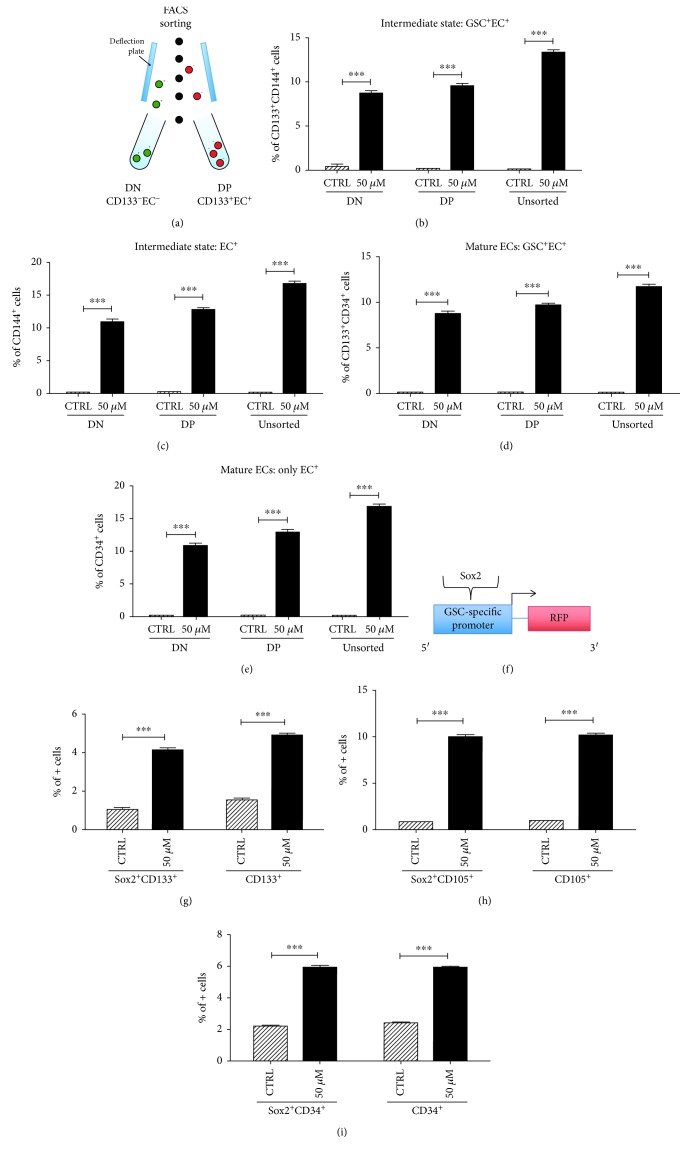
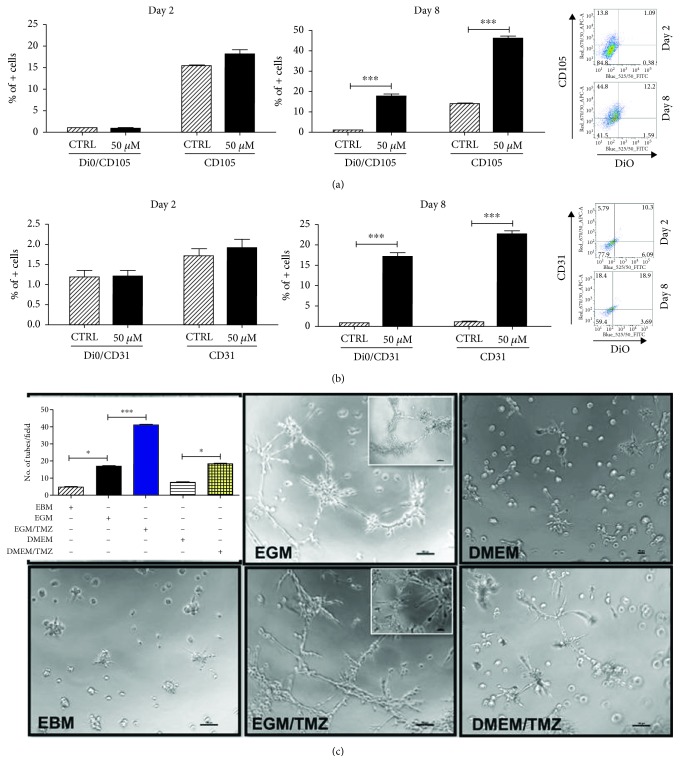
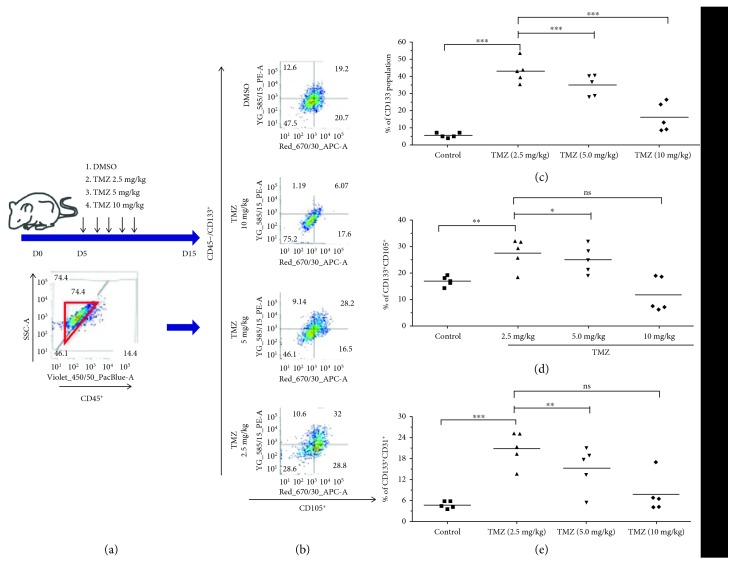
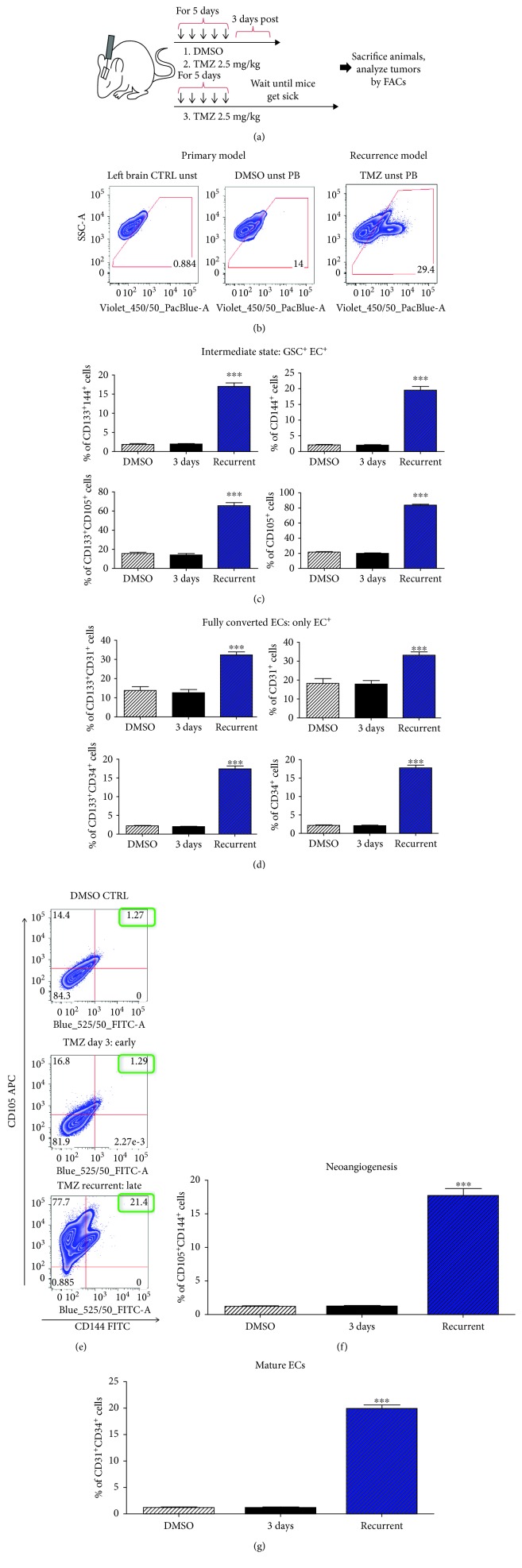
Glioblastoma (GBM) is the most common and aggressive primary malignant brain tumor affecting adults, with a median survival of approximately 21 months. One key factor underlying the limited efficacy of current treatment modalities is the remarkable plasticity exhibited by GBM cells, which allows them to effectively adapt to changes induced by anticancer therapeutics. Moreover, GBM tumors are highly vascularized with aberrant vessels that complicate the delivery of antitumor agents. Recent research has demonstrated that GBM cells have the ability to transdifferentiate into endothelial cells (ECs), illustrating that GBM cells may use plasticity in concert with vascularization leading to the creation of tumor-derived blood vessels. The mechanism behind this transdifferentiation, however, remains unclear. Here, we show that treatment with temozolomide (TMZ) chemotherapy induces time-dependent expression of markers for glioma stem cells (GSCs) and immature and mature ECs. In addition, GBM tumors growing as orthotopic xenografts in nude mice showed increased expression of GSC and EC markers after TMZ treatment. FACS analysis showed the presence of immature and mature EC populations. Furthermore, immunofluorescence analysis revealed increased tumor-derived vessels in TMZ-recurrent tumors. Overall, this study identifies chemotherapeutic stress as a new driver of transdifferentiation of tumor cells to endothelial cells and highlights cellular plasticity as a key player in therapeutic resistance and tumor recurrence.
胶质母细胞瘤(GBM)是影响成年人的最常见且侵袭性最强的原发性恶性脑肿瘤,中位生存期约为21个月。当前治疗方式疗效有限的一个关键因素是GBM细胞表现出的显著可塑性,这使它们能够有效适应抗癌治疗所诱导的变化。此外,GBM肿瘤血管高度丰富且血管异常,这使得抗肿瘤药物的递送变得复杂。最近的研究表明,GBM细胞具有转分化为内皮细胞(ECs)的能力,这说明GBM细胞可能利用可塑性与血管生成协同作用,导致肿瘤衍生血管的形成。然而,这种转分化背后的机制仍不清楚。在此,我们表明替莫唑胺(TMZ)化疗处理可诱导胶质瘤干细胞(GSCs)以及未成熟和成熟ECs标志物的时间依赖性表达。此外,在裸鼠中作为原位异种移植生长的GBM肿瘤在TMZ处理后显示GSC和EC标志物的表达增加。流式细胞术分析显示存在未成熟和成熟的EC群体。此外,免疫荧光分析显示TMZ复发肿瘤中肿瘤衍生血管增加。总体而言,本研究确定化疗应激是肿瘤细胞向内皮细胞转分化的新驱动因素,并强调细胞可塑性是治疗抵抗和肿瘤复发的关键因素。