Brinkman David, Sheridan Gerard, O'Sullivan Michael
Department of Orthopaedics, Galway University Hospital, Newcastle Road, Galway, Ireland.
Case Rep Orthop. 2019 Jun 17;2019:8697360. doi: 10.1155/2019/8697360. eCollection 2019.
The aetiology of trigger digits has been debated since Notta first described them in 1850. Aetiology has been segregated for adult and paediatric presentations. While an adult trigger digit is most likely an acquired inflammatory process, the same is not true for cases in children: no inflammatory reaction is seen on microscopic evaluation. We wish to add strength to a genotypical aetiology for paediatric cases.
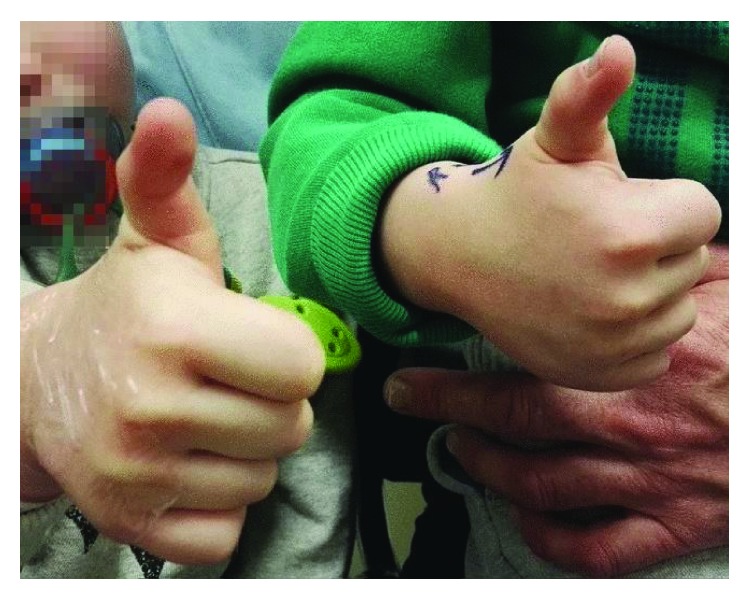
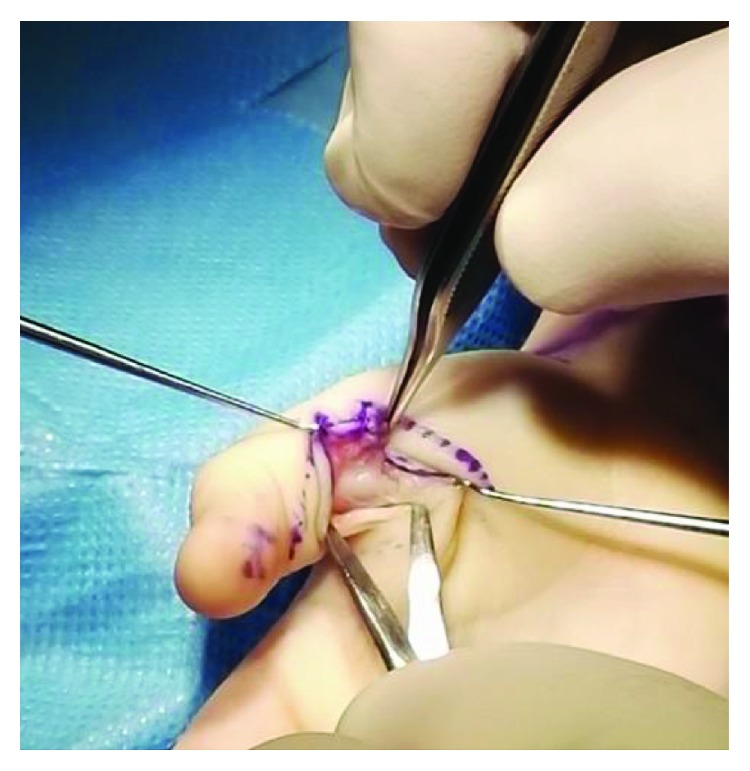
We present two cases of monozygotic twins with trigger digits managed in our institution. A comprehensive review of literature was conducted for cases of trigger digit in monozygotic twins to support our theory.
Our two sets of twins enjoyed a full recovery from surgery at one-month follow-up. A total of seven other cases of monozygotic twins were found in literature.
Our cases add to the growing body of evidence supporting a genotypical aetiology for paediatric trigger digit.
自1850年诺塔首次描述扳机指以来,其病因一直存在争议。病因已根据成人和儿童病例进行了分类。虽然成人扳机指很可能是一种后天性炎症过程,但儿童病例并非如此:在显微镜评估中未见炎症反应。我们希望为儿童病例的基因型病因提供更多支持。
我们报告了在我们机构接受治疗的两例患有扳机指的单卵双胞胎病例。对单卵双胞胎扳机指病例进行了全面的文献综述以支持我们的理论。
我们的两组双胞胎在术后1个月随访时均完全康复。文献中还发现了另外7例单卵双胞胎扳机指病例。
我们的病例增加了越来越多的证据,支持儿童扳机指的基因型病因。