Zhang Hang, Muhammad Junaid, Liu Kai, Ras Robin H A, Ikkala Olli
Department of Applied Physics, Aalto University, P.O. Box 15100, FI 02150 Espoo, Finland.
Nanoscale. 2019 Aug 1;11(30):14118-14122. doi: 10.1039/c9nr05416b.
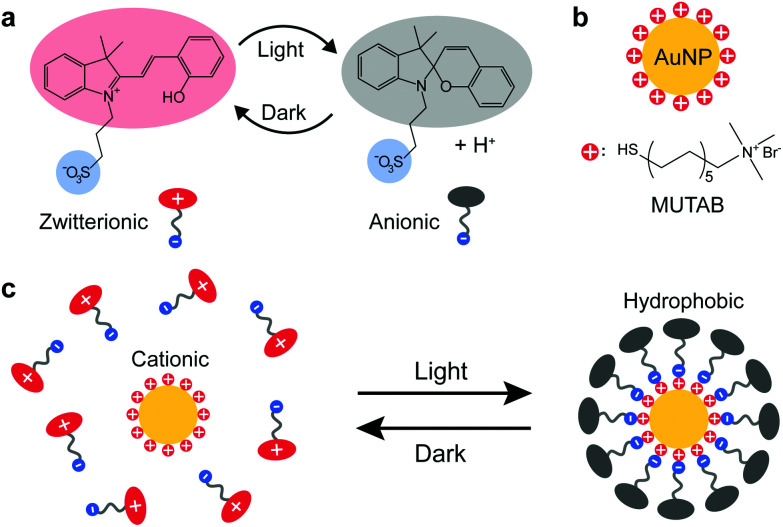
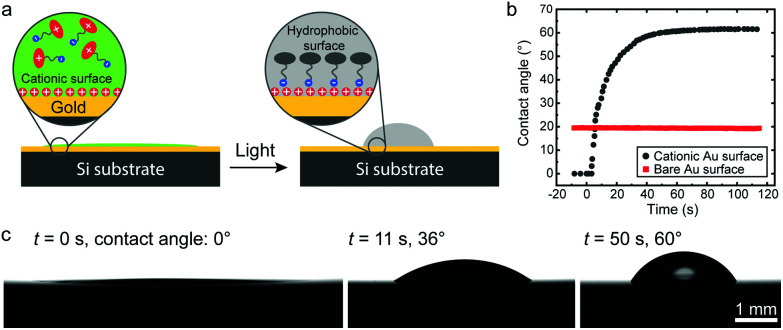
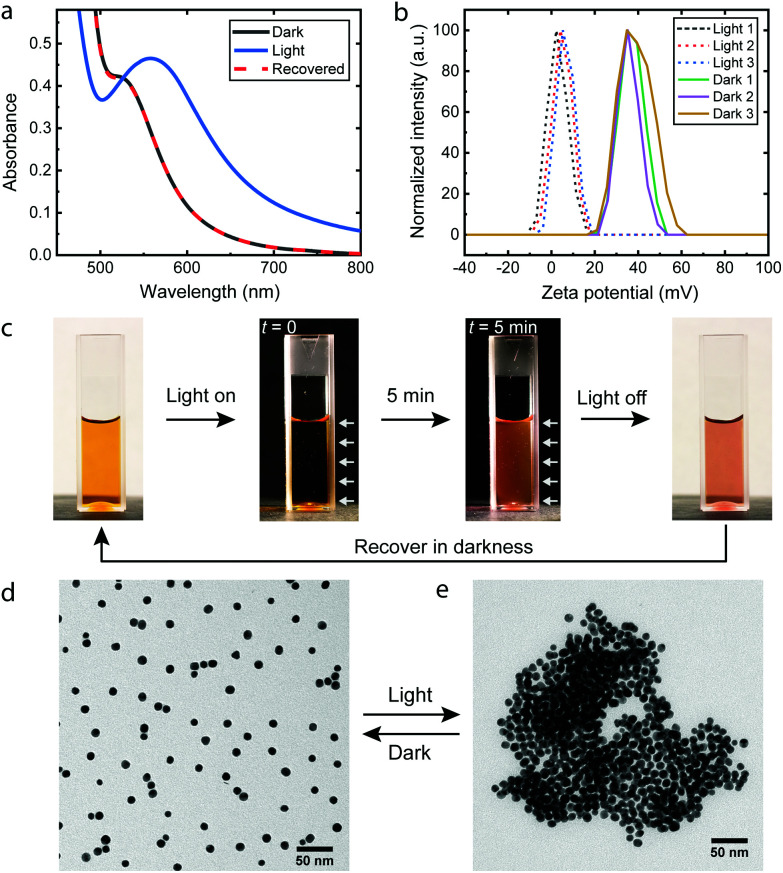
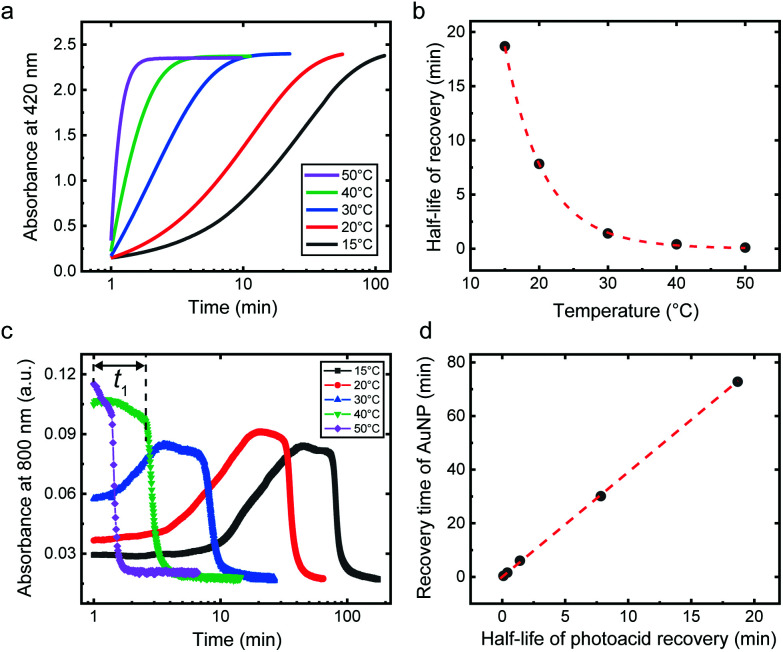
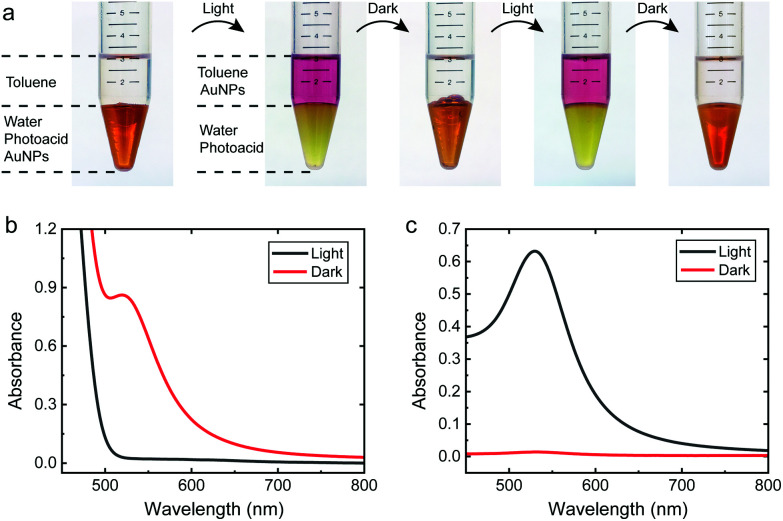
The ability to switch the hydrophilicity/hydrophobicity of nanoparticles promises great potential for applications. Here we report a generic approach that allows hydrophobization of cationic surfaces by light-induced photoacid switching from the unbound zwitterionic form to the electrostatically bound anionic form. Importantly, this allows reversible assembly and disassembly of cationic AuNPs, with disassembly kinetics controlled by temperature. The AuNPs can be repeatedly transferred between aqueous and non-polar solvents using light, showing potential in purification processes. In the macroscopic scale, nontrivially, light triggers the in situ hydrophobization of a flat cationized gold surface. The current approach is generic and opens up a new way to control the surface properties and self-assembly of nanoparticles.
纳米颗粒亲水性/疏水性的切换能力在应用方面具有巨大潜力。在此,我们报道了一种通用方法,该方法可通过光诱导光酸从未结合的两性离子形式转变为静电结合的阴离子形式,从而实现阳离子表面的疏水化。重要的是,这使得阳离子金纳米颗粒能够可逆地组装和拆卸,拆卸动力学受温度控制。金纳米颗粒可以利用光在水性和非极性溶剂之间反复转移,在纯化过程中显示出潜力。在宏观尺度上,值得注意的是,光引发了平坦阳离子化金表面的原位疏水化。当前的方法具有通用性,为控制纳米颗粒的表面性质和自组装开辟了一条新途径。