Developmental and Reproductive Toxicology Research Group, Korea Institute of Toxicology, Deajeon, 34114, Republic of Korea.
College of Veterinary Medicine, Chungbuk National University, Cheongju, Republic of Korea.
Part Fibre Toxicol. 2019 Jul 18;16(1):31. doi: 10.1186/s12989-019-0313-5.
Titanium dioxide (TiO) nanoparticles are among the most manufactured nanomaterials in the industry, and are used in food products, toothpastes, cosmetics and paints. Pregnant women as well as their conceptuses may be exposed to TiO nanoparticles; however, the potential effects of these nanoparticles during pregnancy are controversial, and their internal distribution has not been investigated. Therefore, in this study, we investigated the potential effects of oral exposure to TiO nanoparticles and their distribution during pregnancy. TiO nanoparticles were orally administered to pregnant Sprague-Dawley rats (12 females per group) from gestation days (GDs) 6 to 19 at dosage levels of 0, 100, 300 and 1000 mg/kg/day, and then cesarean sections were conducted on GD 20.
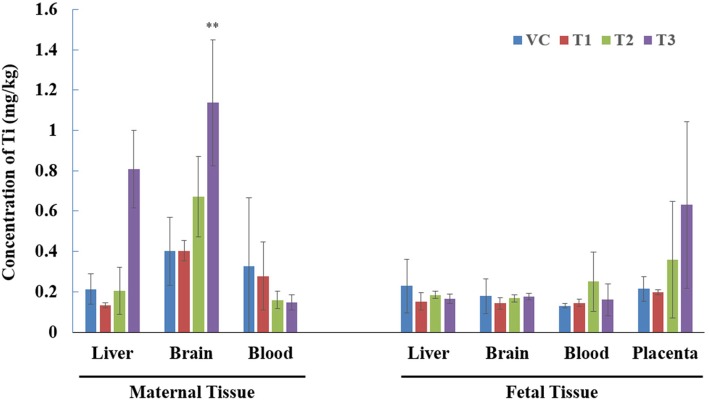
In the maternal and embryo-fetal examinations, there were no marked toxicities in terms of general clinical signs, body weight, food consumption, organ weights, macroscopic findings, cesarean section parameters and fetal morphological examinations. In the distribution analysis, titanium contents were increased in the maternal liver, maternal brain and placenta after exposure to high doses of TiO nanoparticles.
Oral exposure to TiO during pregnancy increased the titanium concentrations in the maternal liver, maternal brain and placenta, but these levels did not induce marked toxicities in maternal animals or affect embryo-fetal development. These results could be used to evaluate the human risk assessment of TiO nanoparticle oral exposure during pregnancy, and additional comprehensive toxicity studies are deemed necessary considering the possibility of complex exposure scenarios and the various sizes of TiO nanoparticles.
二氧化钛(TiO)纳米颗粒是工业中制造最多的纳米材料之一,用于食品、牙膏、化妆品和油漆中。孕妇及其胚胎可能会接触到 TiO 纳米颗粒;然而,这些纳米颗粒在怀孕期间的潜在影响存在争议,其内部分布尚未得到研究。因此,在这项研究中,我们研究了口服暴露于 TiO 纳米颗粒及其在怀孕期间的分布的潜在影响。从妊娠第 6 天到第 19 天,将 TiO 纳米颗粒以 0、100、300 和 1000mg/kg/天的剂量水平口服给予妊娠 Sprague-Dawley 大鼠(每组 12 只雌性),然后在妊娠第 20 天进行剖腹产。
在母体和胚胎-胎儿检查中,一般临床体征、体重、食物摄入量、器官重量、大体观察、剖腹产参数和胎儿形态检查均无明显毒性。在分布分析中,暴露于高剂量 TiO 纳米颗粒后,母体肝脏、母体大脑和胎盘中的钛含量增加。
妊娠期间口服暴露于 TiO 会增加母体肝脏、母体大脑和胎盘中的钛浓度,但这些水平不会引起母体动物的明显毒性,也不会影响胚胎-胎儿发育。这些结果可用于评估人类在怀孕期间口服暴露于 TiO 纳米颗粒的风险评估,并且考虑到复杂暴露情况的可能性和 TiO 纳米颗粒的各种尺寸,还需要进行额外的综合毒性研究。