Department of Biomedical Informatics, School of Basic Medical Sciences, Peking University, Beijing, 100191, China.
Sci Rep. 2019 Jul 18;9(1):10442. doi: 10.1038/s41598-019-46540-x.
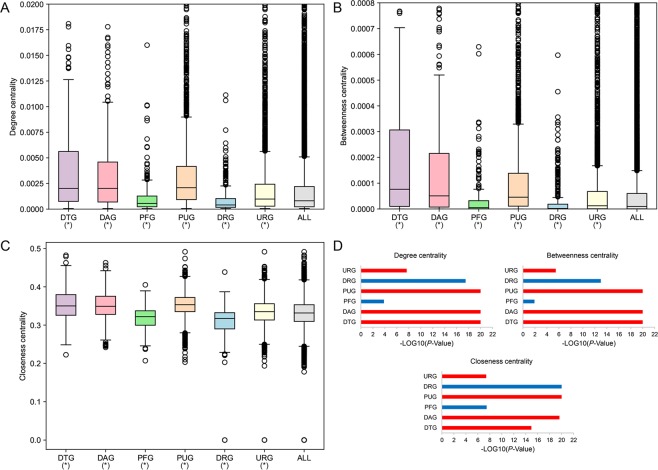
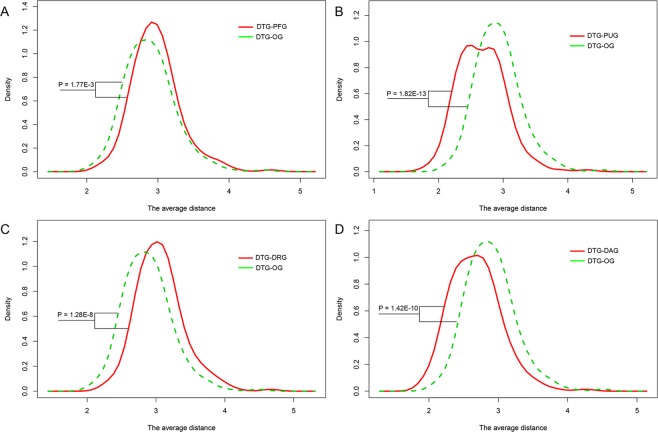
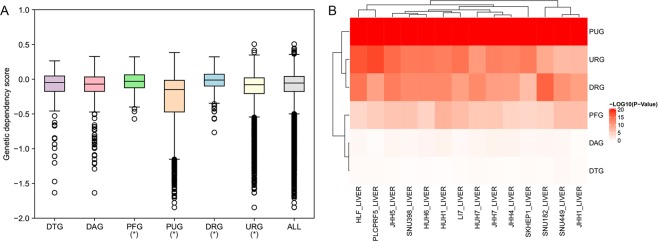
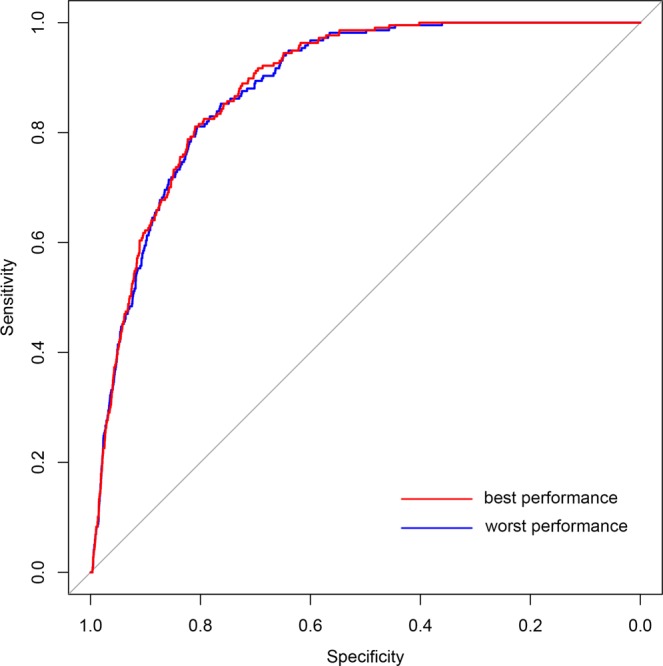
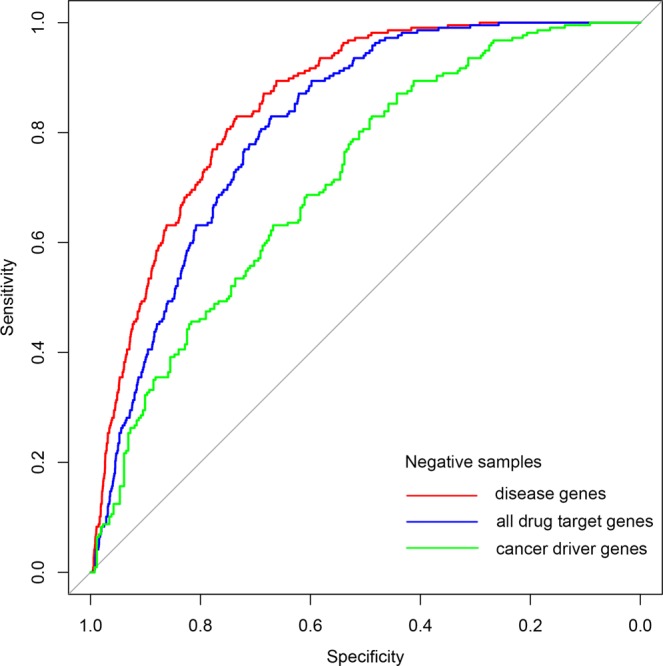
Hepatocellular carcinoma (HCC) is one major cause of cancer-related death worldwide. But now, the systematic therapy for the advanced stages of HCC is rather limited. Thus, the discovery of novel drug targets and thereafter targeted drugs against HCC is continuously needed. In this study, we combined clinical association data, gene expression profiles and manually collected drug target genes with the human protein-protein interaction (PPI) network to establish an in-silico HCC drug target predictor. First, we found drug target genes (DTGs), disease-associated genes (DAGs), prognostic unfavorable genes (PUGs) and cancer up-regulated genes (URGs) have higher degree, betweenness, closeness centrality, while cancer down-regulated genes (DRGs), prognostic favorable genes (PFGs) have lower degrees, in comparison with background genes. Moreover, DTG nodes were shown to be closer to DAG, PUG and URG nodes, but farther away from PFG and DRG nodes. Compared to the background, PFGs and DRGs were shown to have relatively bigger genetic dependency scores, while PUGs and URGs have smaller genetic dependency scores. Finally, based on the observed features of DTGs, we constructed a drug target predictor using one-class support vector machine (one-class SVM). Performance evaluation results suggested our predictor could effectively identify putative drug target genes for further research.
肝细胞癌 (HCC) 是全球癌症相关死亡的主要原因之一。但目前,HCC 晚期的系统治疗方法相当有限。因此,需要不断发现新的药物靶点和针对 HCC 的靶向药物。在这项研究中,我们将临床关联数据、基因表达谱和手动收集的药物靶点基因与人类蛋白质-蛋白质相互作用 (PPI) 网络相结合,建立了一种 HCC 药物靶点预测的计算方法。首先,我们发现药物靶点基因 (DTGs)、疾病相关基因 (DAGs)、预后不良基因 (PUGs) 和癌症上调基因 (URGs) 的度、介数、紧密度中心度较高,而癌症下调基因 (DRGs)、预后良好基因 (PFGs) 的度较低,与背景基因相比。此外,DTG 节点与 DAG、PUG 和 URG 节点更接近,而与 PFG 和 DRG 节点更远。与背景相比,PFGs 和 DRGs 具有相对较大的遗传依赖评分,而 PUGs 和 URGs 具有较小的遗传依赖评分。最后,基于 DTGs 的观察特征,我们使用单类支持向量机 (one-class SVM) 构建了药物靶点预测器。性能评估结果表明,我们的预测器可以有效地识别潜在的药物靶点基因,以供进一步研究。